
Infrared saunas have gone from spa novelty to something you can buy for a spare room in New Zealand. The claims attached to them range from genuinely evidence-backed to wildly overblown. Here’s an honest breakdown.
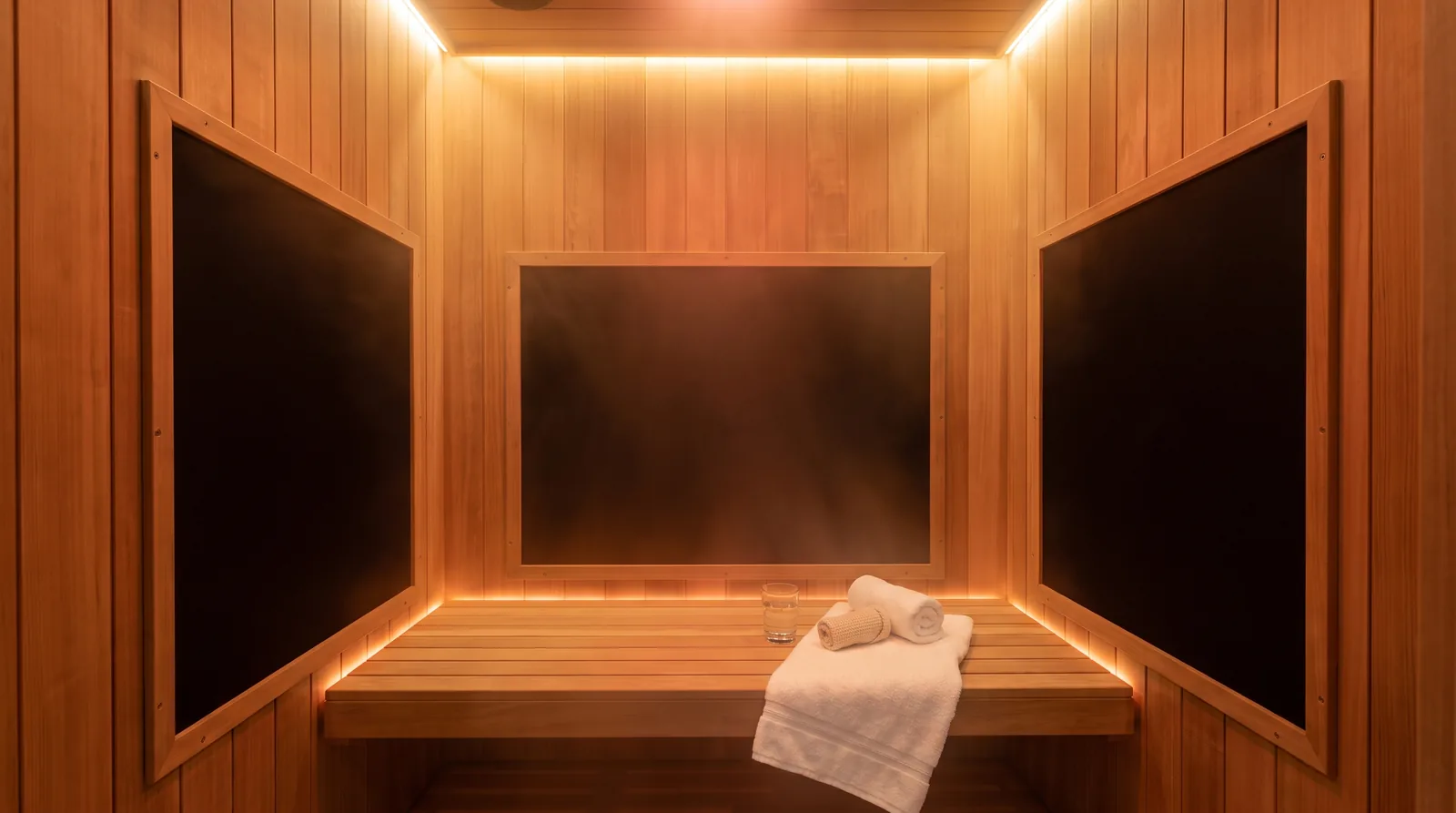
Unlike traditional saunas that heat the air around you to high temperatures, infrared saunas use infrared light to heat your body directly — at lower ambient air temperatures (typically 50–60°C vs 80–100°C in a Finnish sauna). This makes them more tolerable for longer sessions and accessible to people who struggle with the intense heat of traditional saunas.
Near, Mid, and Far Infrared: Does the Distinction Matter?
Most consumer infrared saunas use far infrared (FIR) wavelengths (around 8–15 microns). One correction is worth making here, because it appears in a great deal of infrared sauna marketing: far infrared at those wavelengths does not penetrate a few centimetres into you. It sits in a strong water-absorption band and is absorbed within roughly a tenth of a millimetre of the skin surface, after which the warmth travels inward as ordinary heat rather than as light. Near infrared, at around 800–1100nm, is the band that actually reaches several millimetres into tissue — which is why near infrared, not far infrared, is the wavelength used in red light therapy. None of this makes a sauna less pleasant or less useful. It just means the mechanism is heat delivered at the skin, and from there a sauna warms the body’s soft tissue. Some premium models offer full-spectrum panels including near and mid infrared. Near infrared (NIR) has a smaller body of research for skin and cellular benefits.
For most people most of the time, a quality far infrared sauna delivers the core benefits. Full-spectrum is worth considering if budget allows, but don’t let the absence of NIR be a dealbreaker.
What Infrared Sauna Therapy Is Actually Supported By
Cardiovascular Health
This is the strongest area of evidence, and it comes with an honest caveat: most of it is about traditional sauna bathing, not infrared. Research published in JAMA Internal Medicine (Finnish sauna cohort studies) found men who used saunas 4–7 times per week had significantly lower rates of fatal cardiovascular events than those using them once a week. Those were traditional Finnish saunas. Infrared saunas produce comparable short-term physiological responses at lower air temperatures — heat-induced increases in heart rate, changes in blood vessel behaviour — but long-term outcomes have not been established for infrared specifically. Treating the Finnish numbers as if they were measured in an infrared cabinet is the single most common overreach in this category.
Muscle Recovery and Soreness Reduction
Heat therapy increases blood flow to muscle tissue, which can accelerate clearance of metabolic waste products post-exercise. Whether that reliably reduces delayed onset muscle soreness (DOMS) after a session is less settled, and we’re not going to promise it here. Many people also follow a sauna session with a cold plunge, an approach known as contrast therapy for recovery.
Relaxation and Stress Reduction
Sauna heat drives sympathetic activation during the session itself — your heart rate climbs, much as it would under light exercise — and the calm most people describe arrives afterwards, as the body cools and settles. That post-sauna half hour is the reason plenty of regular users keep at it. It’s a reasonable thing to want from a sauna, and it doesn’t need a bigger claim than that.
Sleep and Skin
Body temperature naturally drops before sleep — this cooling process is part of the sleep-onset signal. A sauna session in the afternoon or early evening raises core temperature, followed by a more pronounced cooling response, which can improve sleep onset and depth. Evening saunas too close to bedtime (within an hour) can have the opposite effect for some people. On skin, the honest position is anecdotal: consistent sauna users frequently report improved texture and clarity, which is roughly what you’d expect from increased circulation and a good sweat. It is not a treatment for a skin condition.
What Infrared Saunas Probably Can’t Do
Detoxification in the clinical sense — your liver and kidneys handle detoxification; sweat removes trace amounts of some compounds but calling it a “detox” is marketing. Significant fat loss — any weight lost during a session is water weight, replaced immediately on rehydration. Curing disease — there are some wellness brands making claims that go well beyond what evidence supports.
Who Should Be Cautious
Infrared saunas are generally safe for healthy adults. Those with cardiovascular conditions, low blood pressure, pregnancy, or multiple sclerosis should talk to their GP before using one — and that includes anyone who has read the cardiovascular research above and is wondering whether a sauna might help a heart condition. That’s a conversation for your doctor, not a reason to buy. Don’t drink alcohol before or during a session, hydrate well before and after, and get out if you feel faint, dizzy or unwell.
How Often Should You Use an Infrared Sauna?
The Finnish cohort research above compared people saunaing four to seven times a week against once-weekly users, which is a reasonable place to aim. Start with 15–20 minute sessions at lower temperatures and work up to 30–45 minutes as your tolerance builds. Consistency over months is where the meaningful benefits accumulate. If you would rather try before buying, an infrared sauna studio in Auckland is an easy place to start.
The Bottom Line
Infrared saunas are pleasant, low-risk for most healthy adults, and there are plausible reasons to think regular heat exposure is good for you — though the strongest outcome evidence sits with traditional sauna bathing rather than infrared panels. They’re not miracle devices, and the detox marketing is overblown. If you’re weighing one up, it sits alongside the other wellness experiences worth trying in New Zealand.
This article is for informational purposes only and does not constitute medical advice. Consult your healthcare provider before beginning any new health practice, especially if you have existing health conditions.