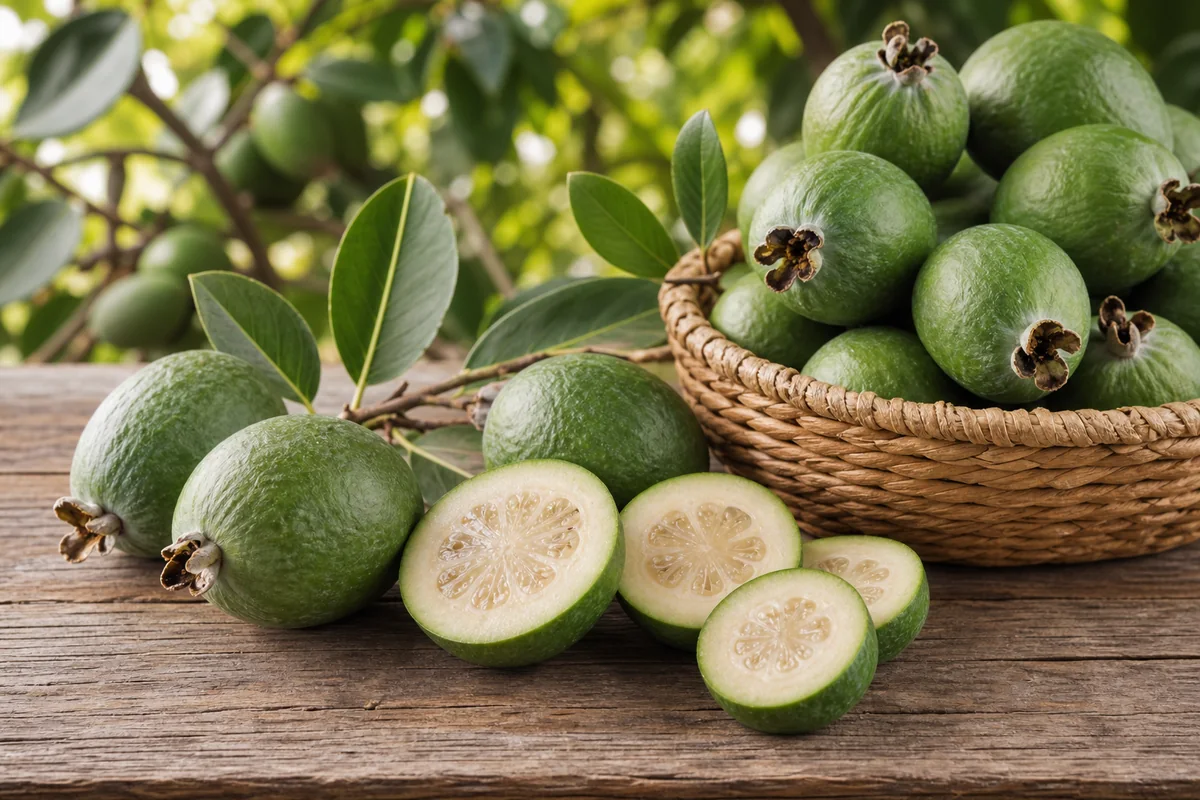
Few things unite New Zealanders like a glut of feijoas. Every autumn, ice-cream containers of them appear on office desks and at front gates with “FREE — PLEASE TAKE” signs, and the national mood lifts. It’s one of our most beloved fruits — so it deserves an honest look rather than the usual “miracle superfruit” treatment.
First, a myth to clear up
Feijoas feel so quintessentially Kiwi that many people assume they’re a New Zealand native. They’re not. The feijoa (Acca sellowiana, also called pineapple guava) is native to the highlands of southern Brazil, Uruguay and northern Argentina. It arrived in New Zealand early last century and thrived so completely in our climate that we adopted it as our own — NZ is now one of the few places where feijoa is a mainstream, beloved fruit rather than an obscurity. So: not native, but gloriously naturalised.
What’s actually in a feijoa
For a fruit that tastes like a tropical dessert, feijoas earn their keep nutritionally:
- Vitamin C — a decent source at around 30mg per 100g, which comes out at roughly 13mg in a single fruit. A worthwhile contribution to the day rather than a megadose, supporting immune function and skin, and handy given they peak in autumn as cold season arrives.
- Fibre — a moderate amount rather than a standout. The New Zealand Food Composition Database puts feijoa flesh at 3g per 100g, so one feijoa gives you a little over a gram — useful as part of the day’s total, but eating feijoas is not a fibre strategy on its own. Worth noting that international databases report roughly double that figure; for fruit grown here, the NZ data is the one to go by. Either way it ties into the wider fibre story we’ve covered.
- Not a folate source — feijoa often turns up on lists of folate foods, and it shouldn’t. The New Zealand Food Composition Database records feijoa flesh at 0µg of dietary folate per 100g; the international databases that do record some put it low enough to be beside the point. If you’re pregnant or planning to be, folate advice in New Zealand is about folic acid tablets, not fruit — no quantity of feijoa covers what’s recommended before conception and in early pregnancy. Talk to your midwife or GP.
- Antioxidants — feijoas contain a range of polyphenols and flavonoids, concentrated particularly in the skin and the flesh just beneath it.
- Low energy, naturally sweet — relatively low in calories for the sweetness, though still a source of natural sugars.
The honest health picture
Feijoas are a nutritious fruit — vitamin C, fibre, folate and antioxidants in a package that grows abundantly and freely across the country. That’s a good deal. What they’re not is a cure for anything. You’ll see claims online about feijoas “detoxing” the body, “fighting cancer,” or “curing” various conditions — that’s the standard superfruit inflation, and none of it is established. The accurate version is simpler and still worth celebrating: feijoas are a delicious, vitamin-C-rich seasonal fruit carrying a decent amount of fibre, and eating a lot of them in autumn is a straightforwardly good thing.
One practical honesty note: because they’re so easy to eat by the bucketload, the natural sugars do add up. If you’re managing blood sugar, enjoy them — but treat a dozen feijoas as what it is (a meaningful amount of fruit sugar), not a free food.
How to eat them well
- Scoop and eat — halve and spoon out the flesh; the classic. Eating closer to the skin captures more fibre and antioxidants, though the skin itself is tart.
- Don’t waste the glut — feijoas freeze well (scoop flesh into bags), and make excellent chutney, crumble, loaf and smoothies. A feijoa and yoghurt smoothie is a good gut-friendly breakfast.
- Catch them ripe — a ripe feijoa yields slightly to a squeeze and the flesh is jelly-like and fragrant; underripe ones are gritty and sharp.
- Pick up windfalls fast — feijoas are best gathered off the ground daily in season; they don’t ripen well picked hard from the tree.
Growing your own
Feijoas are one of the easiest fruit trees to grow in most of New Zealand — hardy, low-maintenance, and productive once established. Plant two different varieties for better cross-pollination and you’ll have your own autumn glut within a few years. It’s a natural fit for anyone already building a productive garden — see our guide to what to grow in a NZ winter for the cooler-season companions.
The bottom line
The feijoa frenzy is one of the more justified national obsessions. It’s a vitamin-C-rich, fibre-carrying, antioxidant-bearing fruit that grows freely across the motu. Not a native, not a miracle cure — just an excellent fruit that New Zealand happens to grow better than almost anyone. Enjoy them in sensible portions while they last, freeze the rest, and enjoy one of the real perks of a Kiwi autumn. Blackcurrants are the other locally grown fruit worth the same honest look — our guide to NZ blackcurrants covers what the evidence supports.
Sources and further reading
Health information is general and does not replace advice from a qualified clinician or pharmacist. If you are pregnant, breastfeeding, or managing a health condition such as diabetes, check with them about your diet rather than relying on a general guide.