Red light therapy has moved from fringe biohacking into mainstream wellness. The research base is growing, some of the claims are legitimate, and the devices have become genuinely accessible. Here’s what you need to know in 2026.
What Is Red Light Therapy?
Red light therapy (also called photobiomodulation or low-level laser therapy / LLLT) uses specific wavelengths of red (630–700nm) and near-infrared (800–1100nm) light to penetrate tissue and stimulate cellular processes. Unlike UV light, red and near-infrared wavelengths are non-damaging to skin.
The primary mechanism is stimulation of cytochrome c oxidase — a key enzyme in the mitochondrial electron transport chain. By absorbing this light, mitochondria produce more ATP (cellular energy). This has downstream effects on cellular repair, inflammation, and function.
What the Evidence Supports
Skin Health
This is the most robustly studied application of red light therapy. Multiple controlled trials show benefits for: collagen synthesis and skin elasticity, reduction in fine lines and wrinkles, wound healing acceleration, reduced acne inflammation (particularly with blue light combined), and improved skin tone and texture. Dermatologists increasingly use clinical-grade devices for photorejuvenation treatments.
Muscle Recovery and Performance
A significant body of research — including multiple meta-analyses — supports the use of red and near-infrared light for reducing exercise-induced muscle damage, decreasing soreness, and improving recovery time. Pre-exercise application shows promise for enhancing performance and delaying fatigue. Near-infrared wavelengths penetrate deeper into muscle tissue, making NIR particularly relevant for this application.
Joint Pain and Inflammation
Several systematic reviews support red light therapy for reducing pain and inflammation in conditions like osteoarthritis, tendinopathy, and general joint inflammation. The World Association for Laser Therapy (WALT) has published dosing guidelines for clinical use. This is an area where the evidence is sufficiently strong that physiotherapists and sports medicine practitioners now incorporate it into treatment protocols.
Sleep and Circadian Health
Emerging research suggests red light exposure in the evening may support melatonin production and improve sleep quality — in contrast to blue light, which suppresses melatonin. Early studies show red light therapy before bed can improve sleep onset and depth. This is a newer area of investigation but the mechanistic rationale is sound.
Hair Growth
Red light therapy devices specifically for hair loss (laser combs, LED helmets) have FDA clearance in the US for androgenetic alopecia. Multiple studies show improved hair density and thickness with consistent use. Results require 4–6 months of regular application and are not permanent if treatment stops.
What Red Light Therapy Probably Can’t Do
Some devices and brands make extravagant claims. Be sceptical of promises around cancer treatment, dramatic fat loss, or systemic disease resolution. The evidence for these applications is either very preliminary, non-existent, or doesn’t translate from clinical to consumer device doses.
Best Red Light Therapy Devices Available in NZ 2026
Prices checked September 2026. The panels below are sold in US dollars by overseas brands, and exchange rates, freight and duty all move — treat these figures as a starting point and confirm the landed cost at checkout before you commit.
Joovv Solo 3.0 (Full-Body Panel — US$1,699 plus freight and duty)
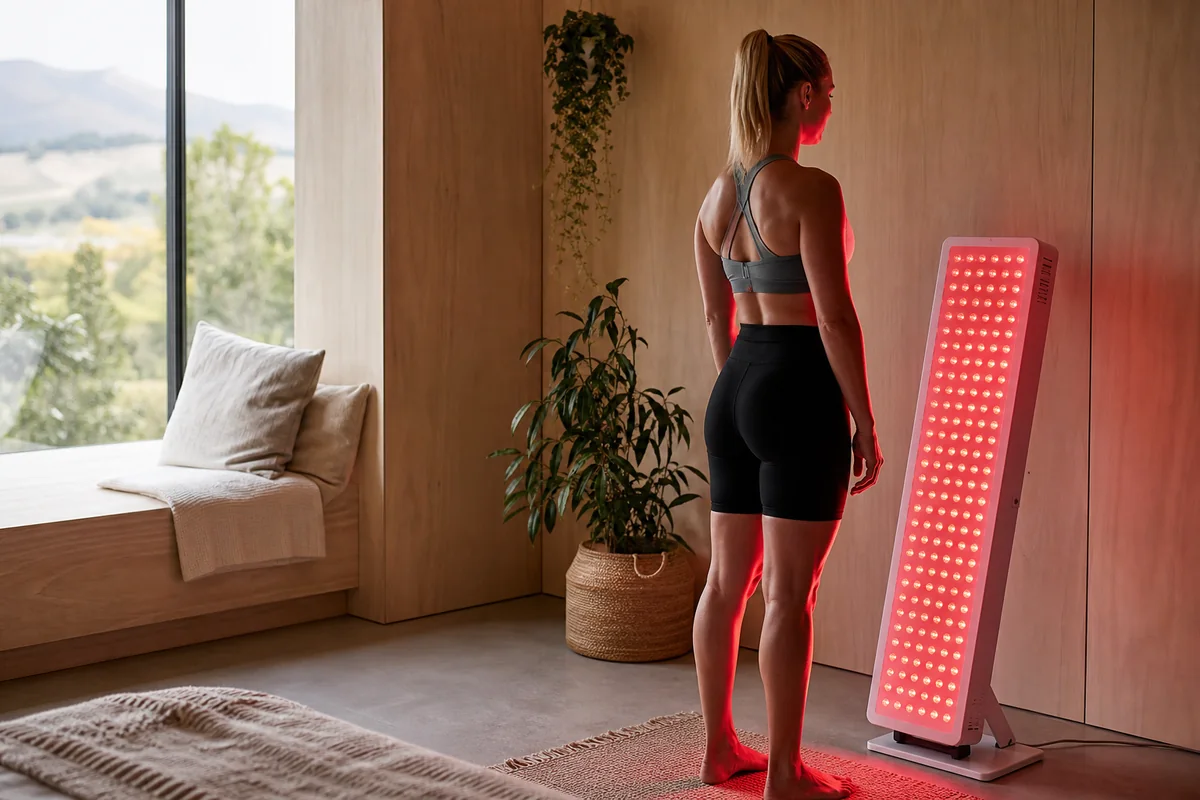
Joovv is one of the most recognised red light therapy brands globally. The Solo 3.0 delivers both 660nm red and 850nm near-infrared wavelengths from a large panel designed for full-body treatments. Well-built, low-EMF, modular (can be connected to additional panels). Joovv sells direct from the US and lists the Solo 3.0 at US$1,699. We have deliberately not printed a converted New Zealand figure here: the landed cost depends on the exchange rate on the day plus international freight, GST and any duty, and a converted number goes out of date almost immediately. Budget for meaningfully more than the sticker price. A premium option for those serious about daily full-body protocols.
Mito Red Light MitoPRO+ and MitoPRO X (Mid-Range — from US$369)
Mito Red Light offers excellent irradiance (light output per area) for the price point. The current line-up is the MitoPRO+ (from US$369, rising to US$1,049 for the largest panel in the series) and the MitoPRO X (from US$449), both well-regarded among red light therapy enthusiasts as high-value alternatives to Joovv. Multiple panel sizes available. One thing to be clear about: Mito ships from the USA or Canada, and we could not find a New Zealand stockist, so this is an import with freight, GST and duty on top rather than a local purchase.
Smaller Targeted Panels
For targeted applications — a smaller panel for a face or a knee — entry-level devices are a reasonable way to trial red light therapy without a major investment. Lower irradiance than a full panel, but adequate for localised use. We are deliberately not naming a budget brand here. Much of this end of the market is white-labelled: contract manufacturers such as Kaiyan Medical openly describe themselves as OEM and ODM suppliers “behind global brands”, so the same hardware appears under many different names, specifications are often unpublished, and which labels are actually available in New Zealand changes constantly. Judge these on the checklist below rather than on the brand on the box.
Commercial Red Light Therapy (Wellness Studios)
Several wellness studios and float centres across Auckland, Wellington, and Christchurch now offer red light therapy sessions. NZ$30–60 per session is typical. A good way to experience the therapy before committing to a home device purchase.
How to Use Red Light Therapy Effectively
- Distance — position yourself 15–30cm from the panel for optimal irradiance.
- Duration — 10–20 minutes per area is typical. More is not always better; there’s a dose-response curve and excessive exposure can have diminishing returns.
- Frequency — daily use is ideal for most applications. Consistency over weeks and months is where results accumulate.
- Eye protection — near-infrared is invisible and can cause eye damage. Always use the protective goggles that come with devices.
- Skin exposure — treat bare skin; clothing blocks the wavelengths.
The Bottom Line
Red light therapy has legitimate evidence behind several applications — particularly skin health, muscle recovery, joint pain, and hair growth. Consumer devices have become good enough to replicate meaningful dose levels at home. For those interested in evidence-informed biohacking or recovery optimisation, a quality red light panel is one of the more defensible wellness investments in 2026.
This article is for informational purposes only and does not constitute medical advice. Consult a healthcare professional for treatment of specific conditions.
How to Choose a Red Light Therapy Device in NZ
Start with the treatment area and the manufacturer’s published specifications, not the number of LEDs. A face mask or small panel is convenient for a local area; a larger panel gives more even coverage for legs, back or whole-body sessions. Look for clearly stated wavelengths, measured irradiance at a stated distance, session guidance, an electrical compliance statement for New Zealand, and a meaningful local warranty.
- Wavelengths: red light is commonly around 630–660 nm and near-infrared around 810–850 nm. A combination is useful when you want surface and deeper-tissue exposure.
- Dose information: reputable sellers explain distance and time instead of promising that maximum intensity is always better.
- Returns and support: check who handles faults in New Zealand and whether return freight is covered.
- Eye guidance: follow the device instructions, and do not stare into high-output LEDs. Near-infrared is invisible, so the absence of visible brightness is not a sign that it is safe — use the supplied eye protection.
A Sensible Starting Routine
Use clean, uncovered skin at the distance recommended by the manufacturer. Begin with short sessions two or three times per week and assess skin comfort before increasing exposure. More is not automatically better: photobiomodulation has a dose-response curve, so very long or very intense sessions may add no benefit.
Red light therapy should complement sleep, nutrition, rehabilitation and medical care rather than replace them. Talk with a clinician before use if you take photosensitising medicine, have a light-sensitive condition, are treating an unexplained lesion, or want to use a device near the eyes. If heat-based recovery is your main interest, compare this approach with our home infrared sauna guide and contrast therapy guide.
What the Research Can and Cannot Tell Us
Research on photobiomodulation is promising for selected uses, including some pain and recovery outcomes, but protocols vary widely by wavelength, dose and condition. That makes broad claims such as “detox”, effortless fat loss or curing chronic disease unreliable. A useful device is one that discloses its specifications and supports a realistic, repeatable routine—not one sold with the biggest list of medical promises.
Sources and further reading
- Hamblin MR, Mechanisms and applications of the anti-inflammatory effects of photobiomodulation, AIMS Biophysics, 2017
- US FDA guidance on home-use medical devices