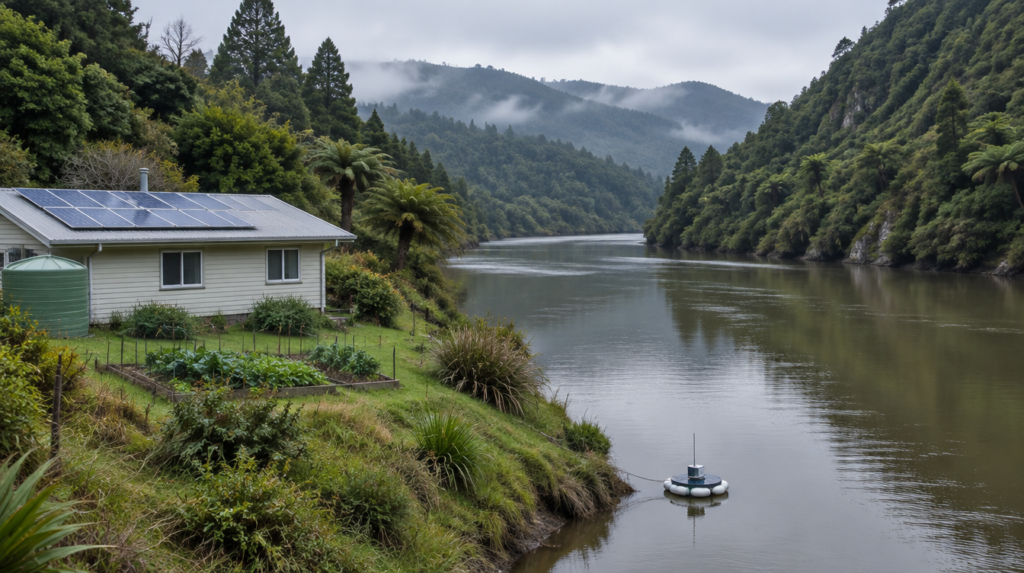
Quick answer: A sponge city gives rain somewhere to go before it reaches a pipe: parks that flood on purpose, streams brought back out of culverts, wetlands, trees and raingardens. Auckland’s Greenslade Reserve can hold 12 million litres, and Napier is planning an 85-hectare wetland at Ahuriri. At home it’s a raingarden, a tree or two and permeable paving, from about NZ$43 per square metre for Strol SurePave at Bunnings (checked October 2026).
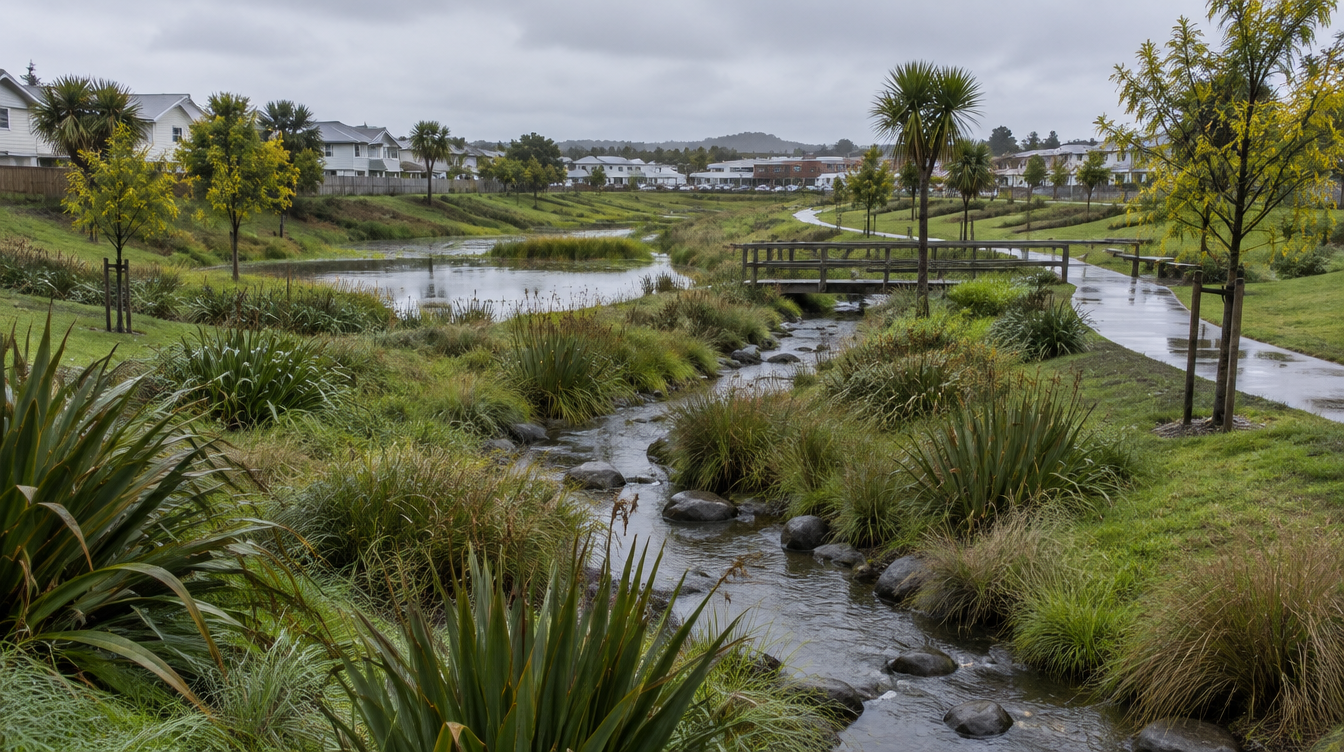
For a century, New Zealand towns have treated rain as something to get rid of. Roofs, roads and car parks shed it into pipes, the pipes empty into streams, and the streams were often piped too. It works until the rain comes faster than the pipes can carry it, as Auckland found in January 2023. The newer approach turns that around: slow the water down, let the land soak up and clean as much as it can, and leave room for the rest.
Why it matters for the planet
Hard surfaces do two kinds of damage. They send water off in a rush, which scours streams and floods low ground. And they send it dirty, carrying the copper, zinc, sediment and rubbish that build up between showers. Soil, plants and wetlands deal with both: they hold water back and they filter it.
The Helen Clark Foundation and WSP made the case in a 2023 report, Sponge Cities: Can they help us survive more intense rainfall? It argues that flood management built on ageing grey infrastructure is proving inadequate, and that our towns should be retrofitted as sponge cities: daylighting streams, reducing hard surfaces, adding green space and green infrastructure, on public and private land alike. It also calls for Māori knowledge to be part of the solution.
The planet wins go beyond flood control. A daylighted stream is habitat again. A stormwater wetland is a home for birds and insects as well as a filter. Trees shade and cool streets and soak up rain. Every one of these also makes a place people want to walk through, which is why the best projects double as parks.
Water to land first
The idea that water should touch the land before it reaches a river has deep roots here. Ngāi Tahu’s Mahaanui Iwi Management Plan (2013) says discharge to land can use the natural abilities of Papatūānuku (the earth, Mother Earth) to cleanse and filter contaminants, as long as it’s managed so it doesn’t harm soil and groundwater. Its stormwater policy asks for on-site stormwater solutions in new developments, swales and wetlands planted in native species rather than left as grass, and stormwater systems that also serve as open space for recreation, habitat and customary use.
Behind this sits the principle of ki uta ki tai, which the plan describes as recognising the connections between land, water, biodiversity and the sea: a catchment managed as one system, source to sea. What leaves your downpipe is part of that system.
What making space for water looks like in New Zealand
Auckland: Making Space for Water
After the 2023 storms, Auckland Council set up Making Space for Water, backed by NZ$1.984 billion of co-funding from central government. One of its main tools is the blue-green network: streams (blue) and parks (green) that give stormwater room to flow. In dry weather they’re parks. In a storm, they’re allowed to flood, so the water goes there instead of into houses. The council’s 2024/25 year in review lists more than 12 existing blue-green networks, and 4,717 raingardens and other public water-sensitive devices across the region.
Greenslade Reserve in Northcote shows how it works. Landscape architects Isthmus, engineers WSP, the council’s Healthy Waters team, mana whenua and the local board reshaped an ordinary reserve: planted wetland terraces treat the first flush of runoff, and the rugby league field was lowered by a metre so it can act as a detention basin. The system can hold 12 million litres and release it slowly downstream. It had been finished for only a few weeks when Auckland’s January 2023 storm arrived, and its designers say it immediately proved its worth, even though no reserve could fully absorb a storm that size. Downstream, the Awataha Stream runs in daylight for the first time in more than 70 years.
Te Auaunga / Oakley Creek, Auckland
This project began as flood protection and became a stream restoration. In the 1930s the creek was forced into a 1.3 km culvert, which made flooding worse. Auckland Council’s Healthy Waters team restored 2 km of the stream, brought seven piped tributaries back to the surface and restored eight hectares of open space. It now protects nearly 200 homes from flooding.
Seven iwi took part: Ngāi Tai ki Tāmaki, Ngāti Te Ata Waiohua, Ngāti Tamaoho, Ngaati Whanaunga, Ngāti Whātua Ōrākei, Te Ākitai Waiohua and Te Kawerau ā Maki. According to Auckland Council, they gifted the project’s name and shifted it from an engineered response to a softer design that let the stream return to a natural state, and they pushed for swales, riparian planting, better fish passage and rubbish traps.
The Ōtākaro Avon River Corridor, Christchurch
Before the 2011 earthquake, more than 5,000 households lived in what became Christchurch’s red zone. The 602-hectare corridor along the Ōtākaro Avon River is now being turned back towards nature under a 30-year regeneration plan approved in 2019. It includes 80 hectares of wetlands to treat stormwater from a 2,600-hectare catchment, 200,000 trees, stopbanks to cut flood risk for up to 4,000 homes with room to adjust for sea-level rise, and an 11 km City to Sea path. It’s one of the clearest examples in the country of land handed back to a river.
Ahuriri Regional Park, Napier
The 1931 earthquake lifted the bed of Te Whanganui-a-Orotū, a 4,000-hectare lagoon beside Napier, and much of the new land became farmland. Napier City Council, Hawke’s Bay Regional Council and Mana Ahuriri Trust are now planning a regional park on the 285-hectare Lagoon Farm site. Its heart is an 85-hectare constructed wetland designed to filter urban stormwater from the Purimu Drain before it reaches the Ahuriri Estuary, surrounded by restored coastal forest, shrubland and wetland. It’s in the masterplan stage, so it’s a direction rather than a finished place.
Te Ara Tupua, Wellington
Te Ara Tupua is the coastal version of the same question. The walking and cycling path between Ngauranga and Petone opened on 16 May 2026, completing a 12 km link between Wellington and Lower Hutt. The NZ Transport Agency built it in partnership with Taranaki Whānui ki te Upoko o te Ika and Ngāti Toa Rangatira, who made key decisions alongside the agency and co-designed its cultural features. Its new harbour edge protects State Highway 2 and the Hutt Valley rail line from severe weather.
It’s a different answer from a sponge park. Where land meets a rising sea, there’s often no room to retreat, so the edge is built up instead. That trade-off is worth knowing about, because more of our coast will face it.
What you can do at home
Every one of those projects is a big version of something a household can do on a section.
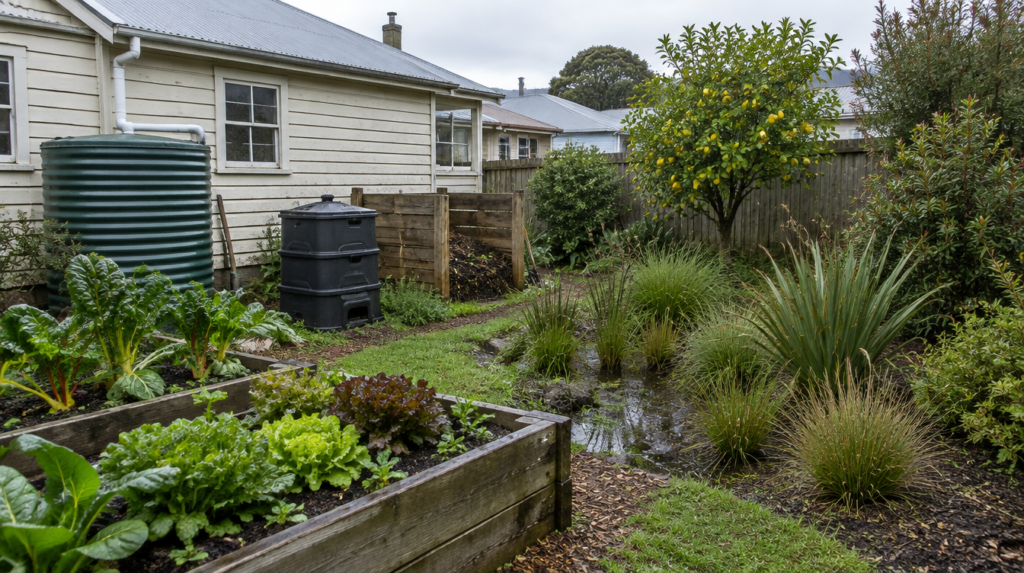
- Build a raingarden. A planted dip of sandy soil that takes the water from a downpipe and lets it soak through. Christchurch City Council’s guidance is that catching the first 20 mm of a storm catches around 80% of a year’s runoff. Our guide to building a raingarden in NZ covers sizing, clay soils and costs, and our list of native raingarden plants covers what to put in it.
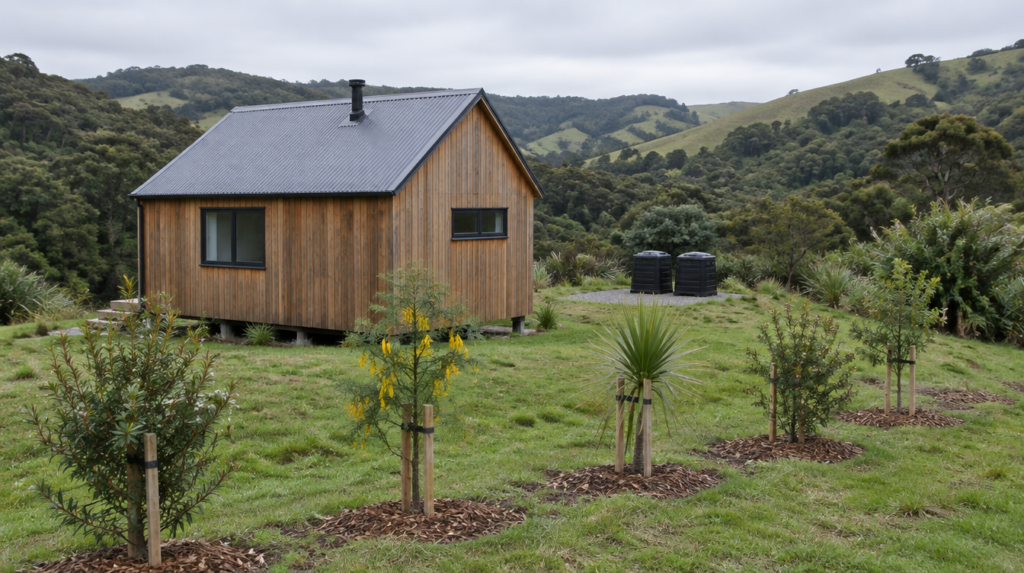
- Plant trees. Trees catch rain on their leaves, open up the soil with their roots, and shade the ground. Auckland’s Urban Ngahere (urban forest) Strategy aims to lift the city’s tree canopy to 30%, partly because trees help manage stormwater. Native nurseries such as Southern Woods and Gough’s Nurseries sell online.
- Swap hard paving for permeable. A path, parking pad or patio that lets water through does a small version of what Greenslade does. Strol SurePave grids are made from 100% recycled plastic, and you fill them with gravel or grass: NZ$21.50 per half square metre (NZ$43/m²) at Bunnings. Firth’s NZ-made EcoPave Grass Paver is a concrete option at NZ$12.75 each, about NZ$79.69/m² (both checked October 2026). The product listing notes that permeable systems need a qualified installer and an engineer-designed base to reach their rated drainage.
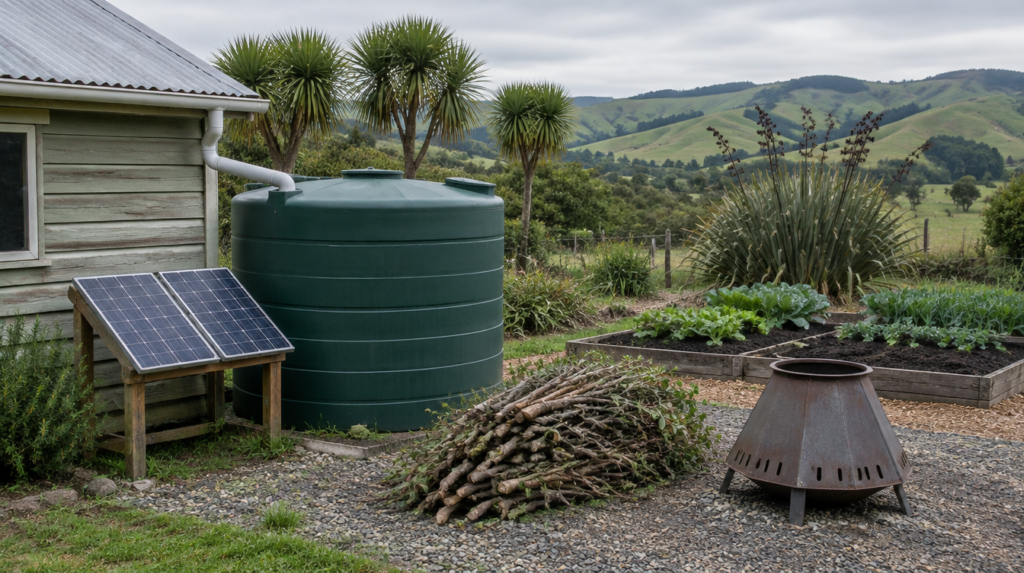
- Keep a tank. A rain tank holds some water back in a storm and gives you water in a dry spell. Our honest look at which closed-loop systems pay back covers what a tank is worth in town and in the country.
A note on rules: planting needs no permission, but changing how your downpipes connect to the stormwater network generally needs building consent and a licensed drainlayer, so talk to your council first. Never send stormwater onto a neighbour’s land or into the sewer.
Why one section matters at scale
A millimetre of rain on a square metre of roof is a litre of water. So a house with 150 m² of roof and driveway sheds 3,000 litres in a 20 mm downpour. Across 1,000 houses, that’s 3 million litres reaching the pipes at once, a quarter of what Greenslade Reserve can hold. Councils can’t build a Greenslade in every suburb. Raingardens, trees and permeable paving spread through a neighbourhood do part of the same job, and they clean everyday rain close to where it falls.
What it won’t do
- It won’t stop every flood. Greenslade Reserve couldn’t fully absorb Auckland’s record January 2023 storm. Sponges help most with frequent, ordinary storms, which make up most of the year’s runoff.
- It needs space. Blue-green parks flood on purpose, and some projects, such as the Christchurch red zone, only exist because houses were lost. Making space for water sometimes means people moving away from it, which is hard and slow.
- It doesn’t suit every site. On clay or where groundwater sits high, a raingarden needs a pipe underneath, and some sites aren’t suitable at all.
- There’s no money for it at home. We couldn’t find council grants for home raingardens in any of the main New Zealand cities we checked.
The Bottom Line
Sponge cities are already being built in New Zealand, and the best of them, such as Greenslade Reserve and Te Auaunga, are also some of the nicest places in their suburbs. The household version is cheap and works on the same principle: slow the water, let the soil clean it, and give it somewhere to go. The same idea works for the water that leaves your house: see our guide to putting shower water to work in the garden.
- If you have a downpipe running to the street: start with a raingarden on that one pipe.
- If you’re replacing a path or parking pad: choose permeable paving such as Strol SurePave or Firth EcoPave instead of solid concrete.
- If you have room for a tree: plant a native one, away from pipes and foundations.
- If you want a bigger say: every council is redoing its plans under the new planning laws, and submissions on stormwater and green space count.
For the bigger picture of technology that cares for the land, read our Solarpunk Aotearoa guide.
Words we use
- Ki uta ki tai: “source to sea”. The principle that land, water, biodiversity and the sea are connected and should be managed as one catchment (Mahaanui Iwi Management Plan 2013).
- Papatūānuku: the earth, Mother Earth, from whom all life comes (Mahaanui Iwi Management Plan glossary; Te Ara: The Encyclopedia of New Zealand).
- Iwi and hapū: iwi means tribe, and hapū a sub-tribe (Te Ara).
- Mana whenua: tribal authority over, and control of, land; also used for the iwi or hapū who hold that authority in a place (Te Ara: Take whenua, Māori land tenure).
Sources and further reading
- Helen Clark Foundation and WSP: Sponge Cities, can they help us survive more intense rainfall? (2023)
- Mahaanui Iwi Management Plan 2013 (Issue P8, Policy P6 and glossary)
- Auckland Council: Making Space for Water year in review 2024/2025
- Auckland Council: blue-green networks
- Landscape Architecture Aotearoa: Northcote’s landscape infrastructure in action (2023)
- Tiaki Tāmaki Makaurau: Te Auaunga (Oakley Creek) and Boffa Miskell: Te Auaunga, Walmsley and Underwood Reserves
- 1News: Government approves the Ōtākaro Avon River Corridor Regeneration Plan (2019)
- Boffa Miskell: Ahuriri Regional Park masterplan
- NZ Transport Agency: Te Ara Tupua and Minister of Transport: Ngauranga to Petone path opening (2026)
- Christchurch City Council: rain garden design, construction and maintenance manual
- OurAuckland: Auckland’s Urban Ngahere Strategy
- Te Ara: Take whenua, Māori land tenure and Te Ara: Papatūānuku, the land
Affiliate disclosure: Some links on ThrivingKiwi may earn us a small commission if you buy through them, at no extra cost to you. Paid links are marked as sponsored. We only recommend products we genuinely believe are worthwhile.