Quick answer: Solarpunk is an optimistic picture of a future where solar power, clean water and food growing work with living systems instead of against them. In Aotearoa, Māori ideas about land such as kaitiakitanga (guardianship) add relationship and obligation to plain efficiency. You can already see it on Whanganui River marae going solar and in NZ-made floating river sensors. At home, start with one loop and grow from there.
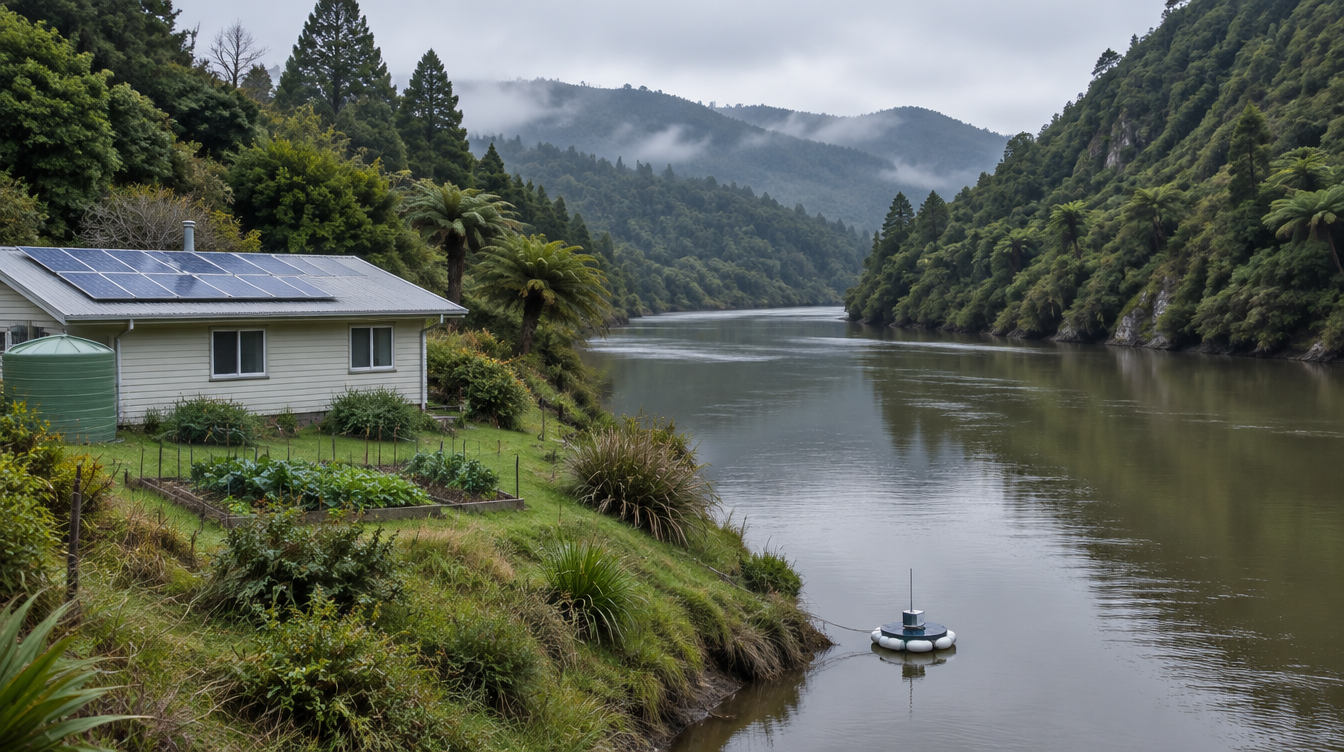
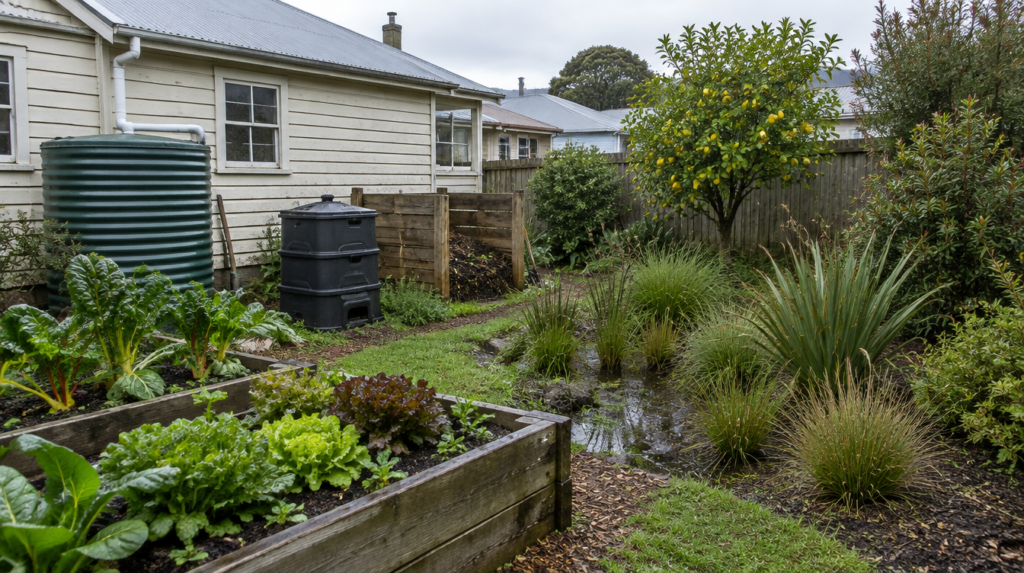
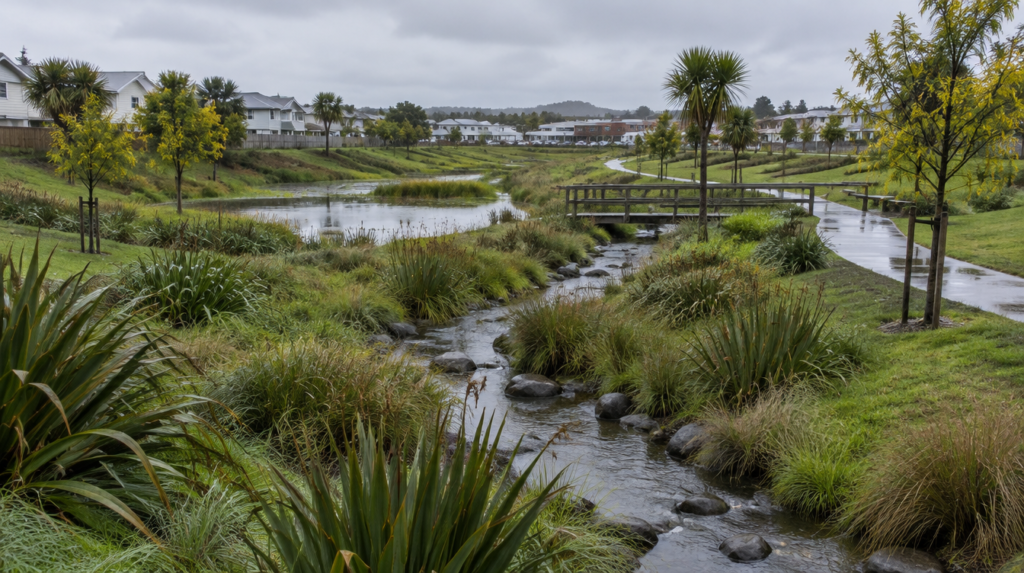
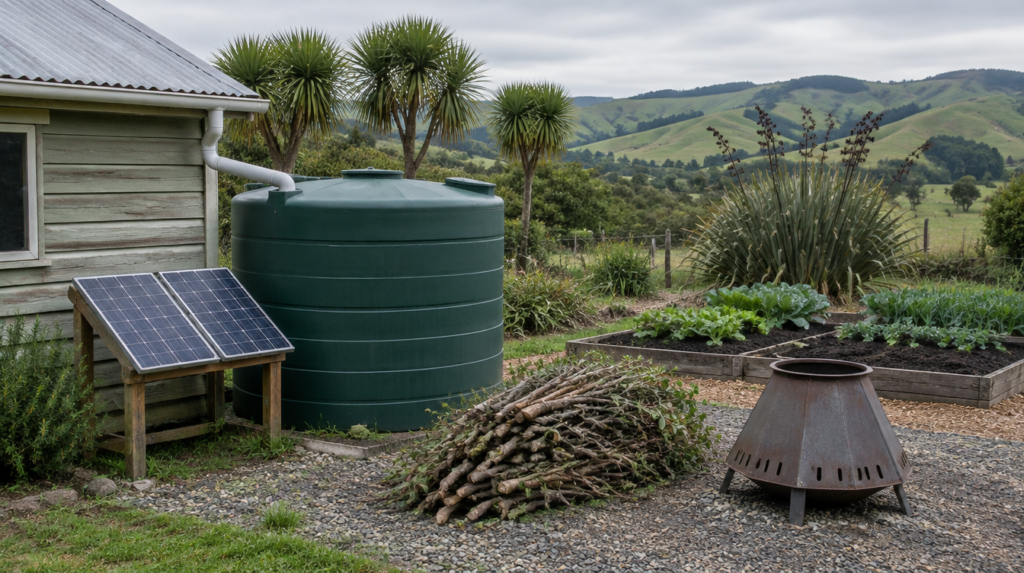
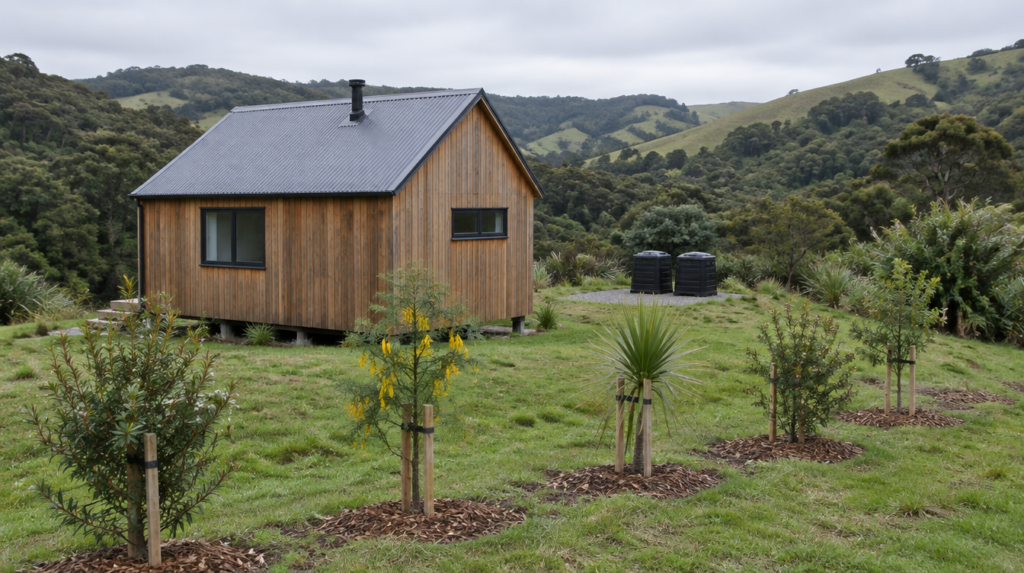
Most pictures of a green future fall into one of two camps. One is all gleaming towers and gadgets. The other is a retreat to the land with no technology at all. Solarpunk sits in between: solar panels on the community hall, a raingarden by the footpath, food growing where lawns used to be, and the tools chosen because they help the place they’re used in. This page is the ideas hub for our Living Systems series. It covers where the idea came from, what a New Zealand view adds, and where you can see it already, with links to the practical guides.
Why it matters for the planet
A lot of environmental damage comes from systems that run in a straight line. Energy is burned once. Water is used once and piped away. Nutrients are mined, spread, eaten and flushed. Every straight line has a pile of waste at the end, whether that’s carbon in the air, methane from landfill or sediment and metals in a harbour.
Solarpunk’s core idea is to bend those lines into loops, using renewable energy to run them. That idea isn’t new. What’s useful about it now is that the tools have become cheap enough for households, marae, schools and small towns to use: solar panels, batteries, low-cost sensors and simple living systems like raingardens and compost. Our practical hub, Closing the Loop on a Kiwi Section, goes through those loops one by one.
What solarpunk is, in plain terms
The word started as a genre of hopeful science fiction and art, a counterpoint to the bleak futures in most films and novels. It has since grown into a loose design movement. There’s no rulebook, but most solarpunk projects share a few habits:
- Renewable energy first. Sun, wind and water power the system.
- Living systems do the work. Plants, soil and microbes clean water and turn waste into food.
- Appropriate technology. Tools are chosen to suit the place and can be repaired locally.
- Community scale. Things are often shared between neighbours rather than owned by each house.
It’s an aesthetic as well, with plenty of green rooftops and stained glass in the artwork. The aesthetic is the least important part.
Where the idea came from
The ideas behind solarpunk were being tested decades before the word existed. Four experiments are worth knowing, because each one teaches something about what works.
The New Alchemy Institute and the PEI Ark
John and Nancy Jack Todd co-founded the New Alchemy Institute in 1969 to work on organic food growing, renewable energy and ecological design. In 1976 they built the Prince Edward Island Ark in Canada, a bioshelter that combined a home, a greenhouse, fish tanks and renewable energy under one roof, so the waste from one part fed another. It was an early test of whether the parts of a household could feed each other.
John Todd’s Living Machines
John Todd went on to found Ocean Arks International in 1981 and to develop what he called “living machines”: a series of tanks of plants and other living things that clean wastewater as it flows through. It’s the same idea as a raingarden or a constructed wetland, packed into a building. The lesson is that, given the right conditions, living things can do work we usually hand to pipes and chemicals.
ESA’s MELiSSA
The European Space Agency has been developing MELiSSA (the Micro-Ecological Life Support System Alternative) since the late 1980s. It’s a loop of five compartments, from bacteria that break down waste through to algae and plants that make oxygen and food, with the crew as the last compartment. Space is the hardest test of a closed loop, because nothing can be thrown away. Decades of work later, it’s still a research project, which tells you how hard a fully closed loop is.
Biosphere 2: closed loops surprise you
In September 1991, eight people sealed themselves inside Biosphere 2 in the Arizona desert, a glass enclosure holding its own rainforest, ocean, marsh, savanna, desert and farm. Over the following months the oxygen fell from about 21% to about 14%, until the crew felt as if they were living on a high mountain and managers pumped oxygen in. Two Columbia University geochemists later found where it had gone. Rich soils full of microbes had used up oxygen and made carbon dioxide, and much of that carbon dioxide had reacted with the building’s exposed concrete and been locked away.
That’s the single most useful lesson from all four experiments. Closed loops behave in ways you don’t predict, so build small, watch closely and leave room for mistakes. A home compost heap or raingarden is forgiving in a way a sealed dome isn’t.
What an Aotearoa view adds
Most solarpunk thinking from overseas is about efficiency: closing loops, cutting waste, running on sunshine. Māori thinking about land adds something different, which is relationship and obligation. The land isn’t just a resource to be managed well. People belong to it and owe it care. We’re not the right people to explain these ideas in depth, so here are a few concepts, each with its source, that help explain the difference.
- Whenua. The Māori word for land also means placenta. Te Ara explains that all life is seen as born from Papatūānuku, the earth mother, and that a newborn’s whenua (placenta) and umbilical cord are traditionally buried in a significant place, tying the child to the land of their birth. Land, in that view, is family.
- Manaaki whenua. Care for the land. This explanation is the one given by Landcare Research, whose Māori name is Manaaki Whenua (it’s now part of the Bioeconomy Science Institute). Its page explains manaaki as “to cherish, conserve, and sustain” and whenua as the soil, rocks, plants, animals and the people of the land. It adds that we need to use land to meet our needs, but must dispose of our waste carefully and think about the consequences.
- Kaitiakitanga. Guardianship and protection of the natural world. Te Ara describes it as based on the idea of humans as part of the natural world, not above it. A kaitiaki (guardian) is given that role by the local iwi, so it’s not a title anyone can claim. The rest of us can still act in the spirit of it.
- Rāhui. A temporary restriction placed by mana whenua (the people who hold authority over an area) so a place or resource can recover. Te Ara gives the example of a lake or forest being closed for a time so the fish, birds or plants can be restored. It belongs to mana whenua; it isn’t a lifestyle idea for the rest of us to borrow.
Put next to solarpunk, these ideas change the question. Instead of asking “how efficient is this system?”, you also ask “what does this place need from me, and who has a say over it?”. That second question is where New Zealand projects tend to differ from overseas ones.
Doing it in NZ: projects you can see now
Solar on Whanganui River marae
Ngā Tāngata Tiaki o Whanganui, the iwi entity set up after the 2014 Whanganui River settlement, is leading and funding a project through Te Whāwhaki Trust to put solar panels and batteries on marae along the river. In May 2026, 1News reported a pilot of eight marae due by the end of June, nine more planned before the end of the year, and 32 marae registering interest. The installer, Tū Mai Rā Energy, is owned and run by Rangitāne. The aims are lower power bills and marae that keep running through outages and emergencies, so they can keep serving as community hubs. One elder told reporters that solar meant not having to worry about power bills for years to come.
Riverwatch “waka”: NZ-made sensors on the river
Riverwatch, founded in the Wairarapa in 2018 and since renamed AquaWatch, makes floating water-quality sensors about the size of a rugby ball from recycled milk bottles. Each one measures temperature, conductivity, turbidity, dissolved oxygen and pH, and sends the data over the internet. In May 2023 the Otago Regional Council trialled them in the three main tributaries of Te Hakapupu / Pleasant River as part of Toitū Te Hakapupu, a catchment restoration project the council runs in partnership with Kāti Huirapa Rūnaka ki Puketeraki. It’s a good example of the solarpunk habit at its best: a cheap, locally made tool that helps the people responsible for a river see what’s happening to it.
Para Kore: zero waste grounded in whakapapa
Para Kore began in 2009 on three Waikato marae. It lost its government funding when the Community Environment Fund was cut in 2024, but still runs programmes through partnerships and paid courses. It has spent years helping marae, schools and community groups cut waste, set up composting and rethink food. It grounds its work in whakapapa (genealogy) to Papatūānuku, and names kaitiakitanga as its first value. We cover it in more depth in Closing the Loop.
Earthsong: a neighbourhood that already works this way
Earthsong Eco-Neighbourhood in Rānui, West Auckland, has 32 homes built around shared gardens, rainwater tanks, semi-permeable paving and planted channels that carry stormwater to a pond. Robin Allison, who started the project, reports that its homes stayed dry in Auckland’s January 2023 storms, and it manages its water at nearly twice the density of the neighbouring streets. It’s the closest thing New Zealand has to a working solarpunk neighbourhood, and it was finished long before the word caught on.
Bringing it home
You don’t need a marae or a cohousing project to start. Our practical guides take the same ideas down to section size:
- Loops on your section: Closing the Loop on a Kiwi Section covers rain, food scraps, greywater, nutrients and toilets.
- What’s worth the money: Which closed-loop systems actually pay back in NZ separates the systems that earn their keep from the satisfying hobbies.
- Water at every scale: Making space for water runs from your downpipe to the sponge-city projects in Auckland, Wellington and Christchurch.
- The buildings themselves: our guides to natural building materials, hempcrete homes and earthships in NZ cover lower-carbon ways to build. If you’re tempted by a rocket mass heater, read our rocket stove guide first, because indoor units run into New Zealand’s wood-burner emissions rules.
- The garden: a food forest is about as solarpunk as a backyard gets.
Honest limits
- Technology has a footprint too. Solar panels, batteries and sensors are mined, made and shipped, and they wear out. They earn their place over years of use, not on day one.
- Full closure is a myth at home. If ESA hasn’t fully closed a loop after decades of work, a backyard won’t. Aim to close the big, easy loops well.
- The aesthetic can get ahead of the substance. Plenty of “solarpunk” images show vertical farms and glass towers that would use more energy than they save. Judge a project by what it does to the water, soil and air around it.
- Māori concepts aren’t a brand. Words like kaitiakitanga and rāhui carry authority that sits with mana whenua. Using them to decorate a product or a lifestyle misses the point, so we’ve kept to a few, defined from their sources.
- Systems need people. The PEI Ark, Earthsong and every marae solar project depend on people who keep them running. A loop with nobody looking after it fails.
The Bottom Line
Solarpunk is a useful way to think about where we’re heading: renewable energy running loops that look after water, soil and food. The New Zealand version adds a question overseas versions often skip, which is what we owe the place we live in and who has a say over it. If you’re a homeowner, start with the loops in our practical hub and check the payback guide before spending big. If you’re part of a marae, school or community group, look at what Para Kore and the Whanganui marae solar project are doing. If you’re building, read up on natural materials before you choose the usual ones. And if you’re mostly here for the ideas, keep the Biosphere 2 lesson in mind: build small, watch closely, and expect surprises.
Words we use
- Whenua: land, and also placenta. All life is seen as born from Papatūānuku, the earth mother (Te Ara).
- Manaaki whenua: care for the land. Manaaki means “to cherish, conserve, and sustain” (Landcare Research’s own explanation of its Māori name).
- Kaitiakitanga: guardianship and protection of the natural world, based on humans being part of nature. A kaitiaki (guardian) is given that role by the local iwi (Te Ara).
- Rāhui: a temporary restriction placed by mana whenua so a place or resource can recover (Te Ara).
- Mana whenua: spiritual authority in a given area, and the people who hold it (Te Ara).
- Whakapapa: genealogy; a framework that links all living and non-living things (Te Ara).
- Tikanga: customary practice; the correct way of doing things (Te Ara). Iwi means tribe, and a marae is a tribal meeting place.
Sources and further reading
- Te Ara: Papatūānuku, the land – whenua, the placenta
- Te Ara: kaitiakitanga, guardianship and conservation and Te Ara: rāhui, prohibitions
- Te Ara: whakapapa, genealogy
- Manaaki Whenua – Landcare Research: the meaning and ethos
- 1News / Local Democracy Reporting: marae along the Whanganui River converting to solar (May 2026)
- NZ Entrepreneur: Riverwatch rebrands to AquaWatch
- Otago Regional Council: Toitū Te Hakapupu science and monitoring
- Para Kore: our kaupapa and annual report 2024–25
- Earthsong Eco-Neighbourhood: stormwater and Robin Allison, “‘Spongy’ Neighbourhoods Can Reduce City Flooding”, Communities magazine, issue 208 (2025)
- New Alchemy Institute and the PEI Ark and Ocean Arks International
- European Space Agency: MELiSSA
- EARTH Magazine: crew sealed inside Biosphere 2
A note on te reo and tikanga: if we’ve got something wrong in how we’ve described these ideas, tell us at hello@thrivingkiwi.co.nz and we’ll fix it.
Affiliate disclosure: Some links on ThrivingKiwi may earn us a small commission if you buy through them, at no extra cost to you. Paid links are marked as sponsored. We only recommend products we genuinely believe are worthwhile.