Every few weeks a version of the same post does the rounds: “Sweet potatoes are one of the ONLY foods that simultaneously fight diabetes, reduce inflammation, improve vision, protect your heart and feed your gut bacteria.” It’s the kind of claim that makes a nutritionist wince — not because it’s entirely wrong, but because it stacks a pile of half-truths into something that sounds like a miracle drug.
Here in Aotearoa we have our own, better version of this vegetable — kūmara — and it deserves an honest write-up rather than hype. So here’s what kūmara genuinely does, what’s oversold, and how to get the most out of it.
First, kūmara vs “sweet potato”
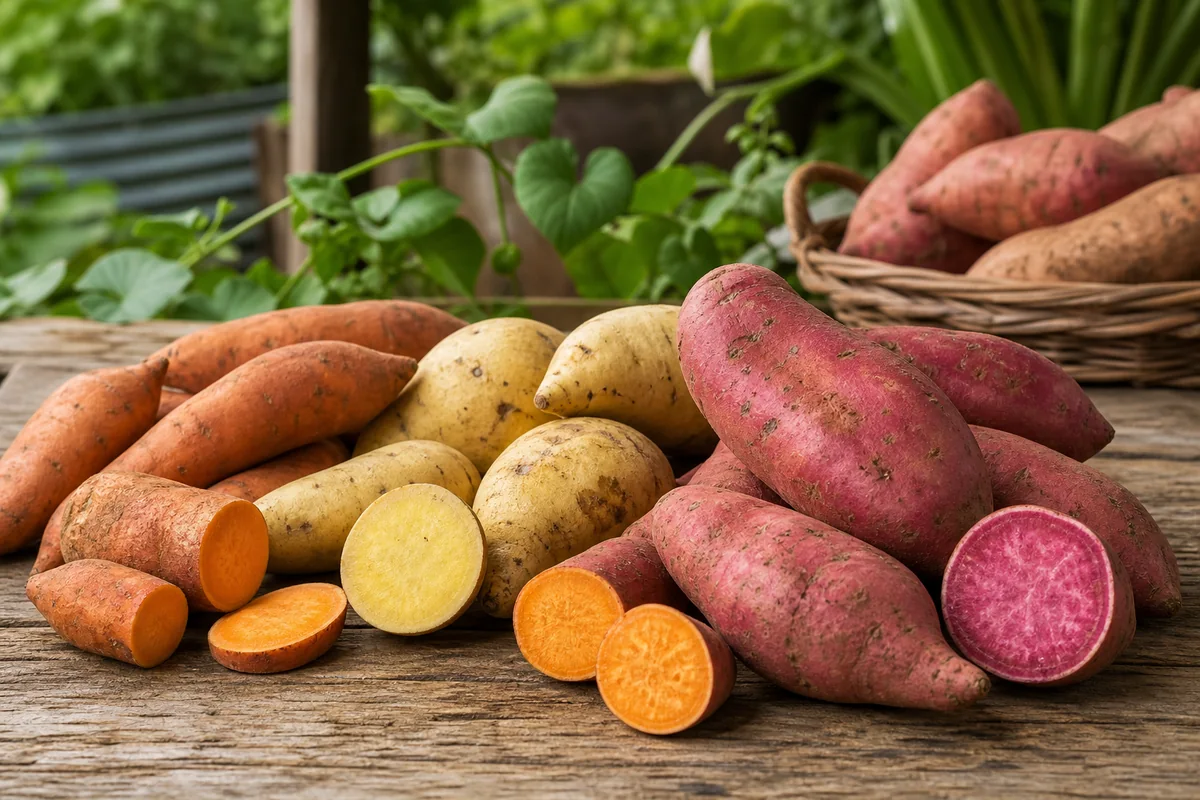
They’re the same species (Ipomoea batatas), but kūmara has real cultural and culinary standing in New Zealand. Brought here by early Māori and cultivated for centuries, it’s now grown commercially mostly around Dargaville in Northland — the self-styled kūmara capital. The main NZ varieties are worth knowing because they’re genuinely different:
- Owairaka Red — the classic red-skinned, creamy-white-fleshed kūmara most Kiwis grew up on. Lower in beta-carotene than orange types.
- Toka Toka Gold — golden skin and flesh, nutty and dense.
- Beauregard (orange) — the orange-fleshed one that’s become common; highest in beta-carotene of the mainstream types.
- Purple kūmara — less common here, rich in anthocyanins (the same antioxidant family as blueberries).
One honest note straight up: the “improve vision” and “beta-carotene” claims apply mainly to the orange varieties. The traditional red kūmara most of us roast on a Sunday is still a great vegetable, but it’s not a beta-carotene powerhouse — so if that’s your goal, choose orange.
What kūmara genuinely does well
Feeds your gut bacteria (the strongest claim)
This one holds up, though not quite for the reason most people assume. Kūmara is not a standout fibre food — the New Zealand Food Composition Database puts it at roughly 1.8 to 2.1g per 100g, much the same as a potato, so a decent-sized one contributes getting on for 4g. The gut benefit comes from somewhere else: when you cook it and then cool it, some of its starch converts to resistant starch — a type of fibre that passes to the large intestine and feeds beneficial gut bacteria, which ferment it into short-chain fatty acids. So a kūmara salad made from yesterday’s roasted kūmara is genuinely better for your gut than hot chips’ worth of the same vegetable. Pair this with the rest of your gut toolkit — our gut health guide and fibre guide cover the wider picture.
Vitamin A / eye health (orange varieties only)
Orange kūmara is one of the richest everyday sources of beta-carotene, which your body converts to vitamin A — genuinely important for vision and immune function. Orange-fleshed kūmara can be a rich source of beta-carotene, but vitamin A activity varies with cultivar, serving size, preparation and individual conversion. Real benefit, correctly stated; it supports normal vision rather than “improving” already-healthy eyesight.
Blood-sugar friendliness (with an honest asterisk)
Here’s where the “fights diabetes” claim needs unpacking. Kūmara is still a carbohydrate-rich food — it will raise blood sugar. Its blood-glucose effect depends on cultivar, portion, preparation and the rest of the meal. Boiling often produces a lower glycaemic response than baking, but kūmara is not automatically low-GI. So the honest version is: kūmara is a smarter carbohydrate choice, not a diabetes treatment. For someone managing blood sugar, swapping white potato for boiled kūmara is a sensible move — but portion size still matters.
Antioxidants and heart health
Kūmara contains a spread of antioxidants (beta-carotene in orange types, anthocyanins in purple), plus potassium, which supports healthy blood pressure. Part of a heart-healthy diet? Absolutely. A standalone “heart protector”? That’s the hype talking — no single food earns that title.
How to cook kūmara for the most benefit
- Boil or steam for the gentlest blood-sugar impact; roast for flavour when that matters more.
- Cook, cool, then eat (salads, or reheated) to boost resistant starch and the gut benefit.
- Keep the skin on — most of the fibre and a good share of nutrients live just under it.
- Add a little fat (olive oil, avocado) — beta-carotene is fat-soluble, so a drizzle genuinely improves absorption.
- Don’t deep-fry it and call it health food — kūmara chips are delicious, but they’re a treat, not a gut tonic.
The honest bottom line
Kūmara is a genuinely excellent vegetable: gut-friendly once you cook and cool it, rich in vitamin A if you choose orange, a good source of potassium, and a smarter carb than white potato. It is not a cure for diabetes, a vision-improver, or a heart medicine — and any post claiming one food does all of that at once is selling a feeling, not a fact. Eat kūmara often, cook it well, choose the variety that matches your goal, and let it be one good part of a varied plate. That’s the Kiwi way, and it happens to be the accurate one too. Our NZ winter produce guide covers what else is worth putting on the plate through the colder months. For another New Zealand-grown staple given the same treatment, see our honest feijoa nutrition guide.
If you’re managing diabetes or another health condition, talk to your GP or a dietitian about carbohydrate choices — general food articles (including this one) aren’t a substitute for individual advice.
Sources and further reading
Health information is general and does not replace advice from a qualified clinician or pharmacist. Check supplements for suitability with your medicines, allergies, pregnancy status and health conditions.