Quick answer: Lifestream Spirulina (NZ-owned brand since 1980; its organic spirulina is grown in India) at around NZ$33.60 for 200 certified organic tablets or NZ$23.60 for 100g of Bioactive powder at HealthPost (checked October 2026). Healtheries Spirulina (NZ brand) is sold through Woolworths and pharmacies when in stock.
Spirulina is genuinely nutrient-dense, and there’s reasonable human evidence behind a couple of its claimed benefits. But quality varies a lot, some of the marketing runs well ahead of the research, and what’s actually on New Zealand shelves has shifted over the past year. Here’s what holds up.
What Is Spirulina?
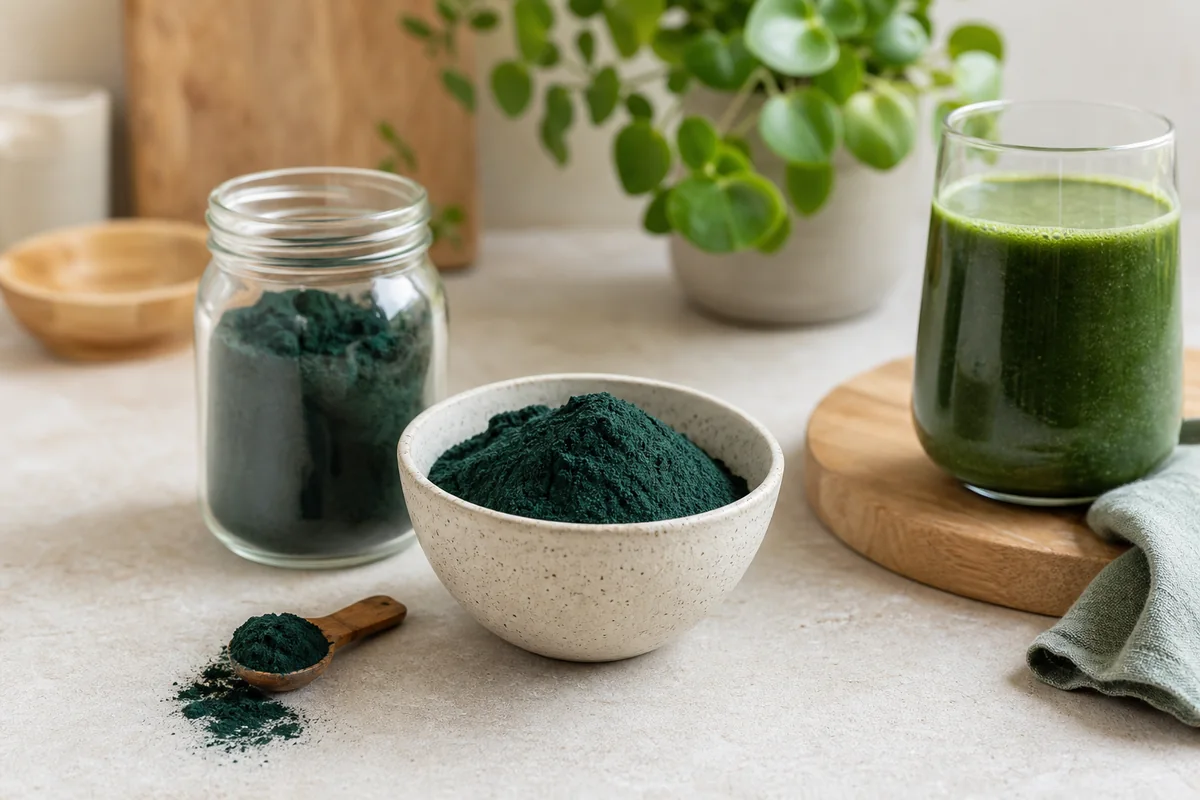
Spirulina is a blue-green microalgae (technically a cyanobacterium) that grows in alkaline freshwater lakes. It’s been consumed by humans for centuries — the Aztecs harvested it from Lake Texcoco, and it’s been a dietary staple in parts of Africa. NASA studied it as a space food in the 1980s. It’s one of the better-studied supplements in the greens category, though as you’ll see below, “studied” doesn’t always mean “settled”.
Per gram of dry weight, spirulina contains roughly 60–70% protein with a complete amino acid profile, plus B vitamins, iron, copper, magnesium, and gamma-linolenic acid (GLA). It also contains phycocyanin — the blue-green pigment responsible for its distinctive colour, and the compound most of the research interest centres on.
What Spirulina Can Actually Do
Nutrition Density
A 3g serve of spirulina gives you about 2g of protein and around 0.9mg of iron. That’s a useful contribution rather than a large one, and it’s non-haem iron, which your body absorbs less readily than the iron in meat. If protein is the actual goal, a dedicated protein powder does that job far more efficiently — spirulina earns its place on micronutrient density, not on grams of protein.
One correction worth making, because it gets repeated everywhere: spirulina contains pseudovitamin B12, which is biologically inactive in humans. If you’re vegan, spirulina is not a B12 source. You still need a proper supplement.
Anti-inflammatory and Antioxidant Effects
Phycocyanin, spirulina’s distinctive blue pigment, is an antioxidant compound that’s been studied for anti-inflammatory activity. Laboratory work shows it inhibits COX-2 in cell cultures, though that’s a mechanism finding rather than a result in people. Human studies have shown measurable reductions in some inflammatory markers with regular spirulina intake — worth knowing, but not the same thing as a painkiller, and you should be sceptical of anyone who frames it that way.
Cholesterol and Cardiovascular Markers
This is the strongest evidence spirulina has. Randomised controlled trials show that 1–8g daily can reduce LDL cholesterol and triglycerides and modestly raise HDL. A 2023 meta-analysis in Pharmacological Research pooled 20 trials and 1,076 participants and rated the certainty of the evidence high for total cholesterol, LDL and HDL. An earlier 2016 meta-analysis in Clinical Nutrition, covering seven trials, found the same direction of effect. Spirulina is an adjunct to dietary change here, not a replacement for it.
Allergy and Rhinitis Symptoms
Two randomised trials, covering 215 people between them, have tested spirulina for allergic rhinitis, and both favoured spirulina over placebo for symptoms like runny nose and congestion. A 2021 systematic review rated the evidence as very low and limited — the trials were too different to pool. Promising for hay fever season, and cheap enough to try, but genuinely preliminary. Anyone telling you spirulina is proven for hay fever is running ahead of the data.
Exercise Performance and Endurance
A handful of small studies suggest spirulina supplementation (around 6g daily for four weeks) may improve exercise endurance and reduce exercise-induced oxidative stress. The trials are small and short, so treat this as an interesting signal rather than a reason to buy.
The Critical Quality Issue: Contamination
Spirulina grown in uncontrolled conditions can accumulate heavy metals and be contaminated with microcystins from other cyanobacteria. Regulators take this seriously: Health Canada caps microcystin-LR in cyanobacteria products at 0.02µg per kilogram of body weight per day. The FDA recalls on record involved a different blue-green algae — wild-harvested Aphanizomenon flos-aquae, not spirulina — but the principle is the same: the risk sits with uncontrolled open-water harvesting.
Only buy spirulina that is grown in controlled, certified facilities rather than wild-harvested open ponds; tested for heavy metals and microcystins with results available; and certified organic where possible. These are the same testing questions worth asking of any supplement you buy in New Zealand, but they matter more here than almost anywhere else. Cheap spirulina from an unverified source is not worth the saving.
Best Spirulina Available in NZ 2026
Prices below were checked in October 2026. The New Zealand spirulina market has thinned out noticeably over the past year — a couple of long-standing options have quietly disappeared — so it’s worth checking stock before you settle on a brand.
Lifestream Spirulina (NZ Brand — Healthpost, Net Pharmacy, pharmacies)
Lifestream is an NZ-owned brand, born here in 1980 and still 100% New Zealand owned. The spirulina itself isn’t grown here: its certified organic spirulina is grown in an isolated area of India, in filtered fresh water away from agricultural run-off. It’s the spirulina brand you’ll actually find in stock in New Zealand, and it comes in real depth — powders and tablets, bioactive and certified organic, in sizes from 100g up to 500g. At HealthPost the Bioactive powder is around NZ$23.60 for 100g and the Certified Organic tablets around NZ$33.60 for 200 tablets (checked October 2026). If you want one recommendation without caveats attached, this is it.
Healtheries Spirulina (NZ Brand)
Healtheries is a long-established New Zealand supplement brand and still lists three spirulina products — 500mg tablets, Spirulina Plus tablets, and a powder. They’re sold through the health section of selected Woolworths supermarkets (the chain formerly known as Countdown) and through pharmacies. Stock moves around, though: at the time of writing the supermarket listing was showing as unavailable and several online retailers had it sold out, so check before you make a special trip.
Lifestream Greens Daily Blend (NZ Brand — Healthpost)
For those who want spirulina as part of a broader greens blend, Lifestream’s Greens Daily Blend mixes certified organic spirulina, chlorella and NZ barley grass, 1g of each in a 3g teaspoon. It’s around NZ$39 for 100g at Healthpost (checked October 2026) — a bit over a dollar a serve, against well under a dollar for straight spirulina powder, and you get a third of the spirulina per teaspoon. You’re paying for convenience and the other ingredients, so it’s only worth it if you’d genuinely use the blend. Because of the chlorella, Lifestream doesn’t recommend it during pregnancy or breastfeeding.
How to Use Spirulina
- Dose — most studies use 1–8g daily. Start with 1–3g and build up to tolerance.
- Powder vs tablets — both are effective. Powder is more versatile (smoothies, juices, even energy balls) but has a stronger taste. Tablets are more convenient for travel and for those sensitive to the flavour.
- Taste — spirulina has a strong, distinctively marine flavour. In a smoothie with banana, frozen berries, and almond milk, it’s barely detectable. In water alone, it’s an acquired taste.
- Timing — morning with a smoothie is most common. Avoid taking it at night, as some people find it energising.
- If it upsets your stomach — some people get digestive discomfort at higher doses, particularly at the start. Drop back to 1g and build up slowly; if it persists, it’s worth looking at what else is going on with your gut rather than pushing through.
The Bottom Line
Spirulina is nutrient-dense, the cardiovascular evidence is solid, and the anti-inflammatory and allergy findings are worth watching without being settled. It is not a B12 source, it is not a painkiller, and it will not make up for a poor diet.
Our pick is Lifestream: NZ-owned, with certified organic spirulina grown in India, and the brand you’ll reliably find in stock here. Take the tablets if you can’t face the taste, or the powder if it’s going in a smoothie. If you’d rather pick it up with the groceries, get Healtheries when it’s on the shelf. Whatever you choose, buy tested product from a controlled facility — that part genuinely isn’t negotiable.
Affiliate disclosure: Some links on ThrivingKiwi may earn us a small commission if you buy through them, at no extra cost to you. Paid links are marked as sponsored. We only recommend products we genuinely rate.