
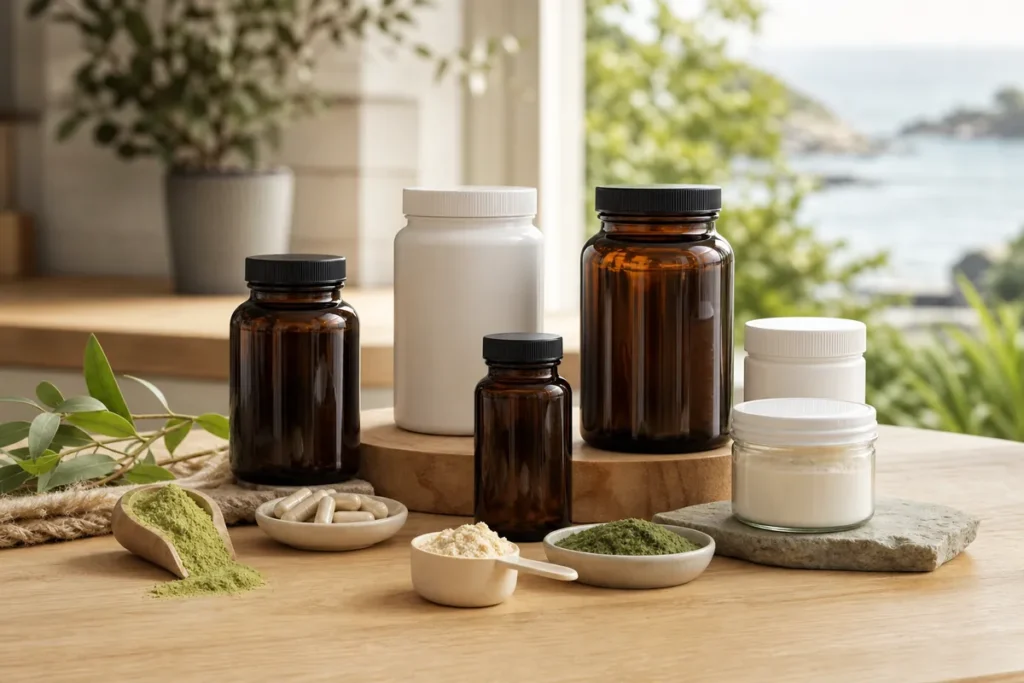
Quick answer: New Zealand’s best supplements in 2026 include probiotics (for gut and immune health), nootropics (Lion’s Mane, Ashwagandha), marine collagen (Jeuneora, Two Islands), and multivitamins (Clinicians, BePure). Key NZ-specific gaps to address: selenium and iodine (low NZ soil content), and vitamin D in winter. Buy from Healthpost, iHerb, or direct from NZ brands for the best quality assurance and NZD pricing.
New Zealand has a vibrant and rapidly growing supplement market — but navigating it is genuinely difficult. Between brands making sweeping claims, wide price variation, and genuine quality differences in formulation, it’s easy to waste money on products that underdeliver.
This is your complete reference to the NZ supplement market in 2026: how to evaluate any product, the specific nutritional gaps Kiwis face, and the best-reviewed supplements in every category with NZD pricing.
Disclaimer: This article is for informational purposes only. Always consult your GP or pharmacist before starting new supplements.
Why NZ Supplement Shoppers Face Unique Considerations
New Zealand’s supplement market differs from the US and UK in several meaningful ways that most generic supplement advice doesn’t account for:
NZ soil deficiencies: NZ soils are notably low in selenium and iodine. This means locally grown food provides less of these minerals than US- or UK-based nutritional databases would suggest. A Kiwi eating a "balanced diet" may still be getting less selenium and iodine than the same diet in another country would provide. This creates genuine supplementation needs specific to Kiwis.
Vitamin D in winter: New Zealanders south of the Nelson/Marlborough line receive insufficient UV-B radiation for vitamin D synthesis between May and August. The 2008/09 New Zealand Adult Nutrition Survey, reported by the Ministry of Health in 2012, found about 4.9% of adults were vitamin D deficient and a further 27.1% below recommended levels — roughly a third of adults in one category or the other.
Light-touch regulation: New Zealand does not run its supplements through the Australian TGA, and you will sometimes see that claimed. Dietary supplements here are regulated by Medsafe under the Dietary Supplements Regulations 1985, alongside the Food Act 2014. There is no pre-market approval: the responsibility for quality, safety and label accuracy sits with the company selling the product, not with a regulator who checked it first. That is the single most important thing to understand about this market. It means the quality signals below are doing real work, because nobody has vetted the product on your behalf.
Strong local industry: NZ has developed several excellent domestic supplement brands — Clinicians, BePure, Jeuneora, GO Healthy, Goodhealth, Mitchells Nutrition — that understand local nutritional context and use it in their formulations.
How to Evaluate Any Supplement
These are the quality markers that separate effective supplements from expensive placebos:
Check the form of each ingredient. The difference between magnesium glycinate and magnesium oxide is substantial: the US National Institutes of Health notes that magnesium in the citrate, lactate, aspartate and chloride forms is absorbed more completely and is more bioavailable than magnesium oxide, because forms that dissolve well in liquid are absorbed better than those that don’t. The same applies to every mineral: citrate, glycinate, and picolinate forms consistently outperform oxides and sulphates. If a product doesn’t specify the mineral form, assume it’s using the cheap form.
Compare the dose to research. A probiotic at 100 million CFU is not the same as one at 50 billion. Collagen at 500mg is not therapeutic — 5,000mg is. Match the dose in the product to the doses shown to be effective in clinical trials.
Look for third-party testing. GMP (Good Manufacturing Practice) manufacturing, NSF or Informed Sport certification, or published certificates of analysis (COAs) confirm that what’s on the label is what’s in the product. Some products made in Australia also carry a TGA listing number, which is a genuine signal for those products — but it is an Australian scheme, not a New Zealand requirement, so its absence on an NZ-made product tells you nothing. Many supplement failures are contamination or mislabelling issues that third-party testing catches.
Assess the ingredient list. Short, transparent ingredient lists are usually a good sign. Proprietary blends without disclosed individual doses can mask underdosing. Avoid artificial colours (especially titanium dioxide, E171), and unnecessary fillers throughout.
Check brand transparency. Reputable brands publish their full formulations, respond to queries, and avoid implausible claims. NZ brands like Clinicians, BePure, Jeuneora, and Two Islands are examples of brands that operate with genuine transparency.
NZ Supplement Guide by Category
All prices below were checked in September 2026 and will move. Where a product is frequently discounted we have said so, and where we could not confirm a current price we have not quoted one.
Gut Health Supplements NZ
Gut health is one of the most evidence-backed areas of supplementation. The gut microbiome — an estimated 38 trillion bacteria, on Sender, Fuchs and Milo’s 2016 revision of the old ten-to-one figure — influences immune function, mental health (the enterochromaffin cells lining the gut make 90–95% of the body’s serotonin, though that gut serotonin does not cross into the brain, so the link to mood is more indirect than the headline suggests), metabolic health, skin conditions, and systemic inflammation.
Key supplements for gut health in NZ:
Probiotics are live bacteria that replenish and diversify the gut microbiome. Look for multi-strain formulas with 10–50 billion CFU and strains with clinical evidence: Lactobacillus rhamnosus GG (diarrhoea prevention), Bifidobacterium longum (anxiety and mood), and L. acidophilus NCFM (general gut health). In NZ, look for refrigerated or shelf-stable products with strain-level disclosure. Complete guide: Best Probiotics NZ 2026
Fibre supplements are fundamental — most Kiwis fall well short of the 25–38g/day recommendation, and gut bacteria depend on dietary fibre as their primary fuel. Psyllium husk, partially hydrolysed guar gum (PHGG), and acacia fibre are the most studied options. For a comprehensive fibre supplement with herbal gut-repair ingredients, see: Qenda Ultimate Fibre NZ Review
Prebiotics are the fibres that feed the bacteria you already have — inulin, fructo-oligosaccharides (FOS), galacto-oligosaccharides (GOS) and resistant starch are the most studied. They are the half of the gut health equation most people skip, and for many they are worth pairing with a probiotic rather than choosing between the two. Complete guide: Best Prebiotic Supplement NZ 2026
Digestive enzymes help break down protein, fat and carbohydrate in the small intestine. The evidence is strongest for people with a diagnosed insufficiency (pancreatic conditions, lactose intolerance) and much weaker for general bloating, so it pays to work out which group you fall into before buying. Complete guide: Best Digestive Enzymes NZ 2026
Gut-repair nutrients including L-glutamine, zinc carnosine, and slippery elm have evidence for supporting gut lining integrity — particularly useful for those recovering from antibiotic use or managing leaky gut symptoms. Colostrum is another gut and immune supplement trending in NZ right now. Complete guide: Colostrum NZ 2026
For the complete deep-dive: Gut Health NZ — The Complete Guide
Nootropics and Brain Supplements NZ
Nootropics support cognitive function, memory, focus, and stress resilience. Evidence quality varies significantly across products — here’s what the research supports:
Lion’s Mane mushroom (Hericium erinaceus) is the most clinically supported nootropic mushroom, with evidence for nerve growth factor stimulation and cognitive improvement. A double-blind trial published in Phytotherapy Research (2009) showed significant cognitive improvements in older adults. Available at iHerb for NZ$35–65.
Ashwagandha (Withania somnifera) is a well-evidenced adaptogen for cortisol reduction and stress resilience. A 2019 meta-analysis in Medicine showed significant anxiety reduction versus placebo across multiple RCTs. Complete guide: Best Ashwagandha NZ 2026
Rhodiola rosea has evidence for reducing mental fatigue and improving performance under stress — particularly useful for high-cognitive-load work environments. Complete guide: Rhodiola Rosea NZ 2026
Caffeine + L-theanine remains the most evidence-backed cognitive combination. 200mg caffeine with 100–200mg L-theanine improves sustained attention and alertness while reducing caffeine-related anxiety.
Complete guide with NZD pricing: Best Nootropics NZ 2026
Collagen Supplements NZ
Collagen is New Zealand’s fastest-growing supplement category — and the science genuinely supports the hype for skin, joint, and gut applications when using hydrolysed collagen peptides at therapeutic doses (2.5–10g/day).
The key decision: Marine vs Bovine
- Marine collagen (Type I): higher bioavailability from smaller peptide size, best for skin, hair, and nails
- Bovine collagen (Type I and III): broader benefits, better for joints, gut health, and athletes
Best NZ collagen brands with NZD pricing:
- Jeuneora Renew+ — best overall NZ marine collagen, B Corp certified, Naticol® formula at 6,000mg a dose (NZ$99 for a 300g tub, 30 doses, so NZ$99/month; NZ$89.10 on subscription)
- Two Islands Marine Collagen Beauty Powder — best for high-dose daily powder use, 10g of marine collagen a serve (NZ$79.95 RRP for 305g, 30 serves; NZ$75.50 at Healthpost)
- Mitchells Nutrition Collagen Peptides — best for joints and gut, NZ made, Type I and III bovine collagen at 8g a serve (NZ$48.90 at Healthpost for 200g, which is 25 serves, so closer to NZ$59/month)
Complete guide with full comparison table: Best Collagen Supplements NZ 2026
Multivitamins NZ
A quality multivitamin addresses common NZ-specific deficiencies — particularly selenium, iodine, and vitamin D. The single most important quality indicator is mineral form: chelated minerals absorb dramatically better than oxide forms.
Best NZ multivitamin brands:
- Clinicians MultiVitamin & Mineral Boost — best overall NZ brand, founded by two NZ pharmacists in 1997, and it does include both selenium and iodine (from NZ$27.30 at Healthpost, NZ$34.49 direct, 90 capsules)
- BePure One — best premium option, vitamin K2 as MK-7 included and most minerals in chelated forms (NZ$69 direct for a 30-day supply, NZ$58.60 at Healthpost). One caveat by our own standards above: the formula includes a “Greens Proprietary Blend” of barley grass, spirulina, chlorella and vegetable powders without individual doses disclosed. The vitamin and mineral panel — the part that matters most here — is fully itemised, so we still rate it, but the greens portion is exactly the kind of blend we tell you to be wary of, and you should treat it as a bonus rather than a reason to buy.
- GO Healthy GO Multi Everyday — best pharmacy pick, widely available nationwide, with 150mcg each of selenium and iodine (RRP NZ$49.99 for 60 capsules but very often discounted — NZ$14.99 at Chemist Warehouse when we checked, so shop the price rather than the label)
- Good Health — best budget NZ brand, solid formulation, widely stocked through Healthpost and pharmacies. Their multivitamin range runs across several formulas at different price points, so check the specific product rather than working off a single figure.
Complete guide with life-stage recommendations: Best Multivitamins NZ 2026
Vitamins and Minerals NZ
Single-nutrient vitamins and minerals are worth adding when there is a specific gap to fill, rather than as a blanket top-up on an already decent multivitamin. As with a multi, the form on the label matters more than the milligram number on the front of the bottle.
Zinc supports immune function, wound healing and skin. Picolinate, citrate and bisglycinate forms are well absorbed; oxide is not. More is not better either — sustained high intakes can interfere with copper absorption, so dose matters as much as form. Complete guide: Best Zinc Supplement NZ 2026
Vitamin C is an essential co-factor for collagen synthesis and a direct antioxidant. Plain ascorbic acid is well absorbed and inexpensive; buffered and liposomal versions mostly address tolerance and absorption at higher doses rather than adding a separate benefit. Complete guide: Vitamin C Supplement NZ 2026
Biotin (vitamin B7) is the headline ingredient in most hair, skin and nail formulas. The evidence is strongest where there is an actual deficiency, which is uncommon in people eating a normal diet. One practical warning: high-dose biotin can interfere with some laboratory blood tests, including thyroid panels. Complete guide: Best Biotin Supplement NZ 2026
Greens Powders NZ
Greens powders provide concentrated plant nutrition — wheatgrass, spirulina, chlorella, barley grass — in a daily serve. They’re not a replacement for vegetables, but a useful nutritional top-up on days when diet is compromised.
What to look for when buying greens powders in NZ:
- Third-party heavy metal testing (spirulina and chlorella can accumulate contaminants)
- Transparent formulation with individual ingredient doses — not a proprietary blend
- At least 3–5g of greens per serve
- No excessive fruit or sweetener content masking poor-quality ingredients
Complete guide with NZD pricing and top product reviews: Best Greens Powder NZ 2026
Natural Skincare and Skin Supplements NZ
Skin health sits at the intersection of topical care and nutrition. Key supplements for skin health include:
- Collagen (marine, 5,000mg+ daily) — clinically evidenced for skin hydration and elasticity
- Zinc — essential for wound healing, sebum regulation, and acne management
- Vitamin C — essential co-factor for collagen synthesis; also a direct antioxidant in skin
- Omega-3 fatty acids — reduce skin inflammation, support the lipid barrier
For NZ-made topical skincare using certified native botanicals: Best NZ-Made Natural Skincare Brands 2026
Sleep Supplements NZ
Sleep is the category with the widest gap between marketing and evidence. Magnesium, glycine and L-theanine have reasonable support for sleep quality and time to fall asleep, while several popular herbal ingredients have very little behind them. One NZ-specific point worth knowing, and it changed recently: melatonin used to be prescription-only here, but it was reclassified on 18 June 2025, and approved melatonin medicines can now be supplied from a pharmacy without a prescription — for up to 10 days for jet lag and up to 30 days for insomnia, with larger packs available from a pharmacist to adults 55 and over. Plenty of NZ guides, including an earlier version of this one, still say prescription-only. Note that it is still a medicine rather than a supplement, so you are talking to the pharmacist, not picking it off the shelf. Complete guide: Best Sleep Supplements NZ 2026
Protein, Hydration and Energy NZ
Performance supplements are the easiest category to overspend in, largely because the handful of things that work are cheap and a lot of what does not work is expensive.
Protein powder is a convenience food rather than a magic one — its job is to help you hit a daily protein target you would otherwise miss. Whey, plant blends and collagen peptides are not interchangeable: collagen is low in the essential amino acids that drive muscle protein synthesis, so it is not a substitute for a complete protein. Complete guide: Best Protein Powder NZ 2026
Electrolyte drinks earn their place when sweat losses are genuinely high — long sessions, hot conditions, or heavy sweaters. Sodium does most of the work; for everyday hydration, water and normal meals cover it. Complete guide: Best Electrolyte Drinks NZ 2026
Matcha delivers caffeine alongside L-theanine — the same pairing covered in the nootropics section above, which is why many people find it a steadier lift than coffee. Ceremonial and culinary grades differ in leaf selection, processing and taste rather than in some hidden active ingredient. Complete guide: Best Matcha NZ 2026
Creatine is one of the most researched supplements there is — creatine monohydrate at 3–5g daily supports strength, power and increasingly cognition, and it is genuinely not just for gym bros. Complete guide: Creatine for Women NZ 2026
Where to Buy Supplements in NZ
Healthpost (healthpost.co.nz) is the widest-range quality NZ health retailer, with fast NZ delivery and genuine customer reviews. Best for NZ brands and certified natural products.
iHerb (iherb.com) is the best source for international brands not stocked locally. Ships to NZ in 5–10 business days, with NZD prices shown at checkout. Whether it works out cheaper than buying locally depends entirely on the product and the day — worth comparing the landed cost per serve against an NZ retailer before assuming the overseas option wins.
Chemist Warehouse is best for NZ pharmacy brands (Clinicians, GO Healthy, Blackmores) at competitive prices.
Direct from NZ brands — Jeuneora, BePure, Two Islands, and Mitchells Nutrition all offer direct ordering, and most run a subscribe-and-save option — commonly around 10% off, though it varies by brand and product, so check before assuming the direct route is the cheapest one.
What to Avoid in NZ Supplements
Proprietary blends without individual doses — you can’t evaluate a formula you can’t read. "Herbal blend 500mg" tells you nothing about whether any individual herb is dosed effectively.
Oxide mineral forms (magnesium oxide, zinc oxide) — these have very low bioavailability. Products using oxide forms are cheap to manufacture but don’t deliver meaningful mineral supplementation.
Extreme health claims — NZ and Australian law (FSANZ and Medsafe) prohibits therapeutic claims on supplements. If a product claims to "cure" or "treat" a condition, it’s either misregistered or overclaiming.
Gummy vitamins for adults — gummy formats omit minerals (minerals affect gummy texture), add sugar, and typically underdose nutrients. They’re a poor investment for adults.
Frequently Asked Questions
Is iHerb reliable for NZ customers?
Yes — iHerb ships to New Zealand reliably and is one of the most trusted online supplement retailers globally. Shipping typically takes 5–10 business days. Orders under NZ$1,000 typically clear customs without issue. For NZ-made brands, buying direct or through Healthpost is usually more convenient.
Are NZ supplement regulations strict?
NZ supplements are regulated under the Food Act and Dietary Supplements Regulations 1985. Medsafe administers those regulations, and there is no pre-market approval step — the company selling the product is responsible for its quality and safety. For the safest products, choose GMP-certified manufacturers, brands that publish certificates of analysis, or products carrying an independent certification such as NSF or Informed Sport.
How much should I spend on supplements monthly?
A sensible NZ foundation supplement stack: a quality NZ-specific multivitamin (NZ$30–55) and a good probiotic (NZ$40–70). Total: NZ$70–125/month. Beyond that, additions like collagen, greens powder, or targeted nootropics add value based on your specific goals.
How do I know if a supplement is working?
Track your baseline before starting — note energy, sleep quality, digestion, or focus in a journal. Reassess after 8–12 weeks of consistent use. Many supplements work gradually. For objective measurement, relevant blood tests (vitamin D levels, selenium) or gut microbiome testing via Microba NZ give you data rather than guesswork.
What are the most important supplements specifically for New Zealanders?
Based on NZ’s specific nutritional context: a multivitamin with meaningful selenium and iodine (Clinicians or BePure), vitamin D3 in winter (1,000–2,000 IU/day), magnesium glycinate (most Kiwis are deficient), and a quality probiotic. These four cover the most common gaps specific to NZ soil, climate, and diet.
The Bottom Line
New Zealand’s supplement market offers genuine options for addressing real nutritional gaps — particularly the selenium, iodine, and vitamin D challenges that are specific to Kiwi soil and climate. The key to getting value is choosing products with bioavailable ingredient forms, meaningful doses, and third-party quality testing.
Use this guide as your starting point and dive into each category guide for detailed product reviews, full NZD pricing comparisons, and honest assessments of what the evidence actually supports.
Some links on ThrivingKiwi may earn us a small commission if you buy through them, at no extra cost to you. Paid links are marked as sponsored. We only recommend products we genuinely believe are worthwhile.