Quick answer: Shower, bath, basin and washing-machine water (greywater) can keep fruit trees, shrubs and flowers going through a dry summer if it goes under the soil or mulch, stays off vegetables, never comes from the kitchen and is used within 24 hours. A bucket is free. A plumbed diverter from WCTNZ or Allflow is about NZ$1,300 to NZ$1,900 for the unit, plus consent and a drainlayer (checked October 2026).
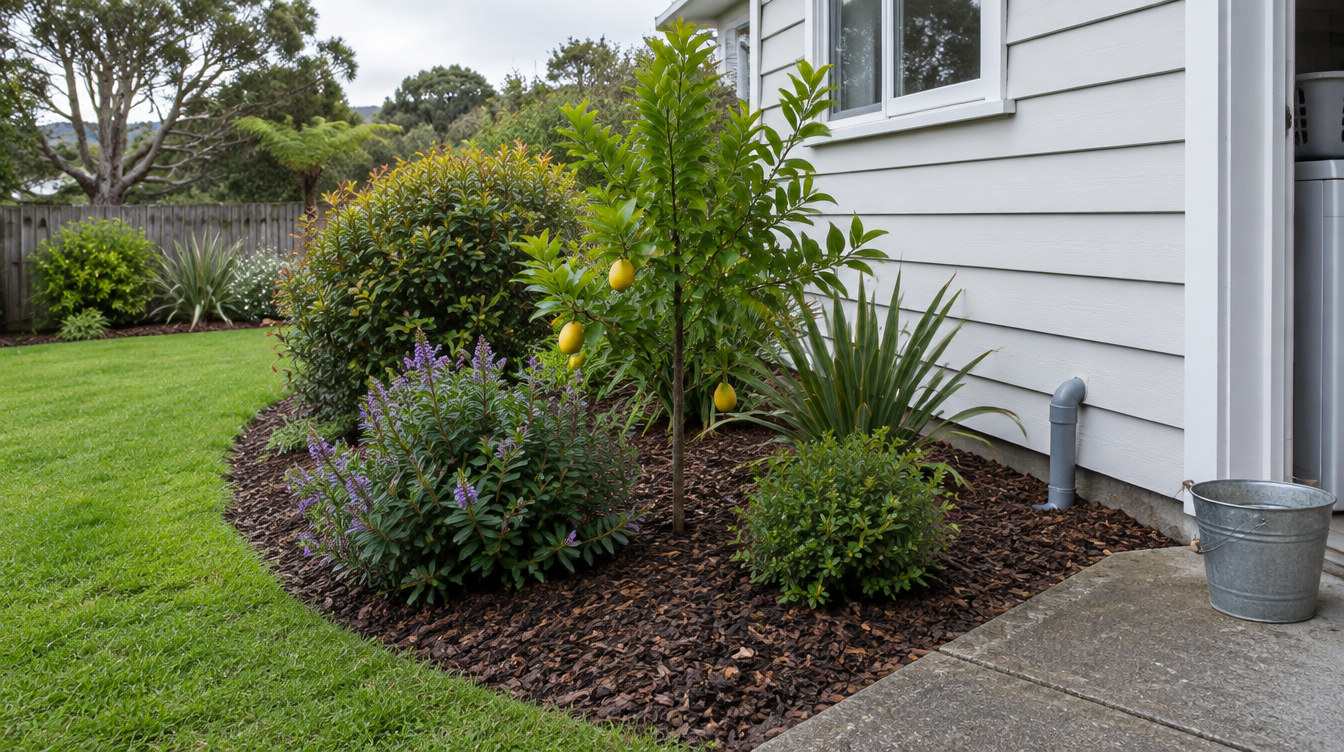
Most of the water that leaves a New Zealand house has barely been used. It ran over someone’s shoulders in the shower or rinsed a load of T-shirts, and then it went to the sewer to be pumped and treated along with everything else. Meanwhile, on a hot February afternoon, the same house is running a hose off the mains. Greywater reuse joins those two things up. Done carefully, it’s one of the simplest loops you can close on a Kiwi section.
Why it matters for the planet
Kāpiti Coast District Council has reported that around 68% of residential water use (about 160 litres per person per day) is greywater that could be reused, according to BRANZ’s Level guide. BRANZ puts a typical household’s greywater at 100 to 200 litres a day.
That water was taken from somewhere first. Town supplies come out of rivers, aquifers and reservoirs, and summer is when they’re under the most pressure. BRANZ monitored 51 Auckland houses and found that in summer, 17% of household water went on irrigation and other outdoor uses. Every bucket of shower water on a fruit tree is a bucket that stays in the river or the ground.
It also takes load off the other end of the pipe. BRANZ lists the benefits as less reliance on mains supply, a smaller volume of wastewater going into the sewer, and more resilience in droughts and water restrictions. For homes on an on-site septic system, less liquid going into the tank means the system works better. For homes that rely entirely on rainwater, reusing greywater outside means the tank is saved for drinking.
And there’s the soil. Water delivered slowly under mulch keeps the ground from drying out completely over summer, which keeps the soil life that feeds your plants working through the dry months.
What counts as greywater, and what to leave out
Greywater is the used water from baths, showers, bathroom basins, laundry tubs and washing machines. Toilet water is blackwater and is a different thing altogether (our guide to composting toilets covers that loop).
Leave the kitchen out. BRANZ is clear that kitchen sink and dishwasher water isn’t collected for reuse because it carries fat, grease and oil, harsh cleaning chemicals, high sodium from some detergents, and Campylobacter bacteria from raw meat. Fat clogs soil and pipes, and the bacteria are a genuine health risk.
Divert to the sewer, not the garden, when the water has something in it you wouldn’t want on your soil: nappy washes, water from bathing very small children, washes after someone has had a stomach bug, or anything with bleach in it. BRANZ notes that proprietary systems have a bypass valve for exactly this reason.
What’s safe for soil and plants
Greywater that hasn’t been disinfected contains bacteria, and it often carries salts and alkalinity from soaps and detergents. These are the habits that keep it doing good rather than harm, mostly drawn from BRANZ’s guidance.
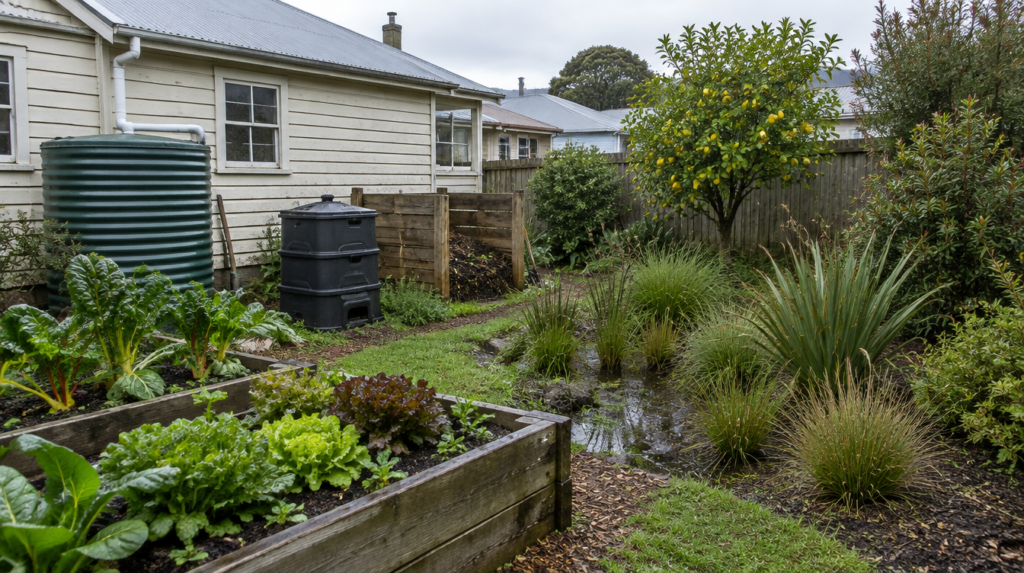
- Put it under the surface. BRANZ recommends irrigating beneath the soil, using subsurface drippers, gravel trenches or a mulch-filled trench, and never through sprays or sprinklers. Water under a good layer of bark mulch can’t be breathed in, touched by kids or licked by the dog. It also doesn’t evaporate before the roots get it.
- Don’t let it pond. Ponded greywater turns foul and can contaminate the soil. Clay soils hold water and are the most likely to pond, so on clay, spread the water across a bigger area and use less of it at a time.
- Use it within 24 hours. BRANZ says untreated greywater shouldn’t be stored any longer than that, because bacteria multiply quickly and it turns septic. A rain barrel full of bathwater is a bad idea.
- Keep it off vegetables and salad greens. BRANZ says greywater suits shrubs, flowers and trees, including fruit trees, but not vegetables. The risk is bacteria on leaves and roots you eat raw. Your citrus, feijoas, apples and ornamental shrubs are the right targets.
- Watch the laundry sodium. This is the slow problem. Choice, Australia’s consumer organisation, points out that laundry detergents are full of sodium salts, and that sodium damages soil structure and permeability over time. Soil that has taken years of salty water drains worse and grows less. Dungog Shire Council in New South Wales notes that sodium can make up to 60% of a washing powder as filler, and that liquids generally carry much less, so switch to a liquid detergent sold as suitable for greywater, use the smallest dose that gets the clothes clean, and avoid bleach, fabric softeners, whiteners and anything containing boron (BRANZ names all of these).
- Mind the acid-lovers. BRANZ notes greywater tends to be strongly alkaline, so it’s a poor match for plants that like acidic soil, such as blueberries, camellias, azaleas and rhododendrons.
- Rest the ground. Move the outlet around, or use a system that switches between zones, so no single patch gets greywater every day. BRANZ recommends occasional rest for the irrigated area.
- Keep it away from play areas, and away from your boundary so it never runs onto a neighbour’s section.
Keep greywater out of a raingarden. Raingardens are built for rain off the roof and often drain through a pipe to the stormwater network, which flows to streams untreated. Greywater is wastewater, and it needs its own patch of soil.
Three ways to do it, from a bucket to a plumbed system
1. The bucket
Put a bucket in the shower while the water warms up, or bail the bath once it has cooled, and tip it slowly onto mulch at the base of a fruit tree or shrub. It costs nothing, involves no plumbing work, and keeps the water moving within minutes, well inside the 24-hour rule. The limits are your back and your patience, which is why most people end up bucketing in a drought and stopping when it rains.
2. The laundry hose
A washing machine pumps its water out, so the next step up is running an extended outlet hose from the machine to a mulched bed, moving it between trees from wash to wash. Choice describes this as the simplest DIY option. It’s only as good as the detergent going into the machine, so the low-sodium advice above matters most here. It also has to discharge under mulch, not across the lawn, and you’ll need to put the hose back into the tub when it rains or when you’re washing something you don’t want in the garden.
3. A plumbed diverter
A proper greywater system adds a diverter valve to the waste pipes so you can switch between garden and sewer, a small surge tank with a filter to catch lint and hair, a pump if there isn’t enough fall, and subsurface dripper lines laid under mulch. Water goes straight out to the garden rather than sitting in storage, and overflow goes back to the sewer. This is the most hands-off version, and the one that needs consent and a certifying drainlayer (see the rules, below). BRANZ recommends using a proprietary system rather than designing your own, because of the health and regulatory issues.
Systems that treat greywater for toilet flushing also exist, but they cost more and need more upkeep. If you already have a rain tank, BRANZ notes rainwater is the cleaner choice for flushing.
Doing it in NZ: suppliers and prices
There are only a handful of greywater suppliers in New Zealand, and we couldn’t find a New Zealand-designed diverter unit to recommend. These are the NZ businesses selling them, with prices from their own sites (checked October 2026).
- WCTNZ (Waterless Composting Toilets NZ, Henderson, Auckland) sells the GreyFlow range, which is certified under Australia’s WaterMark scheme. We couldn’t confirm where GreyFlow or the WaterMate unit below are made, and we found no NZ-designed greywater diverter, so these are the best-supported options sold by NZ businesses. The GreyFlow Gravity filter and diverter, for sites with enough fall and no pump, is NZ$1,130.43 plus GST (about NZ$1,300 including GST), and was on backorder when we checked. The pumped EZGREY Standard unit is NZ$1,280.57 plus GST (about NZ$1,473). A complete dripper-line kit with 100 m of dripper line and 50 m of feeder pipe is NZ$378.26 plus GST (about NZ$435).
- Allflow (Richmond, Nelson) sells the WaterMate Greywater Recycling Unit, sized for a small home or tiny house with one shower and a washing machine, at NZ$1,624.71 plus GST (about NZ$1,868). Allflow’s own product page says plainly that the unit filters greywater but doesn’t purify it, and that greywater shouldn’t go on edible plants or vegetables.
- For the laundry, Ecostore Ultra Sensitive Laundry Liquid is made in New Zealand and says on its product page that, with proper greywater systems in place, laundry water can be reused on flower gardens, lawns and trees. It’s NZ$17.49 for 2 litres (56 washes).
Budget for more than the unit. A plumbed system also needs the building consent fee, a certifying drainlayer, and sometimes an electrician for the pump. Ask for a quote for the whole job before you buy anything.
Whatever system you choose, pair it with a deep layer of mulch. Our guide to no-dig gardening covers building the kind of spongy, organic soil that takes up greywater without ponding.
The rules, briefly
Anything that involves plumbing (a diverter valve, a surge tank, pipes to the garden) needs a building consent, where it’s assessed as an alternative solution, and has to be installed by a certifying drainlayer. Regional councils set the rules for what goes onto land, and they vary a lot. Canterbury’s regional plan, for example, permits below-ground greywater irrigation from a consented system as long as it isn’t stored for more than 12 hours, doesn’t pond, and stays at least 20 m from streams and bores, while Kāpiti Coast requires every new home to have either a 10,000 L rain tank or a 4,000 L tank plus greywater diversion. BRANZ also notes that discharges may be restricted near places where kaimoana (seafood and shellfish) is traditionally gathered. Talk to your district and regional council before you buy.
What greywater won’t do
- It won’t grow your vegetables. The veggie patch still needs rain, tank water or the tap. Greywater is for trees, shrubs and flowers.
- It won’t fix clay. Heavy soils pond, and ponded greywater is a health risk. On clay you’ll need a bigger dispersal area, a mulch trench, and a lighter hand.
- It won’t run itself for long. A New Zealand study cited by BRANZ found fewer than half of the greywater systems assessed were working properly and being maintained to the manufacturer’s instructions. Filters clog with lint and hair and need regular cleaning.
- It isn’t clean water. BRANZ’s microbial research recommends that greywater from showers is treated before use. That’s why subsurface delivery matters so much. The soil does the cleaning, out of reach of people and pets.
- It won’t pay for itself quickly. On a metered town supply, the savings are real but small next to roughly NZ$1,700 to NZ$2,300 for a unit and dripper kit, before consent and installation. The strongest cases are homes on tank water, homes on septic systems, new builds where the plumbing can be laid out for it, and places with regular summer restrictions. We’ll look at the numbers properly in our guide to which closed-loop systems pay back.
The Bottom Line
Greywater is worth using, carefully. The safe version is simple: bath, shower and laundry water only, delivered under mulch to fruit trees, shrubs and flowers within a day, with a low-sodium liquid detergent in the machine. Start with a bucket before you spend anything, and you’ll learn quickly whether your soil takes the water or ponds it.
- If you’re renting or just curious, bucket the shower warm-up water onto your fruit trees this summer. It’s free and needs no plumbing.
- If you’re on tank water or a septic system, a plumbed diverter with subsurface drippers makes the most sense. Get quotes from a certifying drainlayer and talk to your council first.
- If you’re building or renovating, ask your plumber to separate the greywater pipes now. BRANZ notes that pipes set in a concrete slab are almost impossible to change later.
- If you’re on heavy clay, start small, spread the water wide, and watch for ponding before you commit to a system.
Greywater is one of several loops you can close at home. Our hub, Closing the Loop on a Kiwi Section, shows how the water, food-scrap and nutrient loops fit together, and our guide to building a raingarden deals with the rain that falls on your roof.
Words we use
- Kaimoana: seafood, shellfish (Te Aka Māori Dictionary).
Sources and further reading
- BRANZ Bulletin 665: Residential greywater systems (2021)
- BRANZ Facts: Greywater reuse systems for New Zealand houses (2018)
- Level (BRANZ): greywater recycling
- Kāpiti Coast District Council: grey water and water tanks
- Environment Canterbury: Canterbury Land and Water Regional Plan (greywater rule 5.12)
- Choice: using the greywater from your washing machine
- Dungog Shire Council: use low-sodium, low-phosphorus laundry detergents
- Te Aka Māori Dictionary: kaimoana
Affiliate disclosure: Some links on ThrivingKiwi may earn us a small commission if you buy through them, at no extra cost to you. Paid links are marked as sponsored. We only recommend products we genuinely believe are worthwhile.