Bone broth has completed the journey from grandma’s stockpot to premium wellness product, now sold in premium pouches with promises to heal your gut, smooth your skin, and strengthen your joints. As usual, the truth sits between “ancient miracle” and “expensive water” — so here’s the honest version.
What bone broth actually is
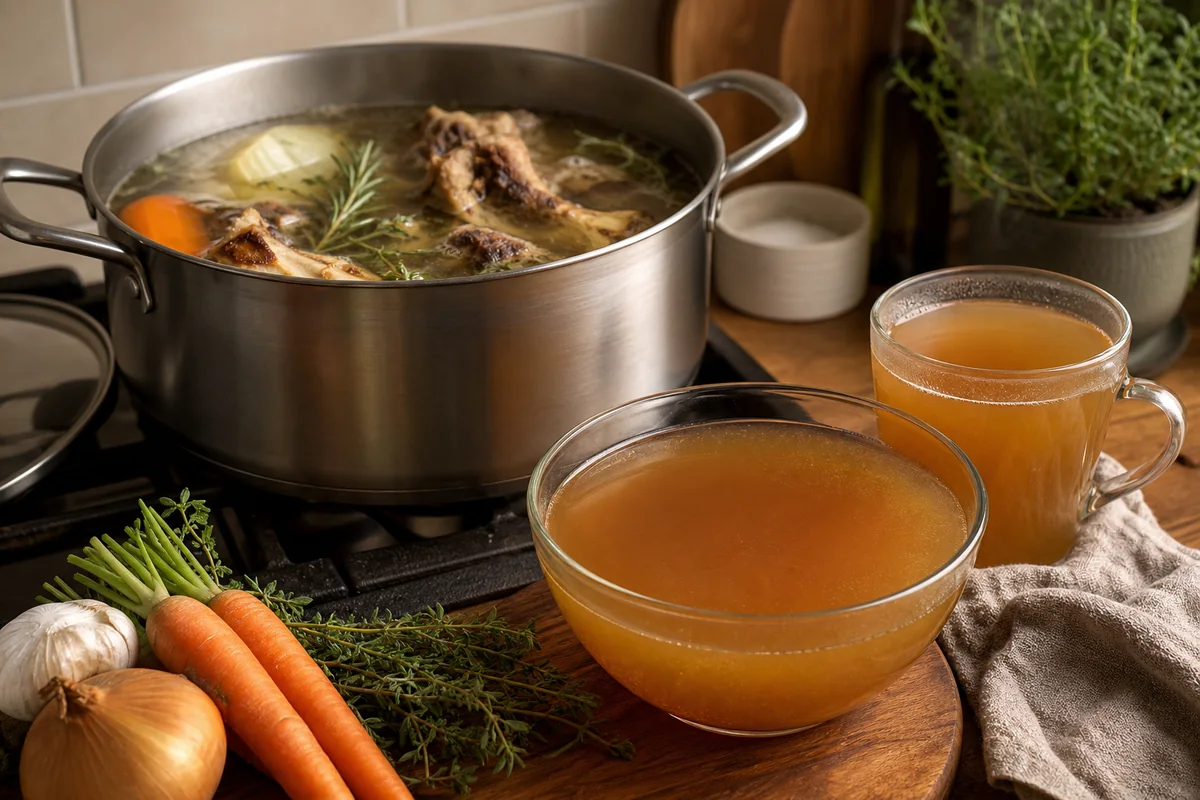
Bone broth is stock simmered long and slow (typically 12–24 hours), which draws gelatin, minerals and amino acids out of animal bones and connective tissue. The long cook is the point — it’s what separates broth from a quick stock and gives it that lip-sticking, gelatinous quality when cooled. It’s a genuinely nutritious, protein-containing, warming food. That much isn’t in dispute.
The collagen myth (the important bit)
The headline claim — that bone broth’s collagen rebuilds your collagen for better skin and joints — is where honesty is needed. When you eat collagen (from broth or a supplement), your body doesn’t ship it directly to your face or knees. It’s broken down in digestion into individual amino acids, which your body then uses wherever it decides to. There’s some interesting research suggesting specific collagen peptides (standardised supplement doses) may modestly support skin and joints, but bone broth isn’t a standardised peptide dose — its collagen content varies wildly batch to batch, and it’s generally far lower and less consistent than a dedicated collagen supplement. So if collagen for skin is your specific goal, broth is an inefficient way to chase it.
What bone broth genuinely offers
- Glycine and other amino acids — bone broth is a good source of glycine, which is a genuine building block for connective tissue. You will also see glycine promoted for sleep; that rests on a small number of trials using isolated glycine at a set dose before bed, not on broth, so treat it as an open question rather than a reason to drink the stuff.
- Hydration and electrolytes — a warm, salted, mineral-containing liquid is genuinely restorative when you’re unwell or depleted. There’s a reason chicken soup endures.
- A gentle, easy-to-digest food — for people recovering from illness or with poor appetite, broth delivers nourishment that’s easy on the system.
- Protein, sort of — broth contains some protein, but far less than the marketing implies; it’s not a meaningful protein source compared to actually eating the meat.
- The gut angle — the “heals leaky gut” claim is overstated (see our gut health guide for the honest take on gut lining). Glycine and gelatin are plausibly gut-supportive, but broth is a nice-to-have in a gut-health plan, not the centrepiece. Fibre and a varied diet do far more.
Make it, don’t buy it (usually)
Bone broth is one of the cheapest, most satisfying things to make at home — and homemade beats most commercial versions on both cost and gelatin content. The premium pouches are convenient but you’re paying a heavy markup for something a slow cooker does for the price of bones.
Simple method: cover roasted bones (beef, chicken carcasses, or a mix — your butcher will often give them away or sell them cheaply) with water, add a splash of apple cider vinegar if you like — it’s a traditional step, though there’s little evidence it draws any meaningful extra mineral content out of the bones — plus a roughly chopped onion, carrot and celery, and simmer very gently for 12–24 hours (a slow cooker is ideal and safe to leave overnight). Strain, cool, and skim the fat if you like. It should set to a wobble in the fridge — that’s the gelatin, and it’s the sign you did it right. Freeze in portions.
Buy ready-made NZ broth (several good local producers exist) for convenience when you can’t make it — just know you’re paying for that convenience, not a superior product.
The bottom line
Bone broth is a genuinely nourishing, comforting, mineral-and-glycine-rich food that’s brilliant when you’re run-down, cheap to make at home, and a lovely base for soups and cooking. It is not a collagen delivery system for your skin, a leaky-gut cure, or a serious protein source — those claims are the wellness-industry markup talking. Make a big batch on a cold Sunday, enjoy it for what it honestly is, and put the premium-pouch money toward, well, more bones.
Sources and further reading
Health information is general and does not replace advice from a qualified clinician or pharmacist. Check supplements for suitability with your medicines, allergies, pregnancy status and health conditions.