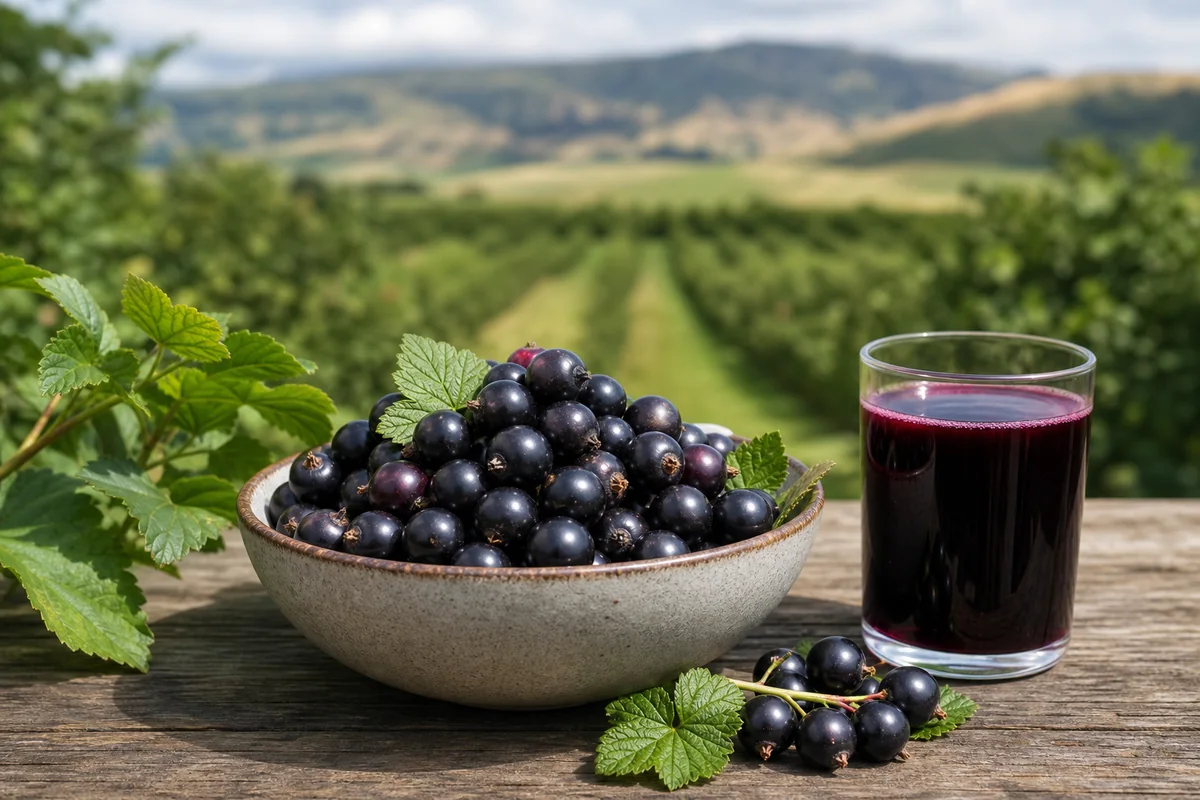
The word “superfood” usually means “ordinary food with a marketing budget.” But every so often a food earns the label — and one of the clearest examples happens to be grown right here. New Zealand blackcurrants are unusually rich in anthocyanins, and unlike most superfruit hype, they come with a genuine and growing body of scientific research, much of it done on NZ-grown fruit.
Why NZ blackcurrants specifically
New Zealand blackcurrants grow under high UV light, one of the conditions associated with higher anthocyanin production in plants — the deep purple-black pigments that give the fruit its colour and its antioxidant activity in the lab. They’re the same family of compounds that made blueberries famous. NZ is a significant blackcurrant producer, and the fruit’s consistent anthocyanin content is exactly why researchers — and sports-nutrition companies — have taken such interest in it.
What the research actually supports
- Exercise recovery and performance — the most-studied area. Almost all of the research on NZ blackcurrant extract sits here. The 2026 systematic review listed below pooled 21 randomised crossover trials and found a small-to-moderate average effect on sport performance, largest in intermittent, repeated-high-intensity activity and smaller or absent in endurance cycling. It rated the certainty of that evidence low, because the trials were small and varied. This is the area with the most work behind it, not the area with the firmest answer.
- Blood flow and circulation. Better blood vessel function is the mechanism usually proposed to explain the exercise findings above. It’s a proposed explanation rather than a demonstrated one.
- Eye health — early days. Blackcurrant anthocyanins come up in discussion of eye fatigue and blood flow to the eye, but we haven’t found evidence solid enough to point you at. Treat it as an open question rather than a reason to buy.
- General nutrition. Set the specific claims aside and blackcurrants are still a strong source of vitamin C and fibre — the NZ Food Composition Database below has the numbers.
The honest framing: a 2026 systematic review found small-to-moderate average effects on some exercise outcomes, but judged the certainty low for sports performance, and moderate for metabolic outcomes, because the studies were small and varied. Blackcurrants remain nutritious fruit; an extract is not a substitute for training, sleep or a broad diet.
How to get them into your diet
- Frozen whole blackcurrants — the most economical way to eat them regularly; NZ-grown frozen blackcurrants are widely available in supermarkets. Great in smoothies, porridge and baking.
- Blackcurrant powder — concentrated and convenient; a common format for the sports-focused products.
- NZ blackcurrant extract capsules — the format most of the sports research uses (standardised anthocyanin doses). Relevant if you’re specifically chasing the exercise-recovery benefits; less necessary if you just want a healthy fruit.
- Whole fruit in season — fresh NZ blackcurrants appear in early summer; grab them when you see them.
If you like eating with the seasons, our guide to NZ winter produce covers what is worth buying through the colder months.
For active readers, blackcurrants sit naturally alongside the rest of a sensible recovery toolkit — see our recovery and biohacking guide. For everyone else, they’re simply a top-tier fruit to add to the rotation.
A note on the sugar and the hype
Blackcurrant juice drinks and cordials are a different story from the fruit — many are loaded with added sugar and contain little of the actual anthocyanin benefit. If you’re buying for health, choose whole fruit, unsweetened powder, or a standardised extract, not sugary blackcurrant drinks. And treat the bolder marketing claims (“cures,” “detoxes,” “boosts immunity dramatically”) with the usual scepticism — the real story is good enough without them.
The bottom line
NZ blackcurrants are a genuinely well-studied homegrown fruit whose research is still some way from settled — most interesting for exercise performance, recovery and metabolic outcomes, and rated low-to-moderate certainty even there. Eat them as frozen whole fruit for everyday vitamin C and fibre value, or reach for a standardised NZ blackcurrant extract if you’re specifically after the researched sports benefits. Either way, it’s a case where backing a local product lines up with backing the evidence. For another New Zealand-grown fruit given the same honest treatment, see our feijoa nutrition guide.
Sources and further reading
- Current Developments in Nutrition (2026): Systematic review of New Zealand blackcurrant supplementation
- New Zealand Food Composition Database
Health information is general and does not replace advice from a qualified clinician or pharmacist. Check supplements for suitability with your medicines, allergies, pregnancy status and health conditions.