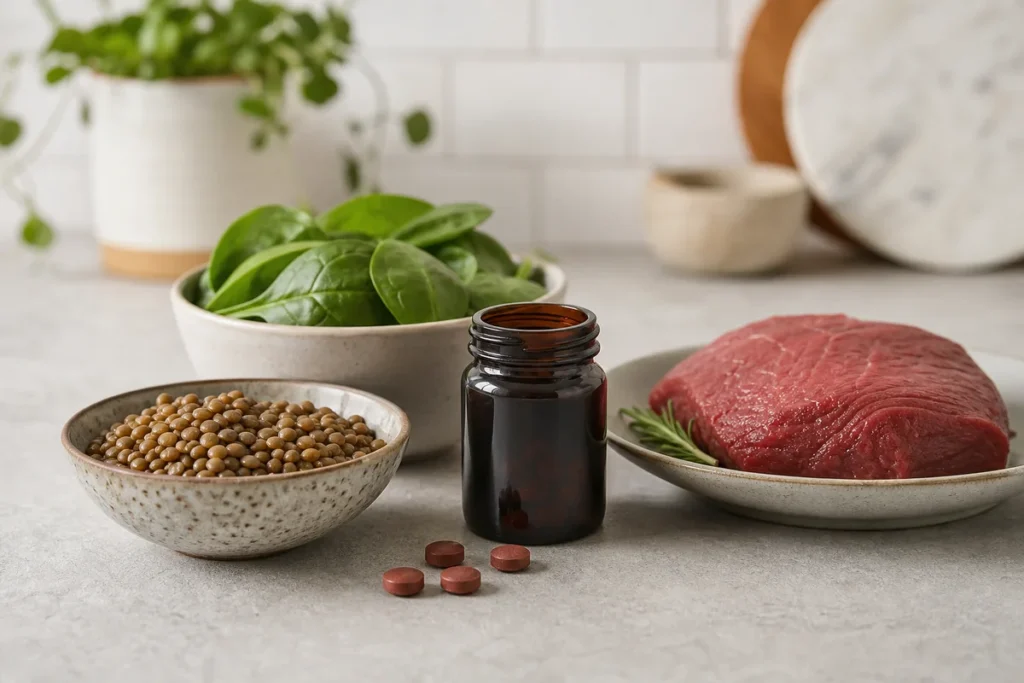
Quick answer: Vitamin D first: ask your GP about funded monthly colecalciferol on prescription. Then creatine monohydrate, such as NZ brand Me Today Creatine 5000 (around NZ$34 for 300g, on sale at about NZ$20 when we checked), and magnesium glycinate, such as GO Healthy GO Magnesium Glycinate (around NZ$28.80 for 60 capsules), both at HealthPost. Prices checked October 2026.

Supplement advice on the internet is overwhelmingly written for 28-year-olds who want more energy and better skin. But the readers asking us the best questions lately are in their 50s, 60s and 70s — and the question changes with the decades. It stops being “what optimises me?” and becomes “what actually protects muscle, bone, brain and independence for the next thirty years?”
That’s a better question, and the research community agrees — “healthspan” (years lived in good health, not just years lived) has become the organising idea in nutrition science. Here’s the honest NZ guide to what’s worth it after 50, roughly in order of evidence.
1. Vitamin D — useful when risk or low status justifies it
In a New Zealand winter, vitamin D deficiency is genuinely common — and after 50 it matters more, because vitamin D works with calcium to slow the bone-density decline that accelerates with age (particularly post-menopause). Skin also becomes less efficient at making vitamin D from sunlight as we age, so the “just get outside” advice does less than it did at 30.
Worth knowing: in NZ, your GP can prescribe funded monthly vitamin D (colecalciferol) if you’re deficient or at risk — one of the few supplements the health system will simply give you. Ask at your next appointment before buying anything. We’re publishing a full vitamin D guide separately this winter.
2. Protein (and creatine) — the muscle defence budget
From roughly our 40s we lose muscle steadily (sarcopenia), and after 50 the loss compounds — it’s the quiet driver behind falls, frailty and lost independence decades later. The defence is unglamorous: resistance exercise, more protein than you probably eat (expert guidance commonly suggests about 1.0–1.2g per kg daily for healthy adults over 65, with higher intakes sometimes considered for active people or during illness under professional guidance), and increasingly, creatine.
Protein powder isn’t compulsory — it’s a convenience for hitting numbers that are genuinely hard to reach with a smaller appetite. And creatine monohydrate (3–5g daily), long stereotyped as a gym-bro powder, now has solid evidence for preserving muscle and strength in older adults when paired with exercise. Our creatine guide covers the details — everything in it applies just as much at 65 as at 45.
3. Omega-3 — consider diet, cardiovascular context and individual goals
Fish oil’s evidence has had ups and downs, but for over-50s the case remains reasonable: eating oily fish fits heart-healthy dietary patterns, but supplement benefits depend on dose and clinical context. Trials have not shown a reliable prevention benefit for age-related cognitive decline. Eating oily fish twice a week beats capsules; capsules beat nothing. Buy brands that publish freshness (oxidation) testing — rancid fish oil is worse than none, and it’s common in products that sit in warm warehouses.
4. Magnesium — sleep, muscles, and the most common “actually deficient” mineral
Magnesium intake drops with age while needs don’t, and it touches sleep quality, muscle cramps, and blood pressure regulation. Glycinate is the gentle, sleep-friendly form; citrate is fine and cheaper; oxide is the cheap one your body largely ignores. If night cramps or restless sleep are your complaints, this is the first thing we’d trial for a month.
5. Joint support — where the money mostly burns
Here’s the honest tier list for the joint aisle: reasonable evidence — omega-3 (above), and undenatured type-II collagen (UC-II), a newer entrant with promising trials for knee comfort. Mixed-to-weak — standard glucosamine and chondroitin, which decades of trials suggest help some people modestly and most people not at all. Genuinely useful but not a supplement — strength training, which remains the single best-evidenced intervention for joint pain in older adults. If budget forces a choice, spend on the gym shoes, not the glucosamine. New Zealand green-lipped mussel extract is the homegrown option in the same aisle, and our guide to green-lipped mussel extract for joints covers what the evidence actually shows.
What about a multivitamin?
A quality 50+ multivitamin is a reasonable backstop for shrinking appetites — B12 absorption in particular declines with age, and 50+ formulas are built around that. But it’s a floor, not a strategy: it won’t move the needle on muscle, bone or joints the way the items above do. Our best multivitamins NZ guide covers solid NZ options including dedicated 50+ formulations. Colostrum is another supplement that has trended hard lately, and our honest guide to colostrum in NZ sets out what the evidence does and does not support.
The over-50 shortlist
| Priority | What | Why |
|---|---|---|
| 1 | Vitamin D (ask GP re funded script) | Bone + immune, NZ winter deficiency is common |
| 2 | Protein target + creatine 3–5g | Muscle is the retirement fund nobody talks about |
| 3 | Omega-3 (or oily fish 2x/week) | Heart, joints, cognitive-ageing research |
| 4 | Magnesium glycinate | Sleep, cramps, commonly under-consumed |
| 5 | 50+ multivitamin (optional) | B12 backstop for smaller appetites |
The bottom line — and the important caveat
Our pick: start with vitamin D through your GP, because funded colecalciferol costs you nothing, then add 3–5g of creatine monohydrate a day alongside resistance training to protect muscle. Me Today Creatine 5000 is pure micronised creatine monohydrate at around NZ$34 for 300g. If night cramps or restless sleep are your main complaint, trial GO Healthy GO Magnesium Glycinate (around NZ$28.80 for 60 capsules) for a month instead. If your appetite has shrunk, a 50+ multivitamin is a reasonable B12 backstop.
After 50, food quality, enough protein and progressive resistance exercise usually matter more than a large supplement stack. Vitamin D, creatine, omega-3 or magnesium may be useful in particular circumstances, but none is automatically required for every person. The caveat matters more at this age than any other: over-50s are the group most likely to be on daily medications, and supplements interact — fish oil with blood thinners, magnesium with some blood-pressure and osteoporosis medicines, and plenty more. Run your full list past your GP or pharmacist before adding anything. It’s a five-minute conversation that makes everything above safer.
Sources and further reading
- PROT-AGE Study Group: Protein intake recommendations for older adults
- Creatine plus resistance training in older adults: meta-analysis
- Omega-3 and cognitive decline: systematic review
Health information is general and does not replace advice from a qualified clinician or pharmacist. Check supplements for suitability with your medicines, allergies, pregnancy status and health conditions.