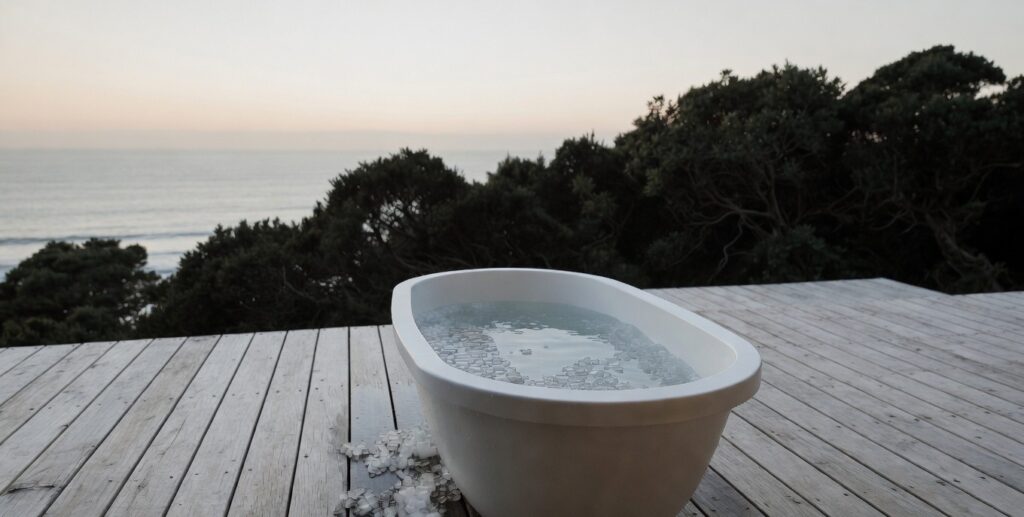
Right, so you’ve seen the videos. Some bloke sitting in a tub of ice looking simultaneously like he’s regretting every life choice and also experiencing a profound spiritual awakening. And you’ve thought — is that actually worth doing? Or is it just modern-day torture dressed up as wellness?
We’re here to give you the honest answer — which is that cold water immersion has real, measurable effects, but a thinner evidence base than its popularity suggests. The largest pooled analysis to date (Cain et al., PLOS ONE, 2025) drew on 11 randomised controlled trials and 3,177 participants, and rated the certainty of that evidence Grade B for stress and inflammation and Grade D for immunity. The authors describe the field as constrained by few trials, small samples and a lack of diversity in who gets studied. Worth knowing before you spend anything.
Medical disclaimer: Cold water immersion is not suitable for everyone. People with cardiovascular conditions, Raynaud’s disease, cold urticaria, or other health conditions should consult their GP before starting cold exposure therapy.
What Does Cold Plunging Actually Do?
The core mechanism is this: cold water immersion triggers a significant release of norepinephrine — a hormone and neurotransmitter that stabilises blood pressure, improves circulation, and is responsible for that electric, wide-awake feeling you get after a cold plunge. The most-cited measurement comes from a small study in which young men sat in 14°C water for a full hour, head out: noradrenaline rose 530% and dopamine 250% (Šrámek et al., European Journal of Applied Physiology, 2000). Read that carefully before quoting it at anyone — it is a one-hour immersion in a small group of young men, not the two-to-five minute plunge most people actually do, and the equivalent figures for a short plunge have not been established.
Beyond the immediate effect, consistent cold exposure has been shown to:
- Reduce muscle soreness — the most consistently reported effect, and the main reason athletes reach for it after a hard session. The inflammation story is the opposite of what usually gets claimed, though: the Cain analysis found inflammatory markers increased significantly immediately after immersion and again an hour later, rather than falling
- Reduce stress — with a caveat on mood — the same analysis found a significant reduction in stress twelve hours after immersion, but no significant difference in mood at any time point measured. Plenty of people report feeling better afterwards; that has not so far shown up as a measurable mood effect in trials
- Boost dopamine — cold exposure triggers dopamine increases that can last hours
- Support better sleep — core body temperature drop post-plunge signals the body to sleep
- Improve circulation — the alternating constriction and dilation trains blood vessel responsiveness
- Build mental toughness — getting into a cold bath when your body is screaming not to is remarkable training for willpower
Cold Plunge Studios in NZ — Where to Try It First
Auckland
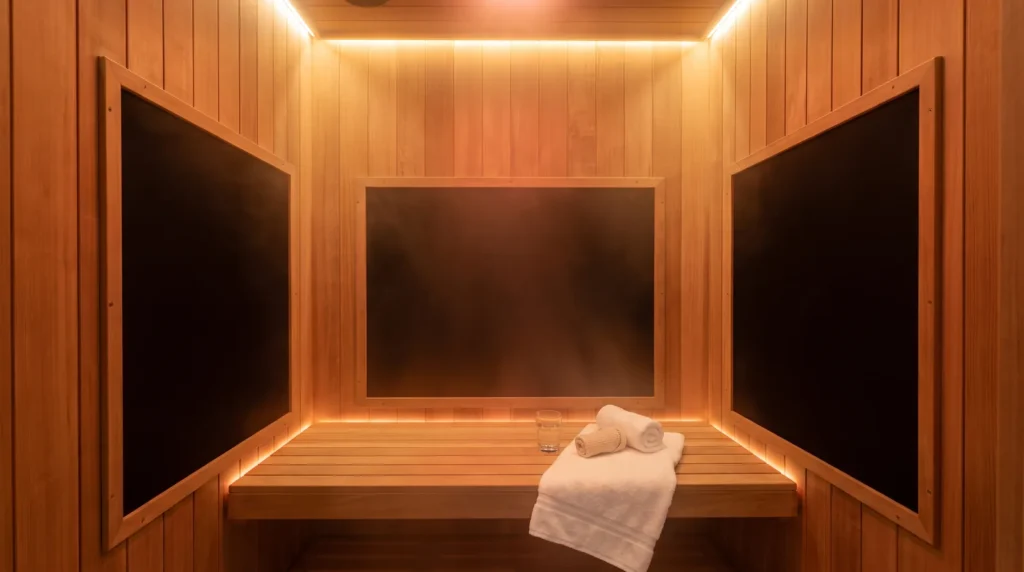
WYLD Chiropractic in Auckland offers private infrared sauna and ice bath suites — perfect for contrast therapy (alternating between hot and cold, which significantly amplifies the recovery benefits). Their ice baths are kept between 4–6°C. Book at wyldchiropractic.co.nz.
Wellington
Run Pōneke offers cold plunge pool access in Wellington — ideal for runners and athletes looking for post-workout recovery. Book at runponeke.nz.
Bay of Plenty
P3 Recovery offers purpose-built contrast therapy facilities with multiple temperature pools — two warm and two cold — allowing you to properly cycle through hot and cold immersion. Their wet therapy zone runs an ice bath at 5–8°C, a cold plunge pool at 13–15°C, a warm hydrotherapy pool at 28–34°C and a hot contrast plunge at 35–40°C. Worth being clear about where it is: P3’s only New Zealand centre is in Mount Maunganui (17A Newton Street), not Auckland — the company’s other sites are all in Australia. Book at p3recovery.co.nz.
Best Home Ice Bath Tubs in NZ
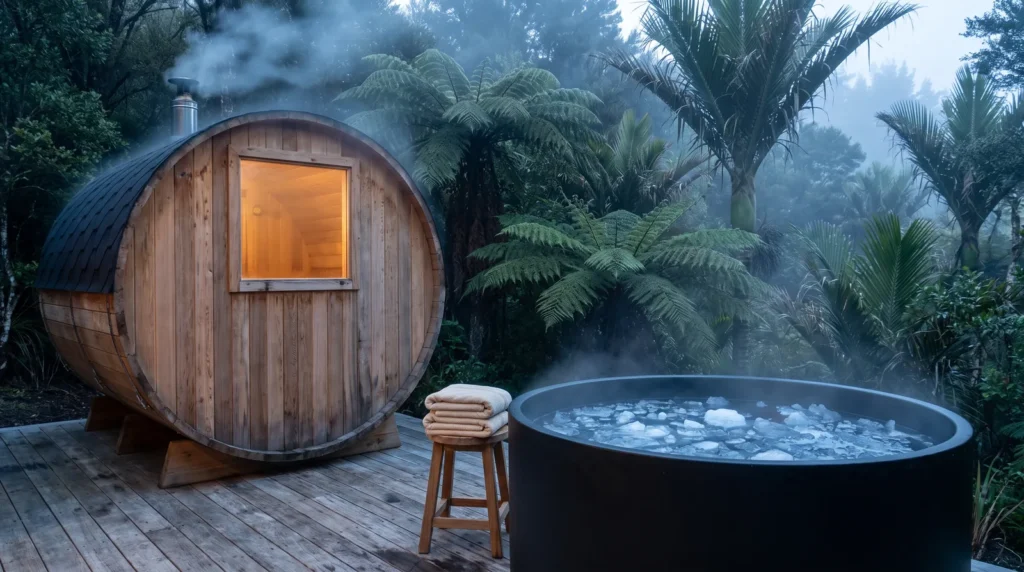
Once you’re hooked (and you will be), having a cold plunge at home makes the habit dramatically easier to maintain. Here’s what’s available in NZ:
1. Freeze Tub — NZ’s Best-Known Ice Bath Brand
Freeze Tub is NZ’s leading ice bath manufacturer with superior reinforced, thickened PVC with 5 thermal layers. The Solo is ideal for one person and can be deflated and stored easily. The Pro is larger with fiberglass-reinforced construction. Their newest 2026 Summit model is a patented design with a detachable hot-melt inner lining withstanding over 1100 lbs of water pressure. The Solo starts at NZ$159 and the Summit at NZ$227; the hard-shell Pro is NZ$918, and their barrel-and-chiller setups run from NZ$2,524 up to NZ$6,199 for the stainless one. Available at freezetub.com. Best for: Most Kiwis — well-reviewed, well-supported, and built for NZ conditions. Check before you order: Freeze Tub’s product pages currently carry an approximate eight-month lead time, so this is not a next-week purchase — worth confirming the current wait with them directly.
2. Everest Plunge — Best Chiller-Ready Option
Popular with serious athletes and biohackers, Everest Plunge offers cold plunge tubs with compatible chiller units so you can maintain a consistent temperature without constantly buying ice. A game-changer for those who want to plunge daily without the hassle. Their inflatable pool is NZ$999, the stainless barrel NZ$2,899, and tub-plus-chiller packages start around NZ$3,199 — though the whole range was on a site-wide discount when we checked, so look at what the standing price is before you commit. Available at everestplunge.co.nz. Best for: Daily plungers who want consistent temperature control.
3. Alpine Spas Ice Bath — Best Premium Option
For those wanting the luxury end, Alpine Spas offer marine-grade stainless steel and cedar-clad ice baths with their AlpineChill™ unit — WiFi controlled and capable of cooling to 3°C or warming to 40°C. NZ-designed and built for our variable climate. The Apollo is NZ$5,495, the Apollo XL NZ$6,495 and the acrylic Triton NZ$6,495 on an introductory offer, which Alpine list as rising to NZ$6,995, with the AlpineChill unit included rather than charged separately. Premium pricing, premium experience. Available at alpinespas.co.nz. Best for: Serious investment in home wellness — combines cold plunge and heat therapy in one unit.
What an Ice Bath Actually Costs in NZ: The Three Tiers
Before you pick a brand, pick a tier — because the real decision is how you’ll use it, and the price spread is enormous. All figures NZD, checked across NZ retailers in September 2026:
| Setup | Typical NZ cost | Best for | The catch |
|---|---|---|---|
| Portable/inflatable tub | $89–$999 | Trying the habit without commitment | You’re buying ice every session — except in winter, when cold tap water (10–14°C in most of NZ) does the job free |
| Insulated hard-shell tub | $784–$3,849 | Regular plungers, 3+ sessions a week | Water temperature still follows the weather in summer |
| Tub + chiller system | $2,524–$10,899 | Daily, year-round, temperature-controlled cold | Needs an outdoor power point, and filters/water care become a small ongoing job |
Is a chiller worth it? A chiller unit circulates and refrigerates the water to a set temperature (typically 3–12°C) with filtration built in — meaning no ice runs, consistent cold, and water that stays clean for weeks. It’s what turns cold plunging from a winter hobby into year-round infrastructure. Our honest rule: don’t spend chiller money until you’ve plunged consistently for 2–3 months on a cheap tub. A $159 tub used four times a week beats a $5,000 system used four times — and most people who quit home cold plunging quit in their first summer, right when the chiller would’ve earned its keep. Buy for the habit you have, not the one you’re aspiring to.
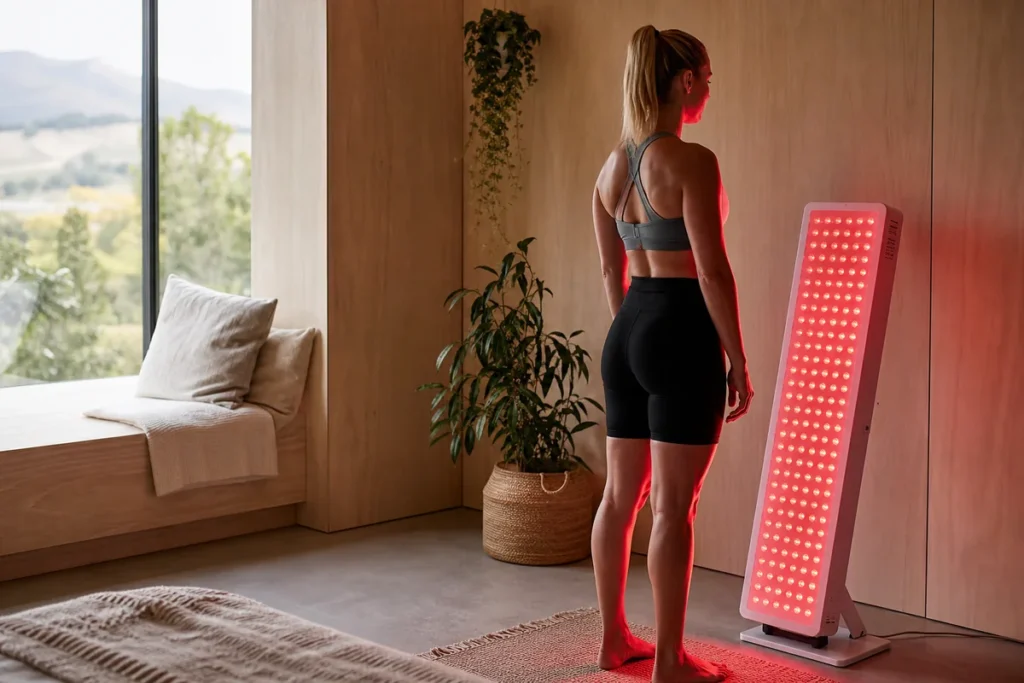
One more honest note on temperature: the research on cold-water immersion mostly uses 10–15°C water — you don’t need 3°C, especially to start. Colder mostly means harder, not healthier. If you are pairing plunges with heat, it is worth reading what the evidence on infrared sauna benefits actually shows.
How to Start Cold Plunging Safely
- Never plunge alone — at home as much as at a facility. Have someone with you, or at the very least within earshot and aware of what you are doing. Cold water can take the strength out of your hands and arms within seconds, and a plunge tub is deep enough to drown in
- Get in slowly — respect the cold shock response — hitting cold water sets off an involuntary gasp followed by fast, uncontrolled breathing you cannot simply decide to stop. It is the mechanism behind most cold-water incidents, and it is the reason you lower yourself in rather than jump. Breathe out as you enter, and let your breathing settle before you do anything else
- No alcohol before or during a session. It blunts your judgement about how cold you are and how long you have been in, which are the two things you need to judge well
- Mind the transition if you are pairing it with heat — going from a hot sauna straight into a 10–15°C plunge asks a lot of your heart and blood vessels in a very short space of time. If you are new to it, take a minute or two at room temperature in between rather than going straight across
- Start at 15–18°C — general hose temperature, not full ice bath
- Begin with 30–60 seconds — build up gradually over weeks. Long first sessions are how people get into trouble, not how they adapt faster
- Morning is best — the norepinephrine and dopamine release sets up the day well
- Breathe slowly — controlled breathing through the cold shock response is the skill to develop
- Don’t plunge after 7pm — the adrenaline surge can make sleep difficult
- Combine with sauna for contrast therapy — 10–15 mins hot, 2–5 mins cold, repeat
The Bottom Line
Cold plunging is cheap to try, low-risk for healthy adults who follow the safety rules above, and has reasonable evidence behind soreness and stress — and thinner evidence behind most of the rest. It’s genuinely uncomfortable at first — that’s kind of the point. Most people who stick with it do so because of how they feel afterwards rather than because of any particular study, and that is a perfectly good reason, as long as you are not expecting it to do more than it does.
Try it at a studio first. Then, if you’re hooked, get a Freeze Tub. You’ll never look back.