
Your home is either working for your health or against it. The light quality, the air, the temperature, the noise levels, the devices you keep in your bedroom — all of it affects sleep, recovery, stress, and how you feel day-to-day. The good news is that most of the meaningful changes don’t require a renovation — they require a few smart product choices and some intentional habits.
Here’s what’s worth investing in for a genuinely wellness-supporting home environment in 2026.
Sleep Environment — The Highest Return on Investment
Sleep quality is the single most impactful factor for physical recovery, mental health, and cognitive performance. Every other wellness tool works better when your sleep is optimised. This is where to start.
Blue Light Glasses
Blue light from screens suppresses melatonin production and disrupts circadian rhythm. Wearing blue-light blocking glasses after sunset is one of the simplest interventions for improving sleep quality. Research by Andrew Huberman and others suggests quality blocking (amber lens, not just clear lens) can meaningfully improve melatonin onset. Available from multiple NZ retailers and iHerb, typically somewhere around NZ$30–80 — treat that as indicative rather than checked, as it varies widely by retailer. Look for amber or orange-tinted lenses — the clear ones don’t block enough spectrum to matter.
Weighted Blankets
The gentle, even pressure of a weighted blanket (typically 7–12% of your body weight) has been shown in clinical research to reduce cortisol, increase serotonin, and support deeper sleep. Particularly beneficial for anxiety, restless sleep, and sensory processing. Available in NZ from Harvey Norman, Adairs (search their bedding range — they don’t keep a dedicated weighted blanket category) and online retailers. Expect roughly NZ$80–200 as an indicative range; we haven’t price-checked individual retailers, so compare before you buy. Look for: 100% cotton covers, glass bead fill (not plastic pellets), machine washable.
Blackout Curtains
Light during sleep disrupts circadian rhythm even through closed eyelids. NZ summer mornings are particularly brutal for early light exposure. Quality blackout curtains are one of the highest-leverage purchases for sleep quality. Available from Spotlight, Mitre 10, and online retailers. Indicative cost is around NZ$60–200 depending on window size, but we haven’t price-checked this — ready-mades and custom sizing differ a lot.
Air Quality
Air Purifiers
Indoor air quality is often worse than outdoor air. Dust, mould spores, volatile organic compounds (VOCs) from furniture and cleaning products, and pet dander all accumulate inside. A quality HEPA air purifier in the bedroom makes a meaningful difference to respiratory health and sleep quality. Dyson and Winix models are both widely available in NZ, but they sit at different ends of the market. Dyson purifiers currently run from about NZ$597 for the Pure Hot+Cool HP00 up to around NZ$1,299 for the Purifier Hot+Cool HP2 De-NOx, with most models between NZ$798 and NZ$999. Winix and other HEPA brands are considerably cheaper, and a well-specified mid-range unit will do the job in a bedroom.
Diffusers and Essential Oils
Ultrasonic diffusers with quality essential oils (lavender and cedarwood for sleep, peppermint and eucalyptus for focus and morning energy) offer a low-cost, low-risk way to support your environment. Available widely in NZ, indicatively around NZ$30–80 for a decent ultrasonic diffuser — not a figure we’ve price-checked across retailers. Go Native is a NZ-owned supplier working out of an Auckland workshop with a Devonport warehouse, stocking certified organic and cosmetic-grade essential oils alongside carrier oils and other natural ingredients — a supplier and reseller rather than a local distiller, but a well-established one.
Movement and Recovery Tools
Yoga / Meditation Space
Designating even a small corner of your home as a movement and meditation space changes how often you use it. A quality yoga mat (see our sustainable yoga mat guide), a meditation cushion, and a simple set of resistance bands are enough to support a consistent daily practice without a gym membership. Total cost: NZ$100–200 for quality gear that lasts years.
Cold and Heat Therapy at Home
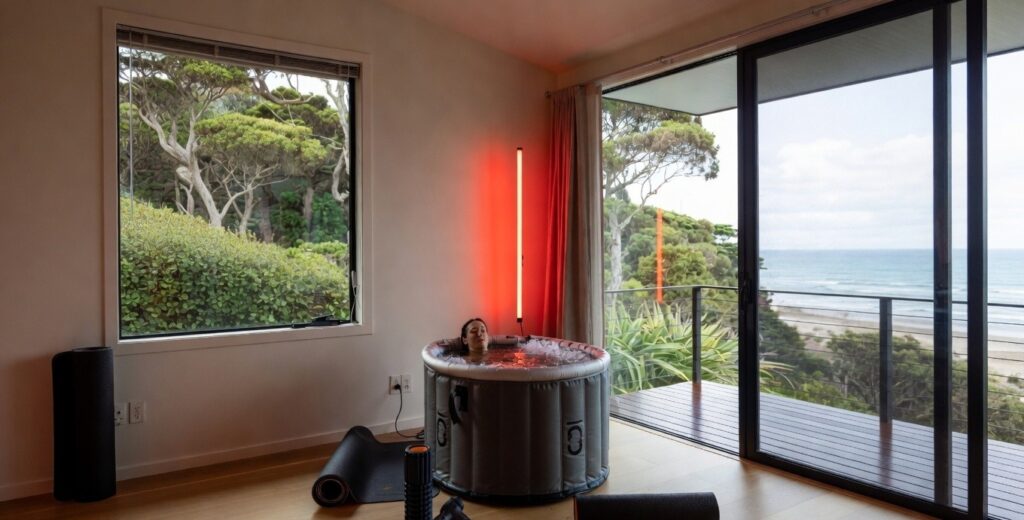
For the full home wellness setup: a sauna barrel (barrel saunas from Alpine Spas currently run NZ$9,995 for the 4–6 person Traditional Barrel up to NZ$17,995 for the wood-fired Vista XL — budget well above the figures older guides quote) and an ice bath tub (the NZ-made Freeze Tub Solo starts at NZ$159, with larger rigid-shell and chiller-compatible models above that) create a complete contrast therapy circuit in your back garden. An investment — but for serious wellness enthusiasts, it transforms daily recovery. See our full cold plunge guide for detailed tub recommendations. Our home infrared sauna buying guide covers cabin sizes, running costs and what to check before buying. Red light panels are another at-home recovery tool, and our guide to red light therapy benefits and devices covers what the research supports and what to check on the specs.
Nutrition in the Home Environment
Your home food environment shapes 80% of your nutritional outcomes. A few practical home wellness upgrades:
- High-quality blender — makes greens powders, protein shakes, and smoothies effortless. Nutribullet (the common 600W and 900W models sell for around NZ$90–150 at Harvey Norman and Briscoes) or Vitamix (NZ retail runs roughly NZ$679 for the Explorian E310 up to NZ$1,675 for the Ascent A3500i — note Vitamix has no New Zealand storefront of its own, so buy through an NZ kitchenware retailer) depending on seriousness
- French press or quality coffee setup — morning ritual quality matters for stress and routine
- Filtered water — a countertop or under-bench water filter removes chlorine and other compounds from NZ tap water. Brita and similar, indicatively around NZ$50–80 for a jug or countertop filter — not a figure we’ve price-checked
The Bottom Line
You don’t need to do everything at once. Start with the sleep environment — blackout curtains, blue light glasses, weighted blanket if sleep is a challenge. That alone will transform your baseline. Then work outward from there.
A home that supports your wellness is the most underrated investment you can make. It’s there every single day — working for you or against you. Make it work for you.
Prices in this guide were checked against retailer and brand websites in September 2026 where a current figure was published; ranges flagged as indicative have not been individually price-checked. Prices change — confirm before you buy.