Quick answer: Plain psyllium husk, such as Auckland brand Ceres Organics Certified Organic Psyllium Husk (around NZ$11.50 for 180g at HealthPost), or for a one-scoop blend, Western Australian Qenda Ultimate Fibre (around NZ$135 for 500g from NZ stockist The Reset Collective). Prices checked October 2026.
Every year or two, wellness culture picks a nutrient and maxxes it. Protein had a long run (still going, honestly). In 2026 it’s fibre — “fibermaxxing” is all over TikTok and the supplement industry’s trend reports, with prebiotic teas, fibre-boosted snack bars and fancy powder blends everywhere you look.
Here’s the thing though: unlike a lot of trends we cover, this one is chasing a genuine gap. Most New Zealand adults don’t hit the recommended fibre intake — roughly 25g a day for women and 30g for men — and the shortfall has real consequences for gut health, cholesterol, blood sugar and even mood. So let’s do this properly: what fibre actually does, whether you need a supplement at all, and which options are worth Kiwi money.
Why fibre suddenly matters to everyone
The fibermaxxing trend rides on a decade of gut-microbiome research that keeps landing on the same conclusion: the bacteria in your gut run on fibre, and what they do with it — producing short-chain fatty acids, training immune cells, signalling to the brain via the vagus nerve — can influence bowel function and a range of metabolic and immune pathways, although individual responses vary by fibre type and dose. The 2026 twist is that people are getting smarter about fibre types, not just grams: soluble vs insoluble, fermentable prebiotic fibres vs bulking fibres, and how each behaves differently.
The short version worth knowing:
- Soluble, gel-forming fibre (psyllium, oats, chia) — the workhorse for regularity, cholesterol and blood-sugar smoothing. The best-evidenced category.
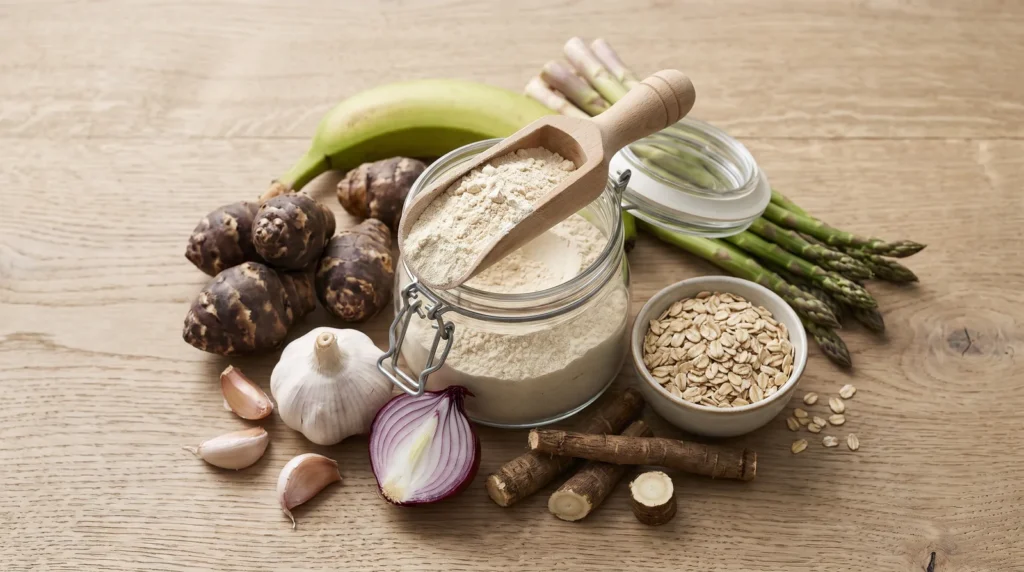
- Prebiotic / fermentable fibre (inulin, GOS, resistant starch, green banana flour) — feeds beneficial gut bacteria specifically. Great in theory; introduce slowly unless you enjoy surprises.
- Insoluble fibre (wheat bran, veggie roughage) — adds bulk and speed. Mostly a food thing, not a supplement thing.
Do you actually need a supplement?
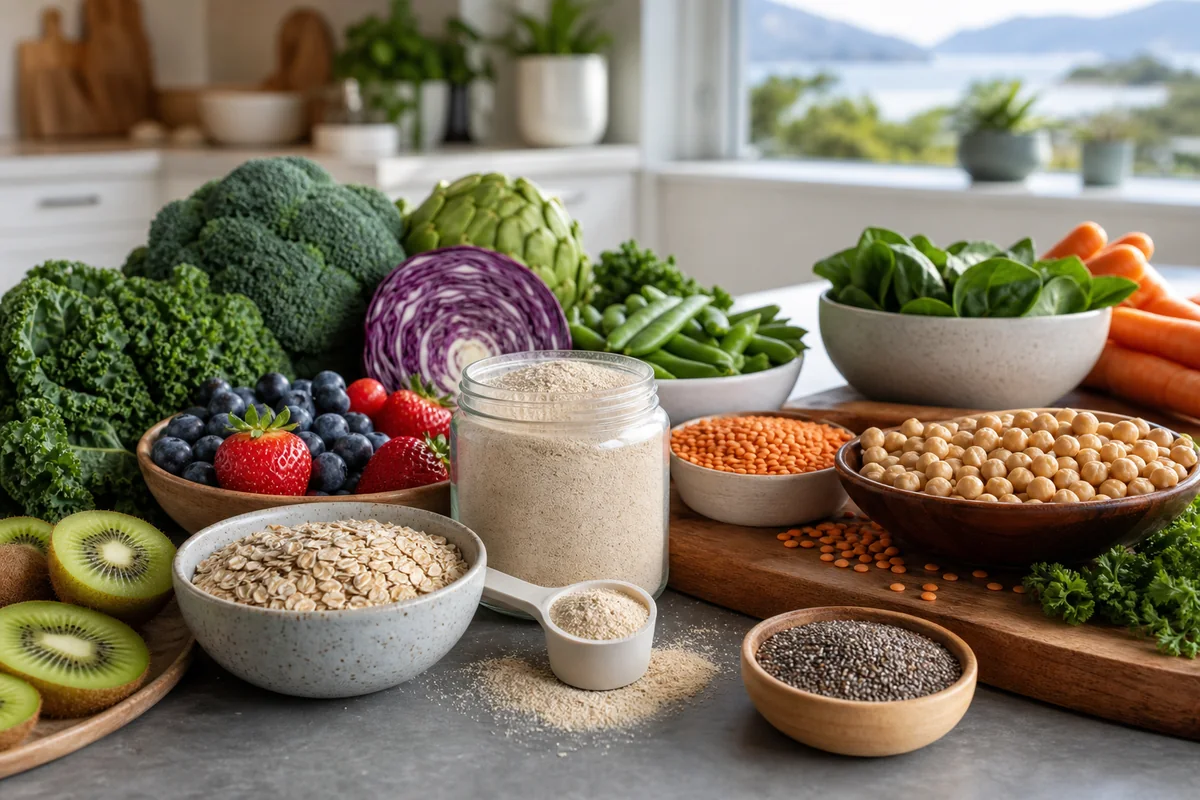
Honest answer: food first, always. Half a cup of chickpeas, two kiwifruit (fitting, and genuinely one of the best-researched fruits for gut regularity), a serve of oats and a slice of grainy bread gets you a long way toward the target, with polyphenols and micronutrients no powder replicates.
But if you’ve read that paragraph before and your actual daily intake still looks like toast and coffee, a supplement is a legitimate bridge — and the difference between “should eat more plants” and “actually getting 28g most days” is worth more than the purism. That’s the fair case for fibermaxxing.
The main fibre supplement options in NZ
| Type | What it is | Best for | Watch out for |
|---|---|---|---|
| Psyllium husk | Cheap, plain, gel-forming | Regularity, cholesterol — best evidence per dollar | Texture. Drink it fast, chase with water |
| Blended fibre formulas | Multiple fibres + herbs (e.g. Qenda Ultimate Fibre) | People who want one daily do-everything scoop | Pricier; check what’s actually in the blend |
| Prebiotic powders (inulin/GOS) | Fermentable fibres targeting the microbiome | Pairing with probiotics, gut-focused goals | Start with half doses — bloating is common early |
| Fibre gummies | Convenient, low-dose | Genuinely nothing, honestly | Often 2–4g per serve with added sweeteners — expensive way to not fix the problem |
We’ve done a full deep-dive on the blended option Kiwis search for most — read our Qenda Ultimate Fibre review for the honest breakdown of what’s in it, what it costs per serve, and who it suits. For the microbiome side of the equation, pair this article with our best probiotics NZ guide — fibre feeds the bacteria; probiotics are the bacteria.
How to fibermaxx without wrecking your week
The classic mistake is going from 15g to 35g overnight and blaming the supplement for the consequences. Fibre needs an on-ramp:
- Increase by ~5g per week, not per day. Your gut bacteria need time to adjust to the new food supply.
- Water matters as much as fibre. Gel-forming fibres without enough fluid can worsen the exact problem you’re fixing.
- Spread it across the day rather than one heroic morning dose.
- Timing with medications: fibre supplements can slow the absorption of some medicines — take them a couple of hours apart, and check with your pharmacist if you’re on anything long-term.
- See your GP first if you have IBS, IBD or any diagnosed gut condition — fibre type matters enormously there, and generic advice (including this article) isn’t written for those situations.
The bottom line
Fibermaxxing is that rare thing: a wellness trend pointed at a real deficiency most of us actually have. Food first, always. If you need a supplement, our pick is plain psyllium husk, which has the best evidence per dollar for regularity and cholesterol: Ceres Organics Certified Organic Psyllium Husk is around NZ$11.50 for 180g. If you want one daily do-everything scoop and don’t mind paying far more, Qenda Ultimate Fibre (made in Western Australia) is around NZ$135 for 500g. Skip the gummies, and add prebiotics if you’re going deep on gut health. Build up slowly, drink more water than feels necessary, and your gut — and probably your cholesterol panel — will thank you by spring.
Sources and further reading
Health information is general and does not replace advice from a qualified clinician or pharmacist. Check supplements for suitability with your medicines, allergies, pregnancy status and health conditions.