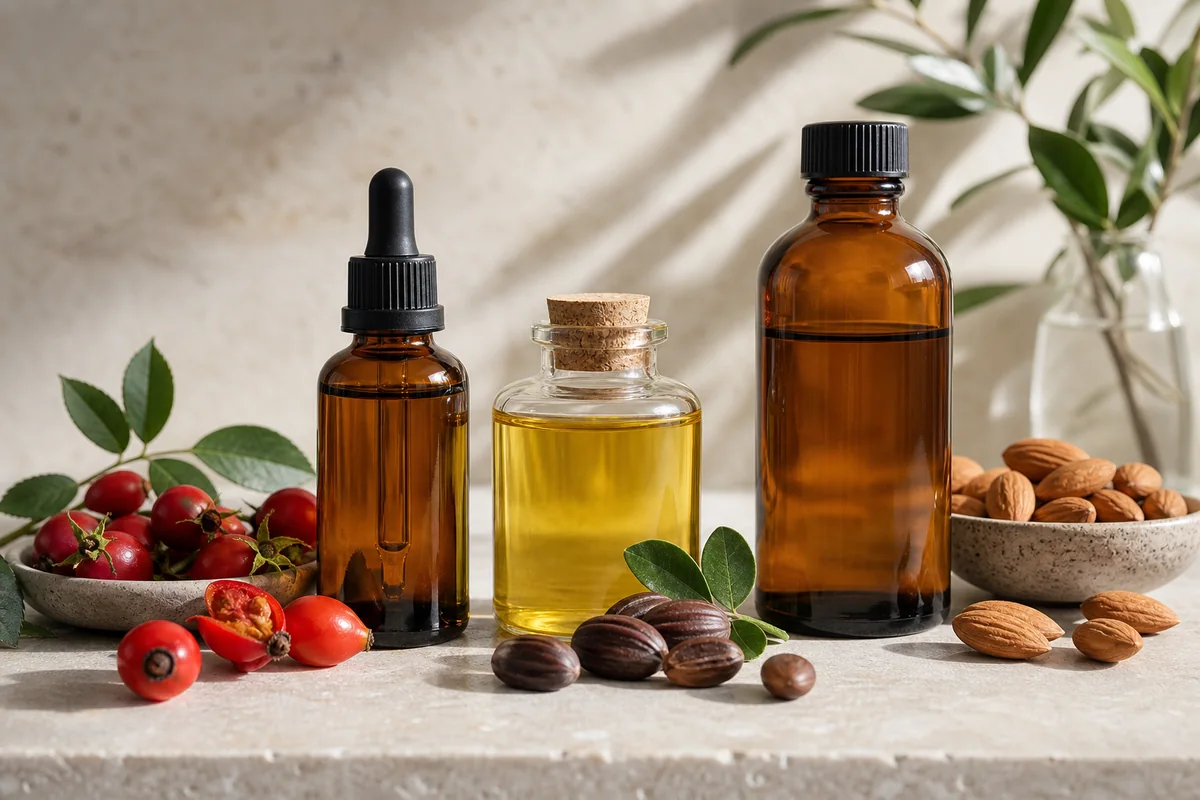
Strip the marketing off most “natural face oils” selling for $60+ and you’ll find a simple plant oil — or a blend of two or three — that you can buy for a fraction of the price. Carrier oils (so called because they “carry” essential oils in dilution) are legitimate skincare in their own right, and choosing between them mostly comes down to your skin type and what you’re trying to fix.
Rosehip oil
Rosehip seed oil is rich in linoleic and linolenic fatty acids and carries provitamin A carotenoids, which is where most of its reputation for tone and texture comes from. It’s been looked at for hydration, appearance and scarring, but we haven’t found evidence solid enough to promise you a result — and where people do notice a change, it’s over weeks to months, not days.
It’s a dry-feeling oil that absorbs fast and suits most skin types, including mildly acne-prone skin. Use it at night. It oxidises faster than most oils, so buy small bottles, look for cold-pressed, keep it somewhere cool and dark, and follow the product’s use-by guidance.
Jojoba — the one for balance
Technically a liquid wax rather than an oil, jojoba is close in structure to human sebum. It tends not to feel greasy, and it’s the default recommendation for combination and oily skin, oil cleansing, and as the carrier for essential-oil blends. It’s stable, near-odourless and lasts for ages — the sensible first bottle.
Sweet almond — the affordable all-rounder
Rich in oleic acid and vitamin E, sweet almond oil is the classic body and massage oil: nourishing, mid-weight, inexpensive (around $15 for 500ml in NZ when we last looked), and gentle enough for most skin. If you want one oil for the whole body rather than just the face, this is it. Skip it if you have nut allergies in the house.
Apricot kernel
Very similar profile to sweet almond but lighter in feel, which makes it lovely for facial massage and mature or sensitive skin. Often the better pick if almond feels too rich on your face.
Avocado — the rich one (and locally grown)
Avocado oil is heavier, packed with oleic acid, and best for very dry skin, rough patches, elbows, heels and winter body care. NZ-grown cold-pressed options exist, which is a nice bonus for keeping your skincare local.
Matching oil to skin type
| Skin type / goal | Best pick | Second pick |
|---|---|---|
| Oily / combination | Jojoba | Rosehip |
| Ageing, scars, tone | Rosehip | Apricot kernel |
| Very dry / winter skin | Avocado | Sweet almond |
| Body massage / everyday | Sweet almond | Apricot kernel |
| Sensitive skin | Jojoba | Apricot kernel |
What to look for when buying
- Cold-pressed and unrefined where possible — heat and solvent extraction strip the good stuff (refined versions are fine for soap-making, where cost matters more).
- Dark bottles and recent batch dates — plant oils go rancid; if it smells like old crayons, bin it.
- Single-ingredient honesty — a $70 “botanical facial elixir” is usually $12 of carrier oil with fragrance. Ingredient suppliers like PureNature sell the same oils by their actual names — sweet almond from about $15/500ml, NZ cold-pressed avocado from $13.20 for 100ml, with certified organic versions of most oils — which is the cheapest way to run a genuinely natural skincare routine. Prices checked September 2026, and they are indicative rather than current, so check before you buy.
“Natural” doesn’t automatically mean non-comedogenic or non-irritating. Patch test anything new on your inner forearm for a few days before it goes near your face.
The bottom line
You can build an excellent, evidence-sensible skincare routine around two bottles: jojoba (or almond) as your everyday base, and rosehip at night for tone and texture. For the brands doing beautiful ready-made formulations with NZ botanicals, see our guide to the best NZ-made natural skincare brands — and if you’d rather make your own, that’s a whole (cheaper) world of its own.
Skin-safety note: Patch-test a new oil on a small area before wider use. Sweet almond and apricot kernel oils may be unsuitable for people with relevant nut or kernel allergies; ask an allergy specialist if you are uncertain, and stop use if irritation develops.
Sources and further reading
- American Academy of Dermatology: How to patch-test skin-care products
- FDA: Microbiological safety and cosmetics
Those two sources cover patch testing and cosmetic microbiology — the safety guidance on this page. They do not support the comparisons between individual oils above, which are based on the oils’ composition and how they behave in use rather than on clinical trials.
Health information is general and does not replace advice from a qualified clinician or pharmacist. Patch test anything new on a small area of skin before wider use, and stop using it if your skin becomes irritated. If you are pregnant, breastfeeding, or managing a diagnosed skin condition, check with a clinician or pharmacist before putting a new ingredient on your skin.