Quick answer: Flow State Lion’s Mane Capsules (NZ, around NZ$65 for a two-month supply at flowstate.nz or HealthPost). For NZ-grown, Mynd New Zealand Lion’s Mane Capsules (Raglan, around NZ$49.50 for 30 days at myndmushrooms.co.nz). Prices checked October 2026.
You’ve probably seen Lion’s Mane popping up everywhere lately — in mushroom coffees, nootropic stacks, and those trendy adaptogen shots at the health café. But is this funky-looking fungus the real deal, or is it just another wellness fad that’ll be forgotten by next summer?
We’ve gone deep on the research — and the answer is more interesting than a simple yes or no.
Disclaimer: This article is for informational purposes only. Always consult your GP before starting new supplements, especially if you take medication or have existing health conditions.
What Is Lion’s Mane?
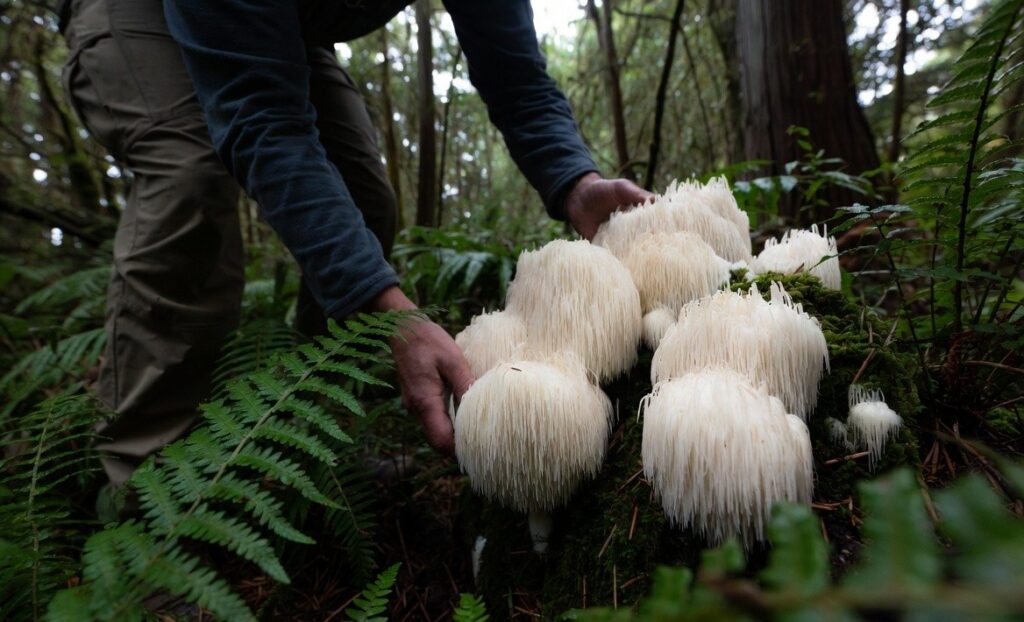
Hericium erinaceus — or Lion’s Mane — is a medicinal mushroom that looks exactly like its name suggests: a white, shaggy pom-pom that could pass for a lion’s mane. It’s been used in traditional Chinese and Japanese medicine for centuries, primarily for cognitive support and gut health. Modern research has started catching up with the traditional wisdom, and what it’s finding is genuinely exciting.
What Does the Research Actually Say?
The most compelling research centres on Lion’s Mane’s ability to stimulate Nerve Growth Factor (NGF) — a protein essential for the growth, maintenance, and survival of nerve cells. The key compounds responsible are hericenones (found in the fruiting body) and erinacines (found in the mycelium).
Human clinical studies have shown promising results for mild cognitive impairment. A 2009 double-blind study published in Phytotherapy Research found that participants taking 3g of Lion’s Mane daily showed significantly improved cognitive function compared to placebo — and importantly, those improvements diminished after supplementation stopped. More recent studies have looked at anxiety, depression, and sleep quality with encouraging results.
Is it a miracle brain drug? No. Is it one of the most interesting natural cognitive support compounds backed by actual science? Genuinely, yes.
What Lion’s Mane Is Good For
- Long-term cognitive support — building neural health over weeks and months
- Anxiety and mood — emerging research suggests benefits for the nervous system
- Gut health — lion’s mane has shown prebiotic effects and may support gut lining integrity
- Focus and mental clarity — many users report this, though it builds over time rather than hitting immediately
What It’s Not Good For
Lion’s Mane is not a stimulant. It won’t give you an immediate focus hit like caffeine. If you’re looking for acute, same-day cognitive performance, it’s not the right tool. Think of it as a long-term investment in your brain rather than a quick fix.
Best Lion’s Mane Supplements Available in NZ
1. Flow State Lion’s Mane Capsules — Best Overall
Flow State is a small, family-owned New Zealand business. Its lion’s mane is the one product on this page that clearly passes the standardisation test we ask you to apply. It is made from the fruiting body only (not mycelium on grain), dual-extracted with hot water and alcohol, and verified at more than 30% beta-glucans per batch. Every batch is independently tested here in New Zealand by Hill Laboratories and Massey University for active compounds, heavy metals, pesticides and microbes, and the reports are published on Flow State’s site. Each serving of two capsules gives 1,000mg of extract, with a little black pepper (piperine) added to help absorption. Flow State doesn’t say where its mushrooms are grown, so if NZ-grown matters to you, see Mynd below. Cost: around NZ$65 for 120 capsules, a two-month supply, from flowstate.nz, or around NZ$62 at HealthPost (checked October 2026). Best for: Anyone who wants a tested, standardised lion’s mane they can buy locally.
2. Mynd New Zealand Lion’s Mane Capsules — Best NZ-Grown
Mynd grows its mushrooms on its own farm in Raglan. One thing to understand before you buy: this isn’t the same species as the lion’s mane in the research above. Mynd uses pekepeke-kiore (Hericium novae-zealandiae), a native New Zealand relative of Hericium erinaceus. Mynd says it contains the same families of compounds (erinacines and hericenones) and publishes its own research and an independent test report. But the human trials discussed above used H. erinaceus, so the evidence for the native species is thinner. The capsules are a full-spectrum heat extract of 85% fruiting body and 15% mycelium, taken at two capsules a day. Mynd doesn’t give a beta-glucan percentage on the product page. Cost: around NZ$49.50 for 60 capsules, a 30-day supply, from myndmushrooms.co.nz (checked October 2026). A powder (around NZ$69.50 for 60 days) is also available. Best for: Kiwis who want a mushroom grown here from spore to capsule, and are comfortable that the research on this species is still early.
3. Lion’s Mane Stocked by HealthPost — Most Choice in One Place
HealthPost is a retailer, not a lion’s mane brand. There is no “HealthPost Lion’s Mane” product, and an earlier version of this guide was written as though there were. Its lion’s mane range includes Flow State (above), GO Healthy, Matakana Superfoods, Pro-life and SuperFeast. The cheapest is Pro-life Lion’s Mane Mushroom 9100mg, 60 vege capsules, at around NZ$27.40 (checked October 2026). Apply the standardisation test when you get there: look for a stated beta-glucan percentage and fruiting-body sourcing, not an unqualified “mushroom powder”. Not every product in the range discloses either. Best for: Kiwis who want to compare a few brands and get them delivered in one order.
4. Flow State Instant Coffee with Lion’s Mane — Best for Beginners
If you’re curious about lion’s mane but not ready to commit to a standalone supplement, a coffee is a low-stakes way to try it. Flow State has teamed up with Flight Coffee, a New Zealand roaster, on an instant version of Flight’s Bomber blend. Each 4g serve has 1,500mg of Flow State’s lion’s mane extract, which sits within the dose range used in the research. Cost: around NZ$42.50 for a 60g jar of 15 serves from flowstate.nz (checked October 2026). If you prefer plunger coffee, Mynd’s Mynd Brew has 1g of its NZ-grown mushroom per serving, at around NZ$59 for a 500g bag. There’s more in our guide to mushroom coffee in NZ. Best for: Coffee drinkers who want an easy introduction.
How to Take Lion’s Mane for Best Results
Consistency is everything with Lion’s Mane. Most research uses doses of 1–3g daily for 8–16 weeks. Don’t judge it after a week — this is a long-game supplement. Take it in the morning, with or without food. Stack it with other nootropics if you want — it pairs particularly well with ashwagandha and rhodiola.
The Verdict
Lion’s Mane is one of the few natural supplements with genuine, peer-reviewed human clinical evidence behind it. It’s not going to turn you into a genius overnight, but as a long-term brain health investment, the evidence is compelling enough that we’d recommend it to anyone serious about cognitive wellness.
Our pick is Flow State Lion’s Mane Capsules. It is fruiting body only, verified at more than 30% beta-glucans, batch-tested in New Zealand, and around NZ$65 for two months. If NZ-grown matters most to you, get Mynd New Zealand Lion’s Mane instead, knowing it is a native species with less research behind it. If you only want to try lion’s mane before committing, start with Flow State’s instant coffee.
Give it 8–12 weeks, be consistent, and see how your focus and mental clarity feel. Most people who commit to it notice the difference.
See also: Best Nootropics Available in NZ 2026 — our full round-up of brain supplements with NZD pricing.
Prices, pack sizes and label claims on this page were re-checked against brand and retailer listings in October 2026, and the product entries above were corrected where they did not match. Prices move frequently, so check before you buy.
This article is for informational purposes only. Consult your GP before starting new supplements.