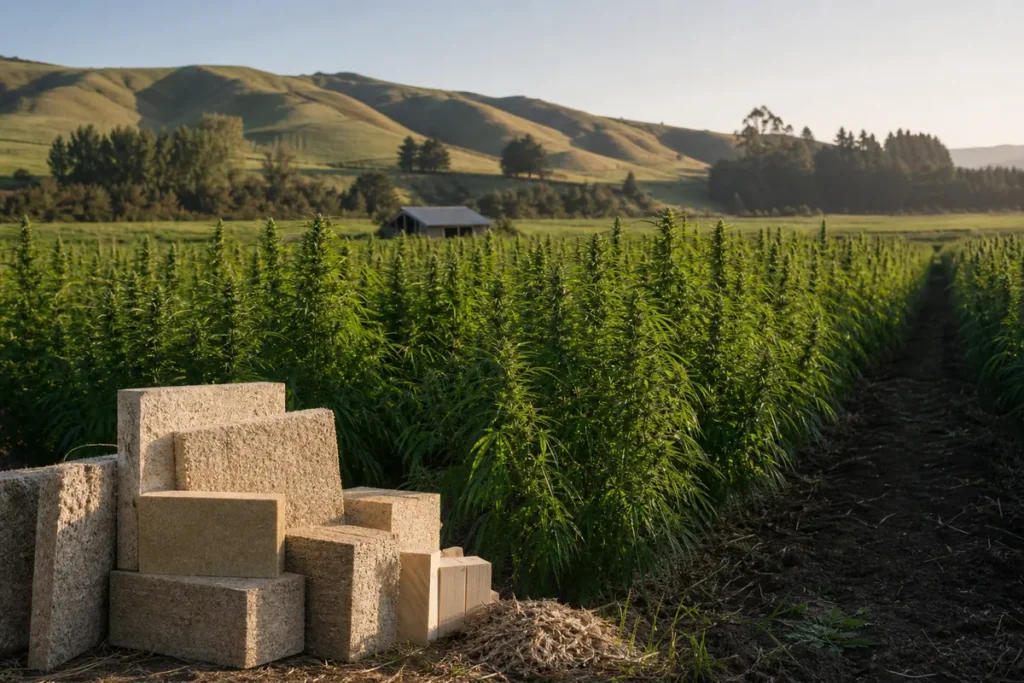
Quick answer: As of 28 May 2026, anyone in New Zealand can grow industrial hemp without a licence — just notify Police and MPI before planting. The THC threshold has been raised from 0.35% to 1%. For natural builders and hempcrete enthusiasts, this is a landmark shift: local hemp hurd (the material used in hempcrete walls) can now be grown by anyone, potentially cutting the cost and supply constraints that have held back NZ’s hempcrete building industry.
On 28 May 2026, something significant happened that barely made the mainstream news: New Zealand quietly became one of the more hemp-friendly countries in the world for growers. The licensing requirement that had governed industrial hemp cultivation since 2001 was abolished. No licence. No application fee. No waiting period. Notify Police and MPI, then plant and grow.
For the NZ sustainable building community, this is the most significant regulatory shift in decades. Here’s what actually changed, why it matters, and what it means for anyone interested in building with hemp.
What Changed on 28 May 2026
Industrial hemp has been legal to grow in New Zealand since 2001 — but only with a Ministry of Health licence. The application process, compliance requirements, and restricted THC threshold (0.35%) kept the industry small and the licence count low. Most NZ hempcrete builders have been importing hemp hurd from overseas, primarily Europe, adding cost and supply chain complexity to every build.
The change was announced in December 2025, but the rules themselves took effect on 28 May 2026, when the Misuse of Drugs (Industrial Hemp) Regulations 2006 were revoked and replaced by permission-based provisions under the Misuse of Drugs Regulations 1977. Three things changed:
- Licence requirement abolished: Anyone can now grow industrial hemp in New Zealand. No Ministry of Health licence required.
- THC threshold raised: The allowable THC content has increased from 0.35% to no more than 1% of the dry weight of the plant, bringing NZ in line with international standards and opening up a wider range of hemp varieties to growers.
- Hemp biomass pathways opened: Hemp biomass (including leaves and flowers) can now be supplied to licensed medicinal cannabis producers, creating additional revenue streams for hemp growers beyond fibre and seed.
What Still Applies
Deregulation doesn’t mean no rules. Key requirements that remain:
- Notification: Growers must notify both Police and MPI (Ministry for Primary Industries) before planting. Police notification is made by form to hempnotifications@police.govt.nz and is valid for one year, so it needs renewing each season. Police warn that if you do not notify them, you may be at risk of enforcement action.
- Import and export: Still requires a Ministry of Health licence. If you want to import hemp seed varieties from overseas or export hemp products, the licence requirement remains.
- Food products: Businesses using hemp in food must register with NZ Food Safety.
- Animal feed: Regulated by MPI separately.
Why This Matters for Natural Building
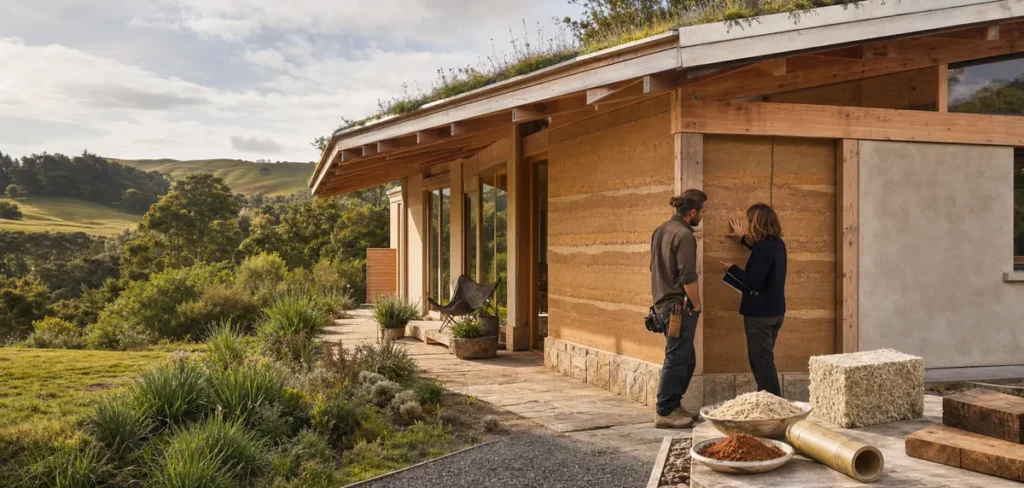
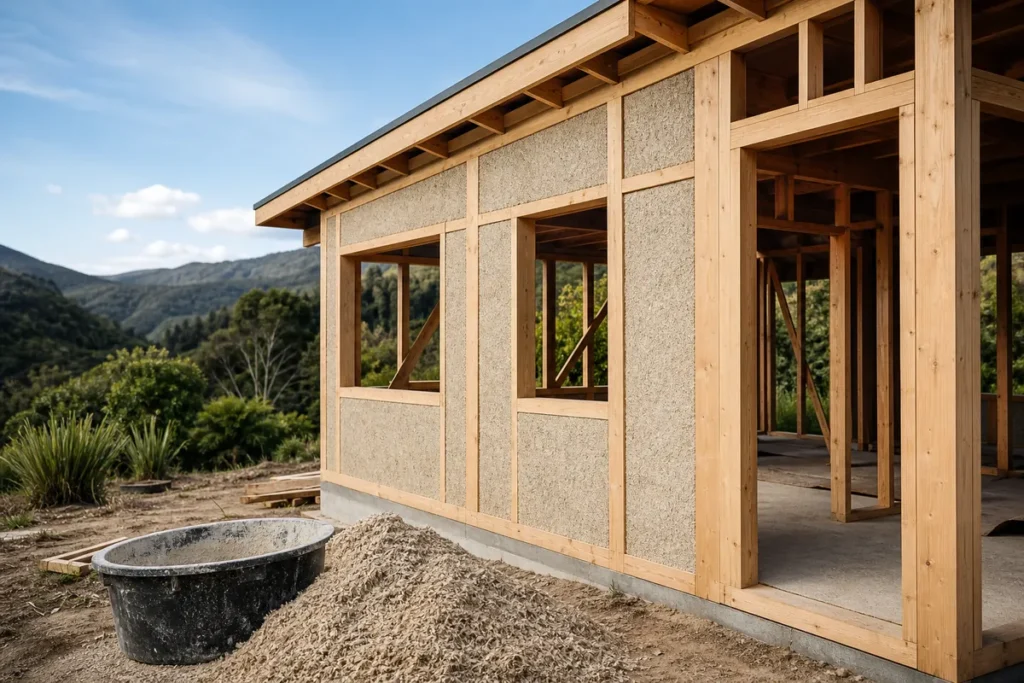
Hempcrete — a mixture of hemp hurd (the woody core of the hemp stalk), hydrated lime, and water — is one of the most promising natural building materials available in NZ. It’s carbon negative, breathable, thermally excellent, fire resistant, and pest resistant. But it requires hemp hurd at scale, and until now, sourcing NZ-grown hurd was difficult and expensive.
With hemp now licence-free, a landowner in Golden Bay, Central Otago, or Northland can grow their own building material — reducing cost and keeping supply chains entirely local.
NZ already has commercial hemp hurd supply infrastructure — NZ Natural Fibres, a Carrfields subsidiary, runs a decortication plant at Burnside in Christchurch, repurposed from a former NZ Yarn carpet plant. In Northland, Tai Tokerau Hemp has said it wants to explore acquiring decortication capacity for local growers, either as a central hub or a mobile unit, though nothing is operating yet. But the removal of the licence barrier will accelerate the growth of local hemp fibre supply dramatically, particularly in regions where hempcrete construction is already active (Wanaka, Golden Bay, Taranaki).
The NZ Hemp Building Industry: Where It Stands Now
Even before this deregulation, NZ had a small but genuinely active hempcrete building sector. A handful of completed homes — primarily in Wanaka and Central Otago — have demonstrated that hempcrete is consent-achievable in NZ under the Building Code’s Alternative Solutions pathway. The Hemp Building Association NZ (HBANZ) has been working to add hempcrete as a formal NZ Building Code standard, and a joint ANZ hempcrete building standard has been in development, with NZ industry involvement in the technical work.
Key NZ companies active in hemp building as of mid-2026:
- Kohu Hemp (kohuhemp.nz) — Takaka, Golden Bay. Supplier and builder using locally sourced hemp hurd, with hands-on education through their “Educate to Regenerate” programme. The most accessible entry point for NZ homeowners interested in hempcrete.
- Erkhart Construction (erkhartconstruction.co.nz) — Wanaka. The most documented NZ hempcrete builder. Multiple completed homes in Central Otago. Has also operated a hempcrete studio in Wanaka available as short-stay accommodation — a rare chance to experience the material before committing to a build. Check with them that it is still available, as it is not currently advertised on their website.
- HempCentral (hempcentral.earth) — Queensberry, Central Otago. Runs hempcrete construction training courses in partnership with Erkhart.
- NZ Natural Fibres — Carrfields subsidiary running the hemp decortication plant at Burnside, Christchurch. Hemp New Zealand (hempnz.co) is a separate business supplying hemp fibre and hurd alongside food ingredients, CBD and other hemp products.
- Hemp Building Association NZ (hba.nz) — Industry advocacy and consent support. Their FAQ is an essential first stop for anyone planning a hempcrete build.
How to Start Growing Hemp in NZ Now
If you have land and want to grow hemp for building material, fibre, or seed, the process as of 28 May 2026 is:
- Select your variety: The approved-cultivar list is gone. Under the old regulations the Ministry of Health’s Director-General approved specific cultivars by notice in the Gazette; that regime was revoked along with the licensing scheme. As the Ministry of Health now puts it, any cannabis cultivar with a THC level of one percent or less is considered to be hemp. NZ-sourced seed is available from local growers without a licence, and the NZHIA runs a Seed Project selling industrial hemp seed. If you want to import seed from overseas, you still need a Ministry of Health licence — whole hemp seed remains a licensed import.
- Notify Police: Submit the notification form to hempnotifications@police.govt.nz before planting, with your details, cultivation locations and intended scale. This is a legal requirement even under the new framework, and each notification lasts one year.
- Notify MPI: Email info@mpi.govt.nz before planting with your name, address and contact details. This enables traceability and is required by the new rules.
- Plant and grow: Hemp is a relatively low-input crop. It grows in most NZ conditions, and is drought-tolerant once established. Time to maturity varies by variety and region — check with your seed supplier rather than a national rule of thumb. For fibre and hurd production, it’s typically harvested before seed set.
- Process or sell: For building use, the stalks need to be retted and decorticated to separate the hurd from the fibre. Small-scale on-farm processing is feasible; commercial-scale requires a decorticator, and NZ Natural Fibres in Christchurch operates the main one.
The Broader Picture
This deregulation is part of a broader shift in NZ’s approach to hemp. The New Zealand Hemp Industries Association (NZHIA) has spent years lobbying for exactly this change, and its arrival signals a maturing of NZ’s hemp policy framework. The combination of licence-free growing, a higher THC threshold, and new biomass pathways positions NZ to develop a genuine domestic hemp industry — one that could supply building materials, textiles, food, and pharmaceutical feedstock from the same crop.
For the sustainable building movement specifically, this is the supply-side unlock that the hempcrete sector has been waiting for. Imported hemp hurd is expensive and carbon-costly to ship. Local NZ hemp, grown in the regions where hempcrete building is already active, transforms the economics and the environmental case simultaneously.
Frequently Asked Questions
Can I grow hemp in my backyard?
Technically yes — the law doesn’t specify minimum land area. However, hemp is a field crop that benefits from space, good soil, and isolation from neighbours (particularly if you want to maintain a specific variety). Suburban backyard growing is legal but impractical for building-material quantities. If you have rural land, you’re well placed.
Is industrial hemp the same as cannabis?
Industrial hemp and cannabis are both Cannabis sativa but differ fundamentally in THC content and in what they’re grown for. Industrial hemp has THC below 1% (now the NZ threshold) and is grown for fibre, seed, and hurd. The intoxicating varieties used for medicinal or recreational purposes have much higher THC levels and remain regulated separately. Industrial hemp plants look similar to cannabis but contain negligible psychoactive compounds.
How much hemp do I need to grow for a hempcrete house?
There’s a figure that circulates widely in the hemp building world putting it at around three acres for a 150m² home. We have not been able to trace it to a primary source, so we are not repeating it as fact. Yields vary substantially with variety, soil, season and how the crop is processed, and hurd is only part of what comes off a hemp stalk — the fibre from the outer stalk is a separate co-product for textiles or sale to processors. For a realistic estimate for your own land and design, talk to the NZHIA or a processor directly.
Where can I buy hemp seed in NZ now?
The NZHIA (nzhia.com) runs a Seed Project selling industrial hemp seed, and some established NZ hemp growers sell seed directly. There is no longer an approved-variety list to check against — any cultivar at or under 1% THC counts as hemp. For imported seed, the Ministry of Health licence requirement still applies to whole hemp seed.
Who should I contact to learn more about hemp growing in NZ?
The NZ Hemp Industries Association (nzhia.com) is the primary industry body and the best first contact. Their newsletter, member network and events are the hub of the NZ hemp industry. For building-specific questions, HBANZ (hba.nz) is the right contact.
The Bottom Line
The deregulation of hemp growing in NZ is genuinely significant — for farmers, for the natural building community, and for anyone who believes that what we build with matters as much as what we eat. Licence-free growing removes the single biggest barrier to local hemp hurd supply, and local supply is what makes hempcrete economically viable at scale in NZ.
If you’ve been curious about hempcrete but held back by concerns about supply and cost, the picture just got meaningfully better. Read our full guide: Can I Build a Hempcrete Home in NZ?
Reviewed September 2026 against the primary sources below. Requirements can change — always verify current rules with MPI and NZ Police before planting.
Sources
- Ministry of Health: Hemp — revocation of the licensing scheme, the 1% THC definition, and the end of the approved-cultivar list
- NZ Police: Cultivating hemp — notification process and the one-year validity period
- MPI: Hemp guidance for growers, processors, importers and exporters
- Misuse of Drugs (Industrial Hemp) Regulations 2006 — the superseded 0.35% threshold and cultivar approval regime