Quick answer: Ceres Organics Organic Chia Seeds (Auckland company, NZ$11.59 for 400g at Ceres) is our pick for most people. For the lowest price per gram, Matakana Superfoods Raw Organic Chia Seeds is NZ$19.50 for 1kg at HealthPost. In the supermarket, Tasti Chia Seeds is NZ$6.19 for 250g at Woolworths. Soak chia in liquid before you eat it. Prices checked November 2026.
Disclaimer: This article is general information, not medical advice. If you have trouble swallowing, a narrowed oesophagus or eosinophilic oesophagitis, talk to your doctor before eating chia. If you’re managing diabetes or blood pressure, keep taking your medicines as prescribed.
Chia (Salvia hispanica) is native to southern Mexico and northern Guatemala and is now grown in many other countries. Every pack we found in NZ stores was imported seed. The Ceres and Tasti labels say “packed in New Zealand from imported ingredients”, and Matakana gives its source as Central and South America. So “NZ chia” means a New Zealand company that sources, packs and sells it, not seed grown here.
How We Chose
- Plain chia seed only. No blends, bars, puddings or drinks.
- NZ brands. All four picks are New Zealand companies. We couldn’t find an Australian-grown brand listed on an NZ store, so there’s no Australian pick.
- A clear label: ingredients, a nutrition panel and, where possible, where the seed comes from.
- Price per 100g from an NZ seller, checked in November 2026.
What’s in Chia Seeds?
These figures are for a 15g serve, the size the Woolworths label uses, worked out from the USDA FoodData Central entry for dried chia seeds:
| Nutrient | Per 15g | Per 100g |
|---|---|---|
| Energy | 305 kJ | 2,030 kJ |
| Dietary fibre | 5.2g | 34.4g |
| Protein | 2.5g | 16.5g |
| Fat | 4.6g | 30.7g |
| ALA omega-3 | 2.7g | 17.8g |
| Calcium | 95mg | 631mg |
| Magnesium | 50mg | 335mg |
| Iron | 1.2mg | 7.7mg |
Fibre is the standout. Healthify NZ suggests at least 30g of fibre a day for men and about 25g for women, so a 15g serve covers roughly a fifth of a woman’s target. Labels vary from batch to batch: Ceres lists 33g of fibre and 25g of ALA per 100g, Tasti 31.9g and 20g.
Chia Seeds Benefits: What the Evidence Says
The trials are small and the results are mixed. A 2018 systematic review in Nutrition Reviews pooled 12 randomised trials and found no significant differences for most outcomes, with a few effects showing up only in higher-dose subgroups. The reviewers rated all the evidence low or very low quality, and every trial measured markers such as blood glucose rather than heart attacks or diabetes.
Blood pressure is the most promising result. A 2025 meta-analysis of 8 trials found chia lowered systolic blood pressure by about 7 mmHg and diastolic by about 6 mmHg, though the authors warn the data are limited. In a Toronto crossover trial of 20 people with well-controlled type 2 diabetes, about 37g a day for 12 weeks lowered systolic pressure by 6.3 mmHg compared with wheat bran.
Weight is weak. The same 2025 meta-analysis found no effect on body weight, waist size or body fat. In a 12-week US trial, 76 overweight adults took 50g of chia a day and lost no more weight than the placebo group. One six-month trial in 77 people with type 2 diabetes on a calorie-controlled diet did find a difference: 1.9kg lost on chia against 0.3kg on an oat-bran control.
Blood sugar may rise less after a meal. In a small Toronto study of 13 healthy people, chia baked into white bread reduced the blood sugar response, and more chia gave a bigger effect. Over the longer term, the 2025 meta-analysis found no change in fasting glucose or HbA1c.
Cholesterol didn’t clearly change. A 2021 meta-analysis of 10 trials found no clear effect on total or LDL cholesterol. If cholesterol is your goal, psyllium has much stronger trial evidence, which our fibre supplement guide covers.
Chia omega-3 isn’t fish oil
The omega-3 in chia is ALA. The Ceres label lists 0mg of EPA and DHA, the omega-3s found in fish and behind most fish oil research. Your body turns some ALA into EPA and DHA, but a 2016 review describes that conversion as limited, especially to DHA. In the 12-week US trial, 50g of chia a day raised blood ALA by 24% with no change in EPA or DHA. A later trial by the same group found 25g a day of milled chia raised EPA by 39%, while whole seeds made no significant difference. If you want EPA and DHA, our fish oil guide covers fish and algae options.
How Much Chia Should You Eat?
There’s no official daily amount. Pack serves range from 10g (Chantal) and 12.5g (Ceres) to 25g (Tasti and Matakana), and the trials above used 25g to 50g a day. One to two tablespoons a day sits comfortably in that range. If you don’t eat much fibre now, start with a teaspoon or two and build up over a week or two so your gut gets used to it. Drink plenty too: Healthify NZ suggests at least 1.5 litres of fluid a day.
How to Use Chia Seeds
- Chia pudding: stir 3 tablespoons of chia into a cup of milk or plant milk, wait five minutes, stir again to break up clumps, then chill overnight.
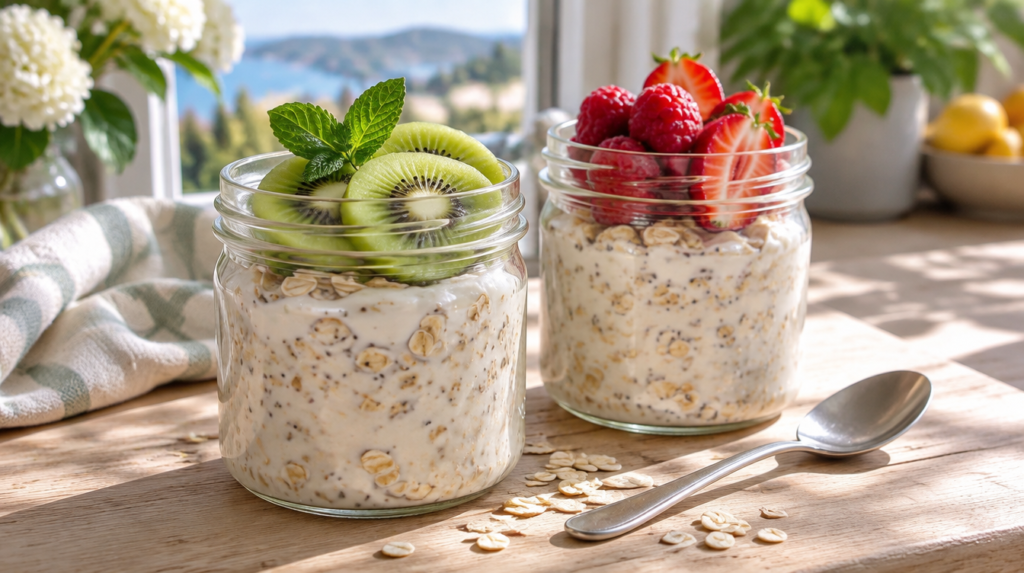
- Overnight oats: a tablespoon of chia thickens the mix and adds fibre. Our overnight oats guide has more ideas.
- Smoothies: blend a tablespoon in and drink it soon after, before it sets thick.
- Egg replacement: Matakana suggests 1 tablespoon of chia with 3 tablespoons of cold water, left to gel.
- Quick jam: mash berries or feijoa, stir in chia and leave it in the fridge to set.
- Sprinkled: on yoghurt or porridge, which is wet enough to soften the seeds.
Whole or ground? For blood sugar it made no difference: in the bread study, whole and ground chia worked equally well. For omega-3, only the milled chia raised blood EPA in the trial above. A spice grinder or blender does the job in seconds.
Are Chia Seeds Safe?
For most people, yes, in normal food amounts. The 2007 Toronto trial found no changes in liver, kidney or blood-clotting tests over 12 weeks. Three things are worth knowing:
- Don’t eat dry chia and then drink. In a 2017 case report from Carolinas Medical Center in the US, a 39-year-old man swallowed a tablespoon of dry chia seeds followed by a glass of water. The seeds swelled into a gel that completely blocked his oesophagus, and doctors needed an endoscope made for newborns to clear it. He had a long history of trouble swallowing and likely eosinophilic oesophagitis. The authors note chia can absorb up to 27 times its weight in water. Soak chia first, or eat it in something already wet.
- Build up slowly. Add chia a little at a time if your diet is low in fibre now. Our gut health guide covers fibre and the gut more broadly.
- Check the allergen line. Chantal’s label says it may contain several nuts, gluten, sesame and soy, and Matakana packs in a facility that handles gluten, nuts and sesame. With a serious allergy, read the pack.
The Best Chia Seeds in NZ (2026)
1. Ceres Organics Organic Chia Seeds, Black: Best Overall
Ceres Organics started in the early 1980s and has its head office in Mt Wellington, Auckland. Its black chia is certified organic and “packed in New Zealand from imported ingredients”; the page doesn’t say which country grew it. The nutrition panel is the most detailed we found, with separate ALA, EPA and DHA lines. A 12.5g serve gives 4.1g of fibre and 3.1g of ALA. It’s NZ$11.59 for 400g at Ceres (NZ$2.90 per 100g), and a 125g pack is NZ$5.49 if you want to try it first.
Pros: Certified organic, NZ company, full nutrition panel, sensible pack size. Cons: Growing country not stated. Dearer per gram than the 1kg Matakana bag.
Best for: A daily spoonful in breakfast, from a brand that’s easy to find.
2. Matakana Superfoods Raw Organic Chia Seeds 1kg: Best Value
Matakana Superfoods describes itself as a New Zealand-based company, established in 2009. Its chia is certified organic, and the label gives the source as Central and South America, the only pick that names a growing region. The 1kg bag is NZ$19.50 at HealthPost (NZ$1.95 per 100g) or NZ$20.50 from Matakana’s own store. HealthPost also sells a 250g bag for NZ$11.20.
Pros: Lowest price per gram, organic, growing region stated. Cons: A kilo takes a while to get through, so reseal it and keep it cool and dry, as the label says. The 250g bag was sold out on Matakana’s own site when we checked.
Best for: Households that eat chia every day or make chia pudding in batches.
3. Tasti Chia Seeds 250g: Best Supermarket Buy
Tasti is a New Zealand-owned food company based at Te Atatū Peninsula in Auckland. Its chia is 100% chia seed, not organic, and “packed in New Zealand from imported ingredients”. The label lists 8g of fibre and 5g of ALA in a 25g serve. It’s NZ$6.19 for 250g at Woolworths (NZ$2.48 per 100g), and PAK’nSAVE lists it too.
Pros: Cheap, sold in supermarkets, resealable pouch, NZ-owned. Cons: Not organic. Growing country not stated.
Best for: Adding chia to the weekly shop without a separate order.
4. Chantal Organics Chia Seeds 200g: Best Small Pack
Chantal Organics began in 1978, when a group of Hawke’s Bay families formed a co-operative to buy organic whole foods, and it still makes its products in Hawke’s Bay. Its chia is certified organic, though the page doesn’t say where the seed is grown. A 10g serve gives 3.4g of fibre. It’s NZ$8.70 for 200g at HealthPost or NZ$8.79 from Chantal’s own shop (about NZ$4.35 per 100g).
Pros: Organic, from a long-standing regional NZ business, a small pack you’ll finish while it’s fresh. Cons: The dearest per gram here. “May contain” warning for nuts, gluten, sesame and soy.
Best for: Trying chia for the first time, or using it now and then in baking.
Supermarket own brands also work. Woolworths Chia Seeds Black is NZ$7.80 for 300g, plain seed with a label that says only “made from local and imported ingredients”.
Comparison Table
| Product | Brand from | Seed source | Organic | NZ price (checked Nov 2026) | Per 100g |
|---|---|---|---|---|---|
| Ceres Organics Organic Chia Seeds, Black | NZ (Auckland) | Imported, packed in NZ | Yes | NZ$11.59 / 400g (Ceres) | NZ$2.90 |
| Matakana Superfoods Raw Organic Chia Seeds | NZ | Central/South America | Yes | NZ$19.50 / 1kg (HealthPost) | NZ$1.95 |
| Tasti Chia Seeds | NZ (Auckland) | Imported, packed in NZ | No | NZ$6.19 / 250g (Woolworths) | NZ$2.48 |
| Chantal Organics Chia Seeds | NZ (Hawke’s Bay) | Not stated | Yes | NZ$8.70 / 200g (HealthPost) | NZ$4.35 |
The Bottom Line
Ceres Organics Organic Chia Seeds is the one to buy for most people: organic, from an Auckland company, with the clearest label. If you eat chia every day, the Matakana Superfoods 1kg bag costs about a third less per gram. If you’d rather grab it with the groceries, get Tasti. For a small first bag, Chantal Organics is a good Hawke’s Bay option. Whichever you buy, treat chia as a handy source of fibre rather than a fix for anything. It may lower blood pressure a little, the weight-loss evidence is weak, and it doesn’t replace fish or fish oil for EPA and DHA. Adding it to a smoothie with protein powder? Our protein powder guide covers the NZ options.
Frequently Asked Questions
Do you have to soak chia seeds?
Soaking is the safe habit. Never swallow a spoonful of dry chia and wash it down with water, which is how a US man ended up with a blocked oesophagus. Chia sprinkled on wet food like yoghurt softens as you eat it.
How much chia should I eat a day?
One to two tablespoons is a common amount and matches most pack serves. Trials have used 25g to 50g a day. Start smaller if you don’t eat much fibre, and drink plenty of water.
Is chia grown in New Zealand?
We couldn’t find any NZ-grown chia for sale. Every pack we checked was imported seed packed or sold by an NZ company. Matakana is the only one that names the region, Central and South America.
Sources and further reading
- USDA FoodData Central: Seeds, chia seeds, dried (FDC 170554)
- Healthify NZ: Constipation (fibre and fluid guide)
- TaghipourSheshdeh et al., Nutrition Reviews (2025): chia, blood pressure, body composition and glycaemic control
- Teoh et al., Nutrition Reviews (2018): clinical evidence on chia seed supplementation
- Silva et al., Food & Function (2021): chia and lipid profile
- Vuksan et al., Diabetes Care (2007): Salba chia in type 2 diabetes
- Vuksan et al. (2017): Salba-chia for weight in type 2 diabetes
- Nieman et al., Nutrition Research (2009): chia seed and weight loss
- Nieman et al. (2012): milled vs whole chia in overweight women
- Ho et al., European Journal of Clinical Nutrition (2013): whole vs ground chia and blood glucose
- Baker et al., Progress in Lipid Research (2016): metabolism of plant-derived omega-3s
- Simmelink et al., Case Reports in Internal Medicine (2017): oesophageal impaction with chia seeds
Affiliate disclosure: Some links on ThrivingKiwi may earn us a small commission if you buy through them, at no extra cost to you. Paid links are marked as sponsored. We only recommend products we genuinely believe are worthwhile.