New Zealand has produced some genuinely exceptional natural skincare brands. The combination of clean southern-hemisphere air, access to unique native botanicals, and a culture that values transparency and sustainability has created a small but impressive local industry. The problem is finding the genuinely good ones amid the noise of brands that claim to be natural without the formulations to back it up.
This is the honest guide to the best NZ-made natural skincare brands in 2026 — what makes each stand out, the ingredients to look for, and where to find them.
What Makes NZ Skincare Actually Different
New Zealand has a handful of native botanicals that are genuinely distinctive. Manuka honey is the one with a real research base behind it — its antibacterial activity is measurable and is graded on the pack as MGO or UMF. Harakeke (NZ flax), kawakawa, horopito and pohutukawa are distinctive and traditionally used, but the published evidence for what they do in a cosmetic formulation is thin, so treat them as points of difference rather than proven actives. Genuine NZ-made products use these as functional ingredients, not just window dressing.
Look for: a named certifier behind any organic claim, New Zealand-manufactured claims (not just blended or packaged in NZ), and ingredient lists where the feature botanicals appear in the top half of the list rather than as the last ingredient before preservatives.
On certifiers, one point matters more than any other in a New Zealand context: BioGro is this country’s own organic certifier, and it is the one most NZ organic skincare actually holds. Guides that tell you to look only for COSMOS, NATRUE or Ecocert — all European schemes — will lead you to reject genuinely certified local products. BioGro certifies to an organic standard covering ingredient sourcing, processing and the percentage of certified organic content in the finished formula, and a BioGro-certified product carries the certifier’s name and a licence number on the pack.
The other thing to check is scope. Certification is granted product by product, not brand by brand. A brand can be entirely legitimate and still have only part of its range certified, because some high-performance ingredients cannot be made to an organic standard. “Certified organic brand” is almost always shorthand; the honest question is which specific product in your hand is certified.
The Best NZ-Made Natural Skincare Brands (2026)
1. Living Nature — Best Overall NZ Natural Skincare Brand
Living Nature is Kerikeri-based and has been making certified natural skincare with New Zealand botanicals since 1987. The brand’s own certifications page states that the majority of the Living Nature range is certified natural or organic by BDIH Germany — the standard that has since been folded into COSMOS — so check the individual product rather than assuming the whole range is covered. Their facility is also GMP certified through Cosmetics New Zealand. Formulations are built around manuka honey and harakeke (NZ flax), both of which appear throughout the range. Widely available from Healthpost and their own website.
Hero product: Mānuka Honey Gel (10ml $19.50, 50ml $35.00) — note that this is a targeted treatment gel for blemishes and irritated patches, not an all-over daily moisturiser. If you want a hydrating base, their Hydrating Toning Gel ($47.00) is the product that does that job.
Best for: Sensitive, reactive, or dry skin needing genuine botanical actives from a certified NZ brand.
2. Antipodes — Best for Premium NZ Natural Beauty
Antipodes is arguably the most internationally recognised NZ natural skincare brand, exporting widely. Formulations are built around NZ-unique ingredients including Vinanza grape from Marlborough and avocado oil.
Two things are worth getting right here, because they are widely misreported. First, the certifier is BioGro — a New Zealand body, not an international scheme. Second, the certification does not cover the whole range: Antipodes states on its own site that “not all Antipodes products are BioGro certified,” because “about half our formulations include high-performance natural ingredients that can’t be fully organic.” So buy the certified product, not the certified brand.
On testing, Antipodes describes itself as “one of the very few natural beauty brands globally who undertake in-vitro testing of our end formulations” — selected finished formulas, not every product. Its scientific validation page currently shows results for roughly nine products. That is still unusual for a brand this size, and it is a genuine point in its favour; it just isn’t the whole range. Available from Healthpost, selected department stores, and antipodesnature.com.
Hero product: Glow Vitamin C Brightening Serum ($56.00) — this is the brightening serum Antipodes actually sells in New Zealand. (If you have seen the “Apostle Skin-Brightening Serum” recommended elsewhere, it is no longer in the NZ range; a differently formulated product under the Apostle name is sold in some overseas markets.)
Best for: Those wanting premium NZ skincare with BioGro organic certification on part of the range and published in-vitro testing behind selected formulas.
3. Trilogy — Best NZ Brand for Oils and Serums
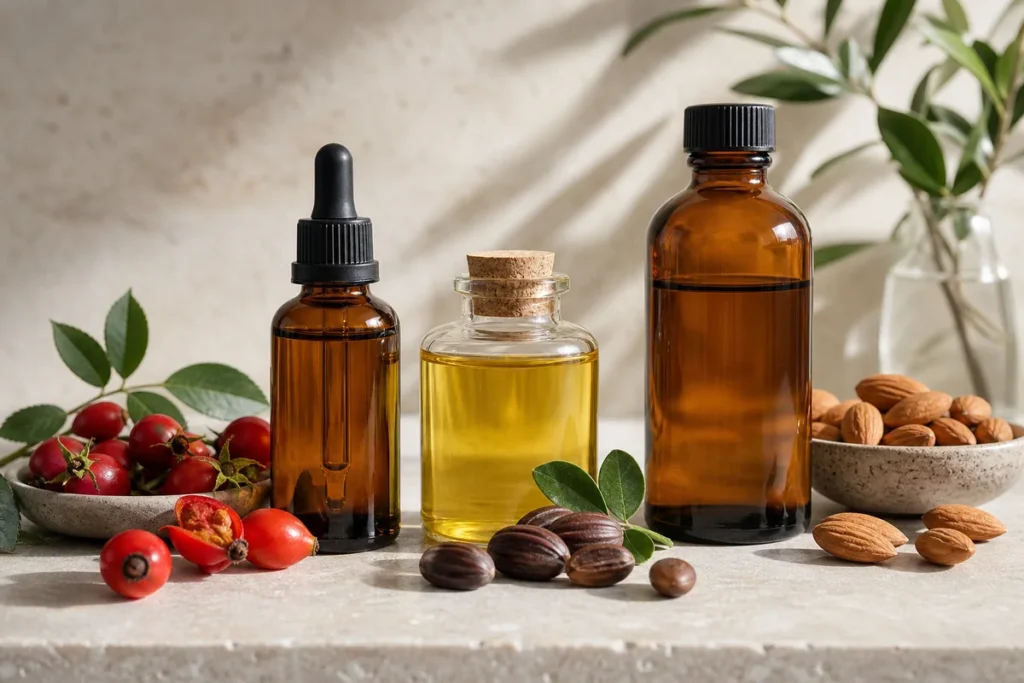
Trilogy is a NZ brand built around certified organic rosehip oil. Their Certified Organic Rosehip Oil is one of the most reviewed and repurchased skincare products in NZ. Rosehip seed oil is rich in linoleic and linolenic fatty acids and carries provitamin A carotenoids. One correction to a claim you will see repeated everywhere, including in older versions of this page: rosehip seed oil contains negligible vitamin C. The vitamin C is in the hips themselves and is water-soluble, so it does not carry through into the pressed oil. Available from Healthpost, Farmers, and pharmacies nationwide.
Hero product: Certified Organic Rosehip Oil — a well-made, widely repurchased single-ingredient oil. We are not going to tell you it is clinically proven: as we set out in our guide to carrier oils, rosehip has been looked at for hydration, appearance and scarring, but the evidence is not solid enough to promise you a result, and where people do notice a change it is over weeks to months.
Best for: Dry skin, uneven texture and post-acne marks — for anyone who wants a good certified organic rosehip oil and has realistic expectations of it.
4. Ethique — Best NZ Sustainable Skincare and Haircare
Ethique is a Christchurch-founded brand best known for solid shampoo and conditioner bars — a plastic-free innovation the company says has saved more than 41 million plastic bottles globally. Their skincare range extends this sustainable ethos to solid facial cleansers and moisturizing bars. Ethique is listed in PETA’s Beauty Without Bunnies programme as both cruelty-free and vegan, and it is a Certified B Corporation — which is the credential most worth knowing about and the one most often left out. On carbon, be precise about what is claimed: there is no “carbon neutral certification” here. Ethique’s own wording is that its production is carbon neutral because “our manufacturer fully offsets the entire carbon footprint of production” — an offset arrangement rather than a certification scheme. Available from Healthpost, supermarkets, and ethique.co.nz.
Best for: Eco-conscious Kiwis who want to eliminate plastic from their bathroom without compromising on product quality.
5. Bestow Beauty — Best NZ Beauty-From-Within Brand
Bestow Beauty bridges the gap between skincare and nutrition — their range includes beauty oils designed to be consumed as food (flaxseed, hemp, and coconut oil blends), as well as topical products. Founded by Janine Tait, a New Zealand beauty therapist and dermo-nutrition educator, the brand is built around the philosophy that skin health begins with nutrition. Available from their website and selected NZ health stores.
Best for: Kiwis interested in the inside-out approach to skin health, combining dietary oils with topical care.
6. Manuka Health Skincare — Best for Manuka-Active Formulations
Manuka Health is a NZ brand focused on manuka honey products across health and skincare categories. The skincare range is real and sits in two lines — Eternal Renewal, built on MGO 800+ manuka honey, and Pro Vitality, on MGO 400+ — alongside the cheaper Manuka Calming Cream. Prices run from around $22 for the Calming Cream to $196 for the Eternal Renewal Face Cream.
One caveat on how to read those numbers: MGO grades the honey going in, not the finished cream. Manuka Health does not publish the honey concentration in these formulas, or antibacterial testing on the creams themselves, so a high MGO number on the front of a moisturiser is not the same evidence as a high MGO number on a jar of honey. Buy them as well-made honey-based skincare rather than as antibacterial treatments. Available from manukahealth.com and health stores; HealthPost carries the brand’s honey, propolis and supplement lines, but we could not confirm it stocks the face skincare.
Best for: Dry or reactive skin, for anyone who wants manuka honey as the hero ingredient and is buying on formulation quality rather than a therapeutic claim.
What to Avoid in “Natural” NZ Skincare
The term “natural” has no legal definition in NZ cosmetics — any brand can use it. Watch for: fragrance listed as an ingredient (often a mix of potential irritants), mineral oil as a primary emollient in products claiming to be natural, and products where the feature ingredient appears at the very end of the ingredient list (suggesting negligible concentration). Genuine organic formulations carry a named certifier and a licence number — in New Zealand that is most often BioGro, and on imported products it may be COSMOS, NATRUE or Ecocert. The absence of a European logo on a NZ product tells you nothing; the absence of any named certifier behind the word “organic” tells you a lot. Single-ingredient products deserve the same scrutiny — we looked at whether beef tallow moisturiser lives up to the hype.
The Bottom Line
New Zealand’s natural skincare scene is genuinely world-class in several niches. Living Nature for certified botanical actives, Antipodes for BioGro-certified formulations with published testing behind selected products, Trilogy for oils, and Ethique for sustainability are the brands consistently worth recommending. Buy through Healthpost for the widest selection in one place — and whatever you buy, check that the specific product carries a named certifier, not just a brand with a reputation for being certified.
If you would rather make your own, our guide to DIY natural skincare in NZ covers where to start.
Certifications, product names and prices checked against each brand’s own website in September 2026. Certification status and ranges change — a product certified today may be reformulated tomorrow, and brands add and drop certifications — so check the pack and the certifier’s licence number before you buy on the strength of a claim.
Affiliate disclosure: Some links on ThrivingKiwi may earn us a small commission if you buy through them, at no extra cost to you. Paid links are marked as sponsored. We only recommend brands we genuinely believe are worthwhile.