Quick answer: A rocket stove is an extremely efficient small wood burner — an L-shaped firebox feeding an insulated vertical riser, which drives a strong draft and burns the fuel almost completely before the flames reach the pot. Outdoors in New Zealand they are easy: a portable one needs nothing, and a permanent masonry one falls under the same building consent exemption as an outdoor fireplace. Indoors is the problem. Installing any solid fuel heater needs a building consent, and on a section under two hectares it must be an authorised appliance meeting strict emissions and efficiency limits. A home-built rocket mass heater is not on anyone’s authorised list, which makes consenting one as your indoor heater very difficult.
Rocket stoves occupy an odd place in the New Zealand conversation. Overseas they are a permaculture staple with thousands of build guides behind them. Here, people start building one and discover late that the interesting version — the rocket mass heater that heats a house off a few armfuls of sticks — collides with our air quality rules. This is the honest picture of what works here and what doesn’t.
How a rocket stove actually works
Three parts do all the work:
- The fuel magazine — a horizontal feed tube where small-diameter wood goes in. Sticks, offcuts, prunings. Not logs.
- The combustion chamber — the elbow where the feed meets the riser, and where the fire actually sits.
- The insulated vertical riser — the part that makes it a rocket stove rather than a hole in a brick. Insulation keeps the flue gases hot, hot gas rises hard, and that draft pulls air through the combustion chamber fast enough to burn the smoke as well as the wood.
The result is near-complete combustion before the flames reach the cooking surface. That is the whole trick. An open fire wastes a large share of its fuel as unburnt smoke; a rocket stove burns most of that smoke as a second fuel.
In practical terms: you can bring a large pot to the boil on an armful of sticks, with very little visible smoke once it is running properly, and the fire goes out almost immediately when you stop feeding it. That last point matters more than it sounds in a dry New Zealand summer.
Outdoors: straightforward
Portable stoves
A steel or ceramic rocket stove you can pick up is a cooker, not building work, so no consent question arises. For fire season purposes, treat it as a solid-fuel cooker and check the current rules for your district before lighting. These are genuinely good for camping, for a power cut, and for anything that involves boiling a lot of water outside.
A permanent masonry rocket stove
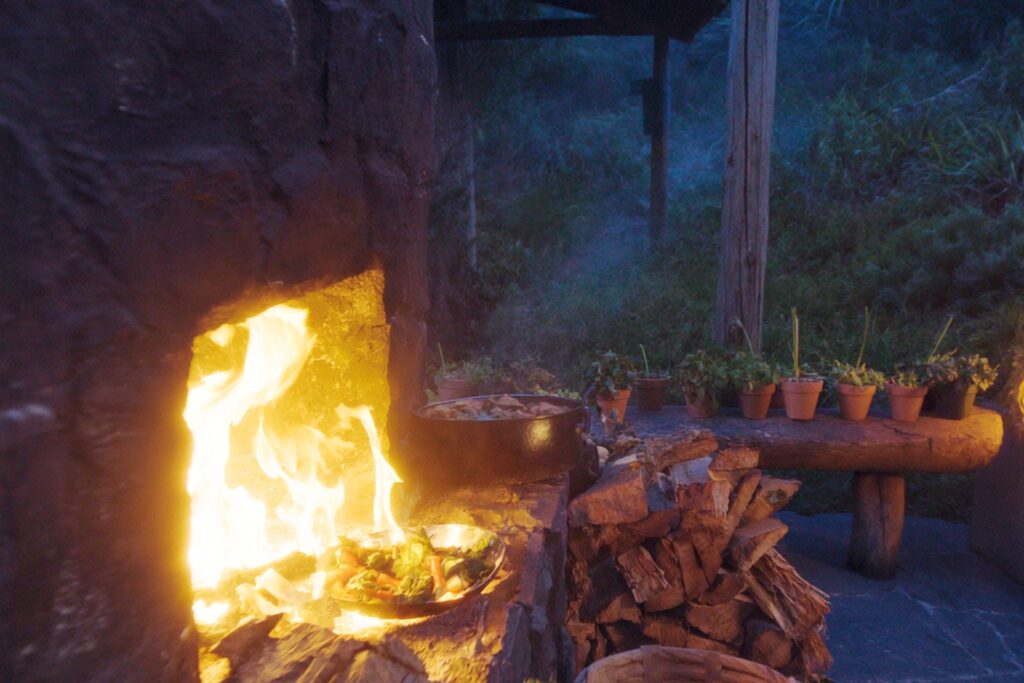
Build one into an outdoor kitchen and it is a permanent outdoor fireplace or oven in the eyes of the Building Act, which means it is exempt from building consent provided it is no more than 2.5 metres tall, has a cooking or fire surface of one square metre or less, and stands at least one metre from any legal boundary or building. Our full guide to wood-fired cooking in New Zealand covers those limits and the fire season rules that sit on top of them.
The 2.5m limit is rarely a problem for a rocket stove — the efficient ones are short. A riser of around 600mm to a metre is typical, because the point is insulation and draft rather than chimney height.
Greenhouse and glasshouse heating
This is the New Zealand use case that most often makes sense. A rocket mass heater warming a glasshouse bench is not a domestic heating appliance, is not inside a dwelling, and extends the growing season at both ends on very little fuel. It sits well alongside the kind of season-stretching a cool-season vegetable garden already does.
Indoors: the part nobody mentions
A rocket mass heater routes the exhaust through a large thermal mass — a cob bench, typically — so the heat is stored and released over many hours instead of going up a flue. It is an elegant idea and it heats beautifully. In New Zealand it runs into two walls.
First, it is building work. Installing, replacing or relocating a fireplace requires a building consent. There is no small-scale exemption for an indoor solid fuel heater the way there is for an outdoor one.
Second, and harder, are the emissions rules. Under the National Environmental Standard for Air Quality and council air plans, a wood burner installed on a property of less than two hectares must be an enclosed appliance meeting a maximum particulate emission of 1.5 grams per kilogram of fuel and a minimum thermal efficiency of 65%. Councils maintain authorised wood burner lists of models that have been tested and shown to meet those limits — Auckland Council’s rules for domestic heating appliances set out the figures and the two-hectare threshold.
A home-built rocket mass heater has not been through that testing and is not on any authorised list. A rocket stove very probably would meet the emissions figure if it were tested — clean combustion is the entire design premise — but the standard is met by appliance model, not by argument. Without a tested model to point at, a Building Control Authority has nothing to approve against.
Properties of two hectares or more sit outside the tighter NES-AQ requirement and only need to satisfy the relevant council air plan, which is a meaningfully easier conversation. If you are on rural land and serious about this, that is where to start, with an engineer and your council before any cob is mixed.
None of this makes a rocket mass heater illegal to build. It makes it very difficult to consent as the heating appliance in a dwelling on an ordinary residential section — which is exactly what most people want one for.
Fuel, and why small sticks are the point
A rocket stove wants small-diameter, dry wood. Prunings, offcuts, storm debris, the stuff that is too small to bother splitting for a woodburner. That is a genuine advantage on a property with trees: material that would otherwise be a bonfire becomes fuel.
Dryness still matters as much as it does anywhere. Wet wood in a rocket stove smoulders and smokes like any other fire, because the draft cannot overcome the energy being spent boiling water out of the fuel. A season under cover with the wind through it, same as firewood.
Frequently Asked Questions
Can I build a rocket mass heater in a New Zealand house?
Very difficult on an ordinary residential section. Installing an indoor solid fuel heater requires a building consent, and on a property under two hectares it must be an authorised appliance meeting 1.5g/kg particulate emissions and 65% minimum thermal efficiency. Home-built heaters are not on authorised lists. On properties of two hectares or more only the council air plan applies, which is a more workable starting point — but it is still a consent, and still a conversation to have before you build.
Do I need a consent for an outdoor rocket stove?
A portable one, no — it is a cooker. A permanent masonry one is treated as an outdoor fireplace or oven and is exempt from building consent if it stays under 2.5 metres tall, has a cooking or fire surface of one square metre or less, and sits at least one metre from any legal boundary or building.
How much wood does a rocket stove use?
Far less than an open fire for the same cooking, because the insulated riser drives near-complete combustion rather than losing fuel as unburnt smoke. Expect to boil a large pot on an armful of sticks. Exact figures depend on the build and the fuel, so treat any specific percentage you read online with caution — the well-documented field results are about emissions reductions rather than fuel ratios.
Is a rocket stove smokeless?
Close to it once it is up to temperature and running on dry fuel. There is smoke at start-up while the riser heats and the draft establishes, and there will be smoke throughout if the wood is wet. A well-run rocket stove produces very little visible smoke, which is the main reason they suit tighter sites.
The Bottom Line
Outdoors, a rocket stove is one of the better things you can build on a New Zealand property — cheap, clean, fuelled by material you would otherwise burn as waste, and comfortably inside the building consent exemption. Indoors, the honest answer is that the emissions rules are built around tested appliance models and a home-built heater has no way through them on a standard residential section. Build the outdoor version, heat the glasshouse with it, and treat the indoor rocket mass heater as a rural project to discuss with your council first rather than a weekend build.
This article is for general information only. Building consent requirements and air quality rules vary by council and change over time — always confirm with your local council and a licensed professional before installing any solid fuel appliance. Information current as of September 2026.