Quick answer: Yes, you can build an earthship in NZ — two have been consented and completed. It requires the Building Code’s Alternative Solutions pathway, an engineer’s personal liability statement (PS1), and significant documentation effort. The two NZ builds are the Gubb earthship in Ngaruawahia (2004) and Earthship Te Timatanga on the Coromandel Peninsula (2015, featured on Grand Designs NZ Season 1). It’s more complex and expensive to consent than a conventional build, but it’s been done and the NZ community is active and supportive.
The word “earthship” tends to produce one of two reactions in NZ: either a flash of excitement from someone who’s been dreaming about building one, or polite scepticism from someone who’s heard it’s impossible to get consent. Neither reaction is quite right. Earthships in NZ are possible — but they’re not easy. This guide gives you the honest picture.
What Is an Earthship?
Earthship Biotecture is a building concept developed by architect Michael Reynolds in New Mexico in the 1970s. The design philosophy combines six core principles: passive solar heating and cooling, solar and wind electricity, contained sewage treatment, water harvesting from rain and snow, food production, and construction from natural and recycled materials.
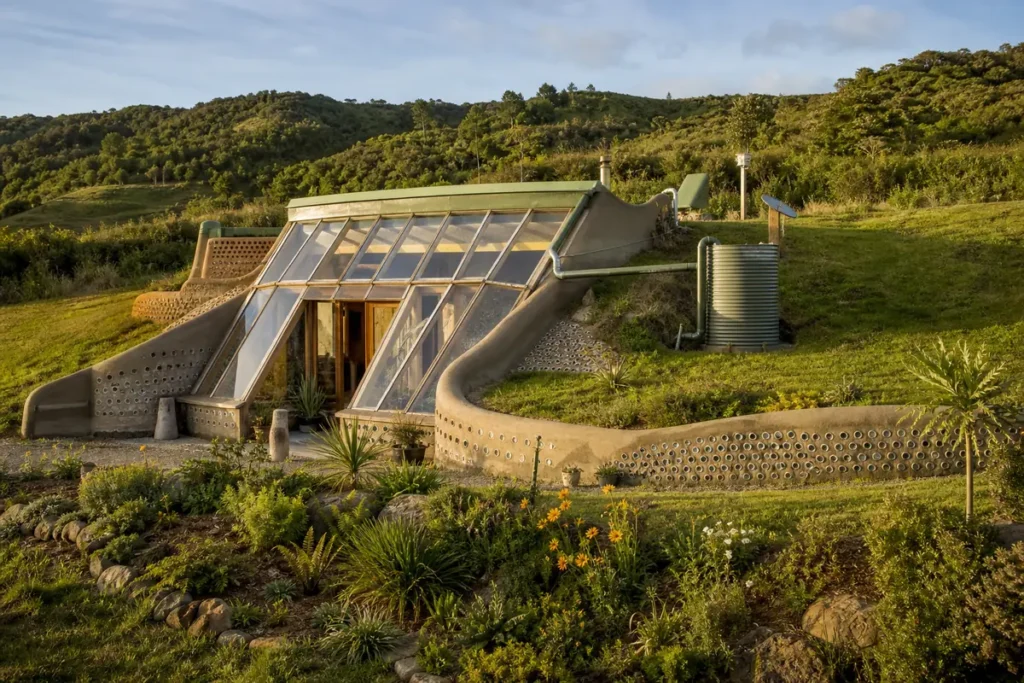
The signature structural element is the rammed tyre wall: used car tyres packed tightly with compacted earth, creating a dense, thermally massive wall system. Supplementary walls use glass bottles or aluminium cans set in mortar (the “bottle wall” aesthetic many people recognise). The roof typically faces north in the southern hemisphere to maximise passive solar gain, with extensive glazing on the north face and a thermal mass floor to absorb and slowly release solar heat.
In ideal conditions, a fully realised earthship is genuinely off-grid: heating and cooling from passive design, electricity from solar panels, water from rain collection, sewage treated on-site through a contained botanical cell. The appeal is obvious. The execution in NZ’s regulatory environment is where things get interesting.
The Two NZ Earthship Builds
The Gubb Earthship — Ngaruawahia, Waikato (2004)
Brian Gubb built NZ’s first consented earthship-inspired structure in Ngaruawahia in 2004, obtaining consent from Waikato District Council. Built largely from recycled materials, it demonstrated that tyre-wall construction could be consented in NZ — a critical proof of concept. The building consent file is public record and has been referenced by subsequent builders navigating the consent process.
The Gubb build is “earthship-inspired” rather than a fully certified Biotecture earthship — it uses the tyre wall principle and recycled materials philosophy without all six earthship systems. This is common with NZ builds: the design is adapted to NZ conditions, available materials, and regulatory requirements.
Earthship Te Timatanga — Hikuai, Coromandel Peninsula (2015)
Built by Gus and Sarah Anning on 2.5 acres in the Puketui Valley on the Coromandel Peninsula, Earthship Te Timatanga is NZ’s most documented and celebrated earthship build. It was featured in Grand Designs NZ Season 1 (2015) and remains the clearest demonstration of what a consented earthship looks like in a NZ context.
The build was consented by Thames-Coromandel District Council using the owner-builder exemption (Restricted Building Work performed by unpaid friends and family). The design team included eco-architect Graeme North (ecodesign.co.nz) and structural engineers Richardson Stevens. Construction took approximately nine months after three years of research and two years of planning consent work — a timeline that reflects the genuine complexity of the process.
The Anning build succeeded through a combination of design excellence, thorough documentation, sympathetic council engagement, and supplier sponsorship that reduced material costs. It’s described by those who’ve visited it as a genuinely beautiful, functional home — not a compromise, but a considered architectural achievement.
The NZ Consent Reality: Honest Assessment
Getting building consent for an earthship in NZ is significantly harder and more expensive than a conventional build. The reasons are specific and worth understanding clearly:
- No NZ Acceptable Solution exists for tyre walls. Everything must go through the Alternative Solutions pathway — meaning you provide performance evidence that satisfies the Building Control Authority (BCA). There is no shortcut.
- An engineer must provide a PS1. A licensed building engineer takes full personal professional liability for the structural system in all conditions, including NZ seismic requirements. Finding an engineer willing to sign off on tyre wall construction in a seismic zone requires specifically experienced practitioners.
- Post-leaky-building weathertightness requirements are strict. The NZ building sector became significantly more conservative about weathertightness after the leaky building crisis of the late 1990s–2000s. Earthship designs — particularly the heavily glazed north face and unconventional roof junctions — require careful weathertightness detailing to satisfy BCAs.
- Seismic requirements add complexity. NZ is seismically active and tyre walls have no pre-approved seismic performance standard here. Engineering analysis specific to NZ seismic zones is required.
The cost implication: The additional engineering, documentation, and consent time means that an earthship in NZ typically costs more than a conventional build, not less, if you’re using professional labour throughout. Where earthships can achieve cost savings is through owner-builder labour for the tyre-ramming and recycled material components — but the professional documentation costs remain.
The 30m² Consent Exemption
Under Schedule 1 of the Building Act 2004, a single-storey detached building can be built without a building consent — but the exemption is considerably narrower than it is usually described, and getting it wrong is how people end up with a structure a council will not sign off. For a building with a net floor area between 10m² and 30m², MBIE’s guidance sets out conditions that must all be met:
- Design and construction must be carried out or supervised by a Licensed Building Practitioner — design work by an LBP with Design credentials, or a Registered Architect. This is not optional, and it is the condition most often missing from summaries of this exemption.
- Single storey only — floor level no more than 1m above ground level, and no more than 3.5m high.
- More than 1m from any legal boundary or other residential building.
- No sanitary facilities and no potable water storage.
- No plumbing or drainage work at all. This one is absolute — there is no exception because there happens to be a consented dwelling elsewhere on the property.
- Sleeping accommodation is a separate condition entirely: permitted only where the building is connected to an existing dwelling on the site and contains no cooking facilities, with smoke alarms installed.
- The building must still comply with the Building Code. Exempt means exempt from the consent process, not exempt from the standard.
Buildings under 10m² fall under a different Schedule 1 exemption with its own conditions. For an earthship-inspired studio or workshop this pathway is genuinely usable — but it is not a way around professional involvement. You still need an LBP, the tyre walls still have to meet the Building Code’s structural requirements, and you cannot put a bathroom or a kitchen sink in it. Check the current conditions in MBIE’s guidance on building work that does not require a building consent before planning around this.
NZ Earthship Community and Resources
The NZ earthship and natural building community is active and genuinely supportive. Key connections:
- Earthship New Zealand (earthship.co.nz) — The main NZ hub. Detailed FAQ specific to NZ conditions, building consent process, and contacts. Essential first stop.
- Facebook: Earthship New Zealand — Active community page with NZ-specific discussions and connections.
- Facebook: Grid Free NZ — Broader off-grid community with significant earthship overlap.
- Earth Building Association of NZ (EBANZ) (earthbuilding.org.nz) — Covers all earth building in NZ including rammed earth, cob, adobe, and straw bale. Publishes earthBUILDING magazine. The NZ earth building standards (NZS 4297, 4298, 4299) give earth-walled buildings a much better-supported consent pathway than tyre walls, which remain under Alternative Solutions. The standards were revised in 2024 and are free from Standards New Zealand, but note that the Building Code’s Acceptable Solutions still cite the 1998 versions of NZS 4298 and NZS 4299 — worth confirming with your council which edition applies to your project.
Alternatives Worth Considering
If the earthship consent complexity is daunting but you’re attracted to the same principles — thermal mass, breathability, natural materials, low operational energy — there are NZ-supported alternatives with better-established consent pathways:
- Rammed earth / pisé: Covered by the NZ earth building standards, which makes for a more straightforward consent pathway than tyre walls. One important detail: the standards were revised in 2024, but the Building Code’s Acceptable Solutions still cite the 1998 versions of NZS 4298 and NZS 4299 — so confirm with your council which edition they are assessing against.
- Adobe / mud brick: Also covered by the NZ earth building standards (same caveat about which edition your council cites). Long NZ tradition, particularly in warm dry regions (Hawke’s Bay, Central Otago).
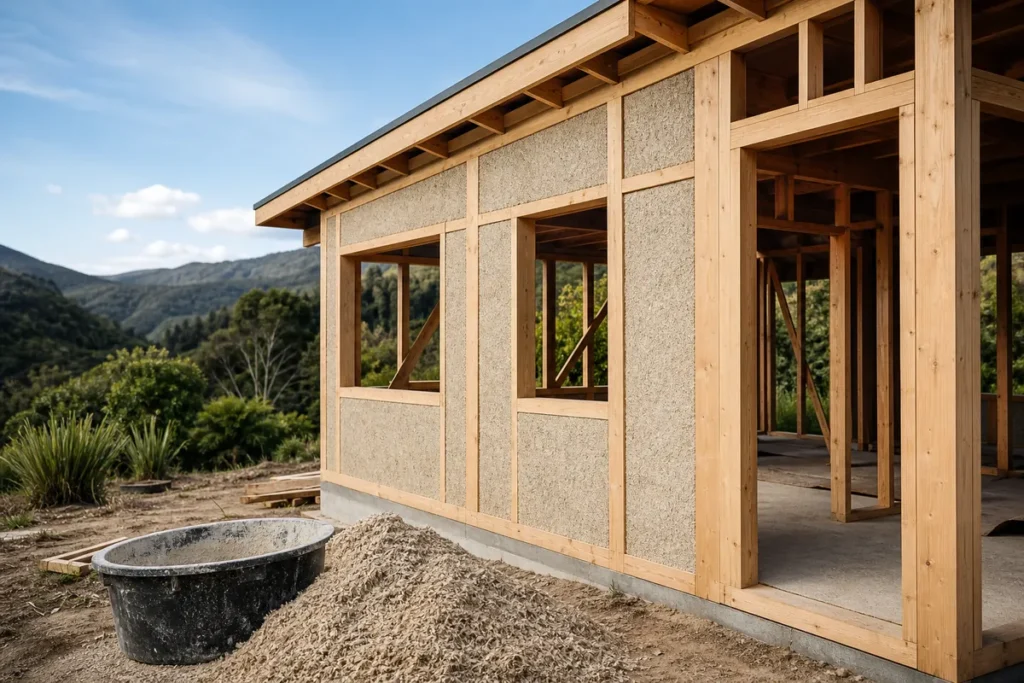
- Hempcrete: Carbon negative, thermally excellent, breathable — shares many earthship principles with a more developed NZ consent pathway. See our full guide: Can I Build a Hempcrete Home in NZ?
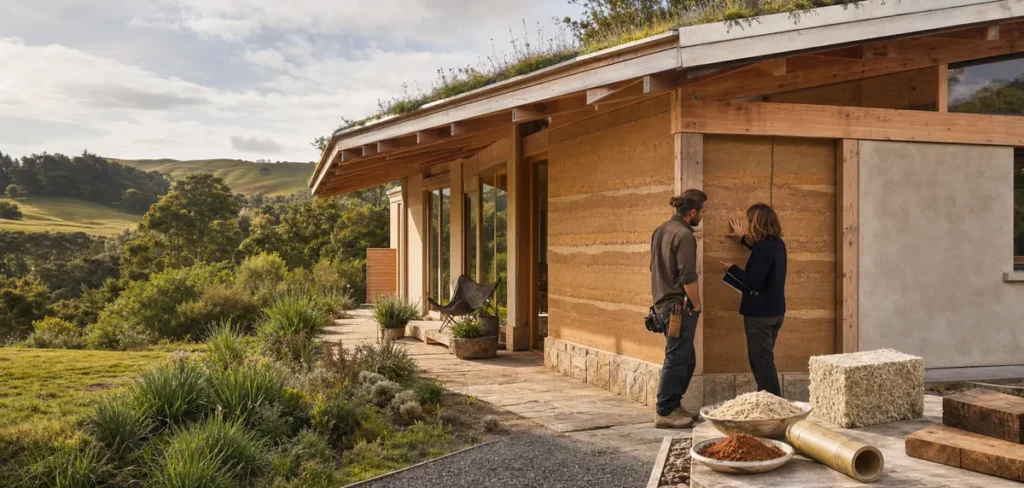
- Straw bale: Excellent thermal performance and an active NZ community — but note that straw bale is not a material covered by the NZ earth building standards. The 2024 revisions include straw bale only as informative guidance on allied natural building techniques, so a straw bale build still needs the Alternative Solutions pathway.
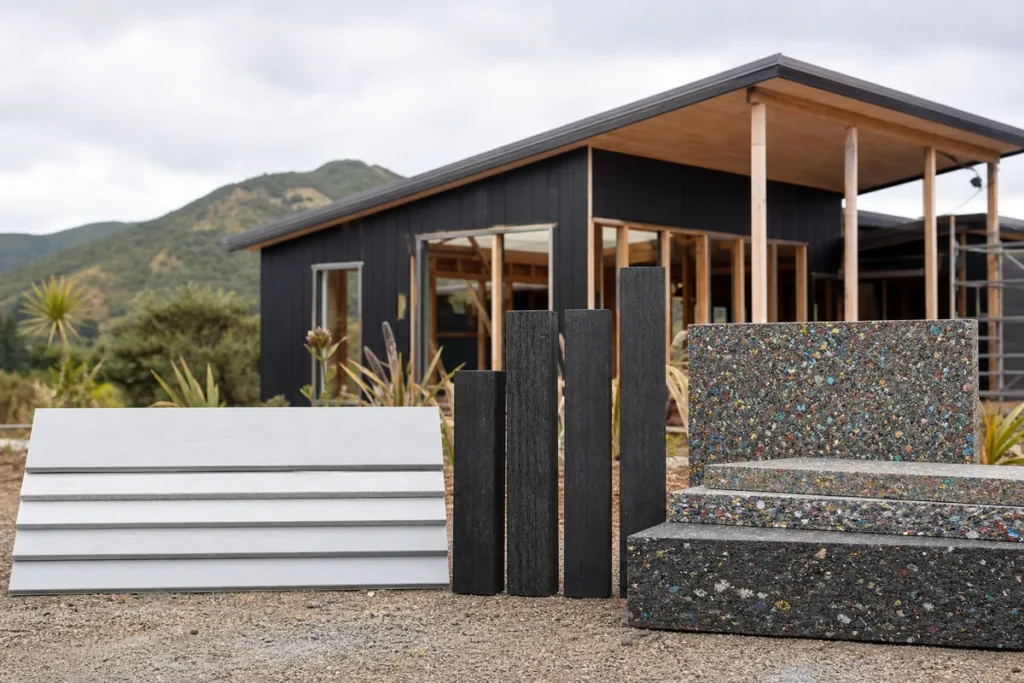
If the recycled-materials side of earthship design appeals, we also cover recycled plastic building products in NZ.
Frequently Asked Questions
Is it legal to build an earthship in NZ?
Yes — two have been consented and built. The NZ Building Code’s Alternative Solutions pathway allows any building material or system to be used, provided you demonstrate it meets the code’s performance requirements. The process is more demanding than a conventional build, but it’s legally possible and has been done.
Which NZ councils are most open to earthship consents?
Thames-Coromandel District Council consented Earthship Te Timatanga; Waikato District Council consented the Gubb build. Anecdotally, rural district councils with officer-level experience of alternative builds are more straightforward to work with than urban councils encountering the concept for the first time. Council attitudes depend heavily on individual Building Control Officers, not formal policy.
Can I use Earthship Biotecture plans directly in NZ?
No — you cannot submit Biotecture plans to a NZ council without NZ-licensed professional sign-off. The design must be adapted by NZ architects and engineers who take professional liability for NZ structural, weathertightness, and seismic requirements. This is not optional.
How much does it cost to build an earthship in NZ?
With professional labour and full documentation, expect costs comparable to or exceeding conventional construction. We have removed the indicative per-square-metre range this guide previously carried, because we could not trace it to a published source — get quotes for your own site and design rather than planning against a national figure. The consent documentation and engineering costs are significant fixed overheads regardless of build size. Owner-builder labour for the tyre-ramming and recycled material work can reduce costs, but professional architectural and engineering fees cannot be eliminated.
Where can I see a NZ earthship in person?
Earthship Te Timatanga on the Coromandel Peninsula is the most documented NZ earthship and has been photographed and written about extensively (Grand Designs NZ, Houzz, and architectural publications). Contact through the earthship.co.nz community may facilitate a visit. The NZ earthship Facebook community is also the best place to find people who’ve built or visited earthships in Aotearoa.
The Bottom Line
Earthships in NZ are possible — but they’re a project for the genuinely committed. The consent process requires professional expertise, patience with councils, and a budget for documentation that doesn’t physically appear in the building. If your primary goal is a high-performance, low-operational-cost, natural-materials home in NZ, and you’re willing to engage seriously with the consent process, an earthship or earthship-inspired design is a real option.
If the complexity feels daunting, hempcrete and rammed earth offer many of the same principles — thermal mass, natural materials, low embodied carbon — with more established NZ consent pathways. Explore what’s right for your situation, your land, and your capacity for a complex project.
This article is for informational purposes only. Always consult licensed NZ architects, engineers, and your local council’s Building Control Authority before proceeding. Consent and exemption requirements reviewed against MBIE guidance in September 2026; the details of the two NZ builds described above are drawn from community and media accounts we have not independently verified.